Israeli Prime Minister Benjamin Netanyahu said a deal with Syria is possible if Damascus agrees to establish a demilitarised buffer zone from Damascus to Jabal al‑Sheikh (Mount Hermon), territory Israel currently controls. His comments followed US mediation efforts and President Trump’s hopes for improved Syria‑Israel ties. Tensions are high after Israel expanded its control over Syrian areas since December 2024 and a recent raid that killed 13 people in Beit Jinn. Critics say Netanyahu’s demands amount to seizing more Syrian land rather than pursuing genuine peace.
Netanyahu Says Syria Deal Possible if Damascus Accepts Demilitarised Buffer Zone

Israeli Prime Minister Benjamin Netanyahu said on Tuesday that an agreement with Syria is possible, but only if Damascus agrees to create a demilitarised buffer zone stretching from the capital to Jabal al‑Sheikh (Mount Hermon), territory Israel currently controls.
Netanyahu's remarks followed a public statement by US President Donald Trump expressing hope that Syria and Israel would "have a long and prosperous relationship together," and come amid ongoing US mediation efforts aimed at a non‑aggression arrangement between the two countries.
Diplomatic contacts over a security arrangement have been under way for months, though officials report that progress has slowed in recent weeks. Syria still does not formally recognise Israel. Over the past year, Israel has widened what many international critics describe as an illegal occupation of Syrian territory.
Israel captured the Golan Heights from Syria in the 1967 war and later annexed the territory — a step recognised by the United States but rejected by most of the international community. After the fall of former Syrian President Bashar al‑Assad in December 2024, Israel reportedly broke with a 1974 agreement and pushed further into Syrian land, taking control of areas that include the entire Jabal al‑Sheikh (known in Israel as Mount Hermon), a mountain commanding views across northern Israel and southern Syria.
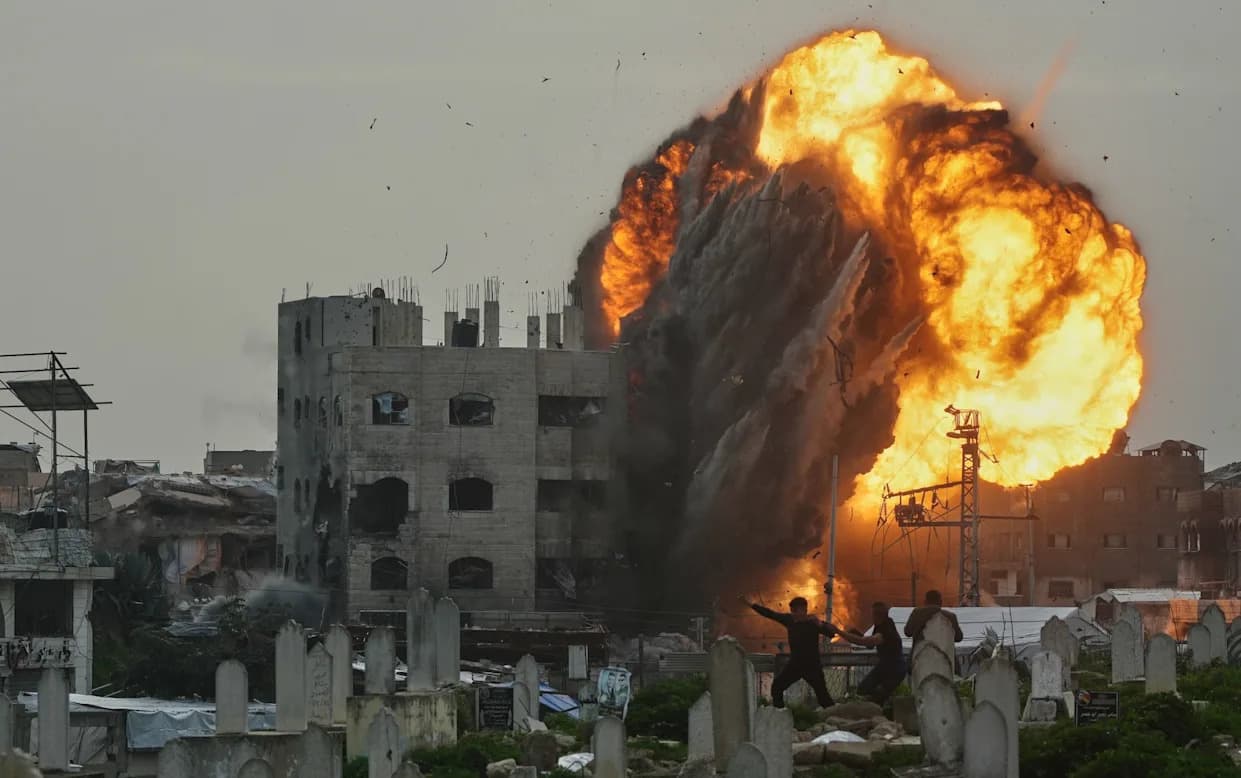
Despite Damascus' insistence that it does not seek confrontation, Israel has carried out repeated strikes inside Syria over the past year. The most recent reported operation, an Israeli raid last Friday, killed 13 people in the town of Beit Jinn, southwest of Damascus.
“What we expect Syria to do is, of course, to establish a demilitarised buffer zone from Damascus to the buffer area, including the approaches to Mount Hermon and the Hermon peak,” Netanyahu said during a visit to wounded soldiers in central Israel. “We hold these areas in order to ensure the security of Israel’s citizens, and that is what obligates us.”
Netanyahu added that with "goodwill and an understanding of these principles, it is possible to reach an agreement with the Syrians," but that Israel would stand by its security demands regardless.
Columnist Gideon Levy sharply criticised the prime minister’s position, calling the demands "outrageous". Levy argued that if Israel wants a security zone it should establish it on its own territory rather than seek more land from Syria, and accused Netanyahu of pursuing policies that perpetuate states of conflict in Gaza, Lebanon and Syria.
The Trump administration has been engaged in shuttle diplomacy: US Special Envoy Tom Barrack visited Damascus and met Syrian officials to discuss Syria‑Israel relations, and he had previously met Syria's new president, Ahmed al‑Sharaa. President Trump publicly praised what he described as early progress under al‑Sharaa’s government and expressed US support for continued stability and cooperation in the region.
Israeli media reports say talks may have stalled largely because of Netanyahu’s reluctance to withdraw from territory seized over the past year. Other reports indicate Israel has sought permission to maintain an aerial corridor across Syrian airspace toward Iran for potential future operations, a demand likely to be contentious in any negotiations.
Outlook
The proposed buffer zone would be a major sticking point: it involves not only security arrangements but questions of sovereignty and territory. Any agreement will require delicate diplomacy, clear enforcement mechanisms, and likely international involvement to bridge the profound mistrust between the parties.
Help us improve.