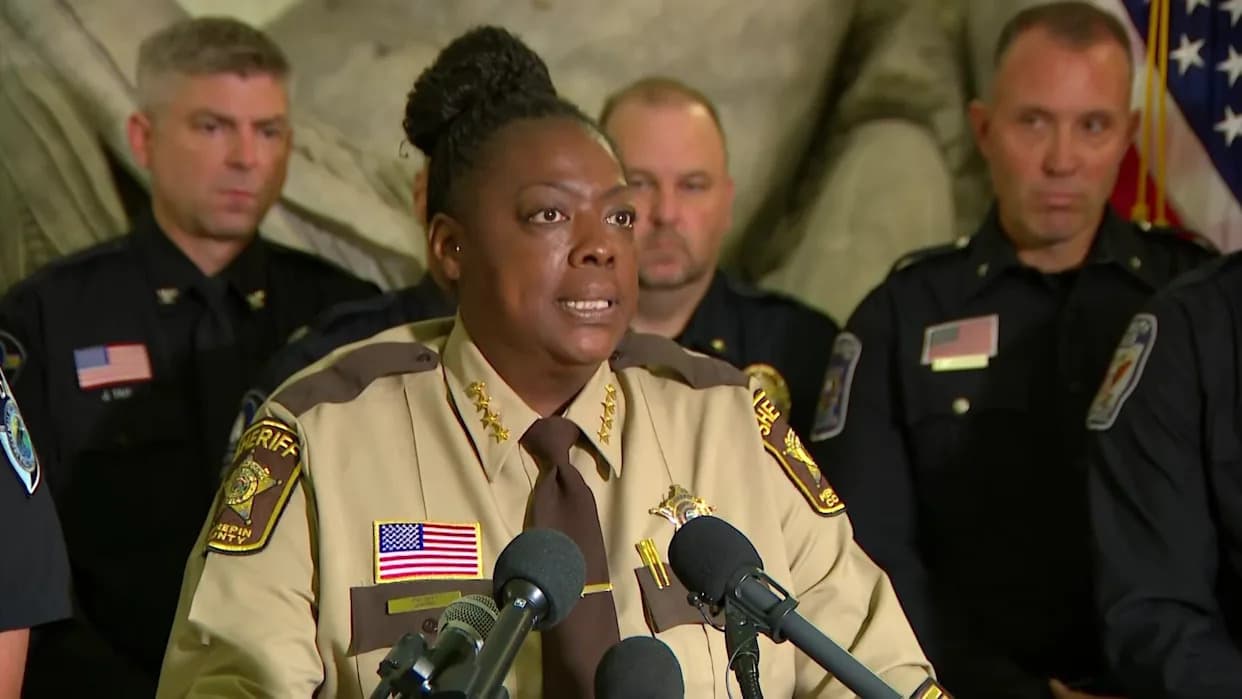
Charlotte Sheriff Garry McFadden, a former homicide detective and TV figure, has long limited his office’s cooperation with federal immigration agencies. This month, CBP carried out "Operation Charlotte’s Web," arresting more than 350 people across Mecklenburg County without meeting county leadership in advance, raising fears in immigrant communities and prompting widespread school and work absences. Supporters and critics differ sharply over McFadden’s policies and leadership, and he faces recent workplace allegations even as he seeks a third term.
CBP Arrests 350+ in Charlotte; Sheriff Garry McFadden at Center of Local-Federal Clash

Garry McFadden, a former Charlotte homicide detective turned television personality who later became Mecklenburg County sheriff, has become the focal point of a heated local debate after a recent federal immigration operation in Charlotte.
Operation and immediate fallout
This month, U.S. Customs and Border Protection (CBP) carried out a large-scale sweep across Charlotte and other parts of Mecklenburg County, arresting more than 350 people in an operation the administration called “Operation Charlotte’s Web.” CBP agents reportedly entered neighborhoods without meeting county leadership in advance, a move that county officials and community leaders say amplified fear across immigrant communities.
Sheriff McFadden — whose legal authority covers the county jail and court-related duties — said his office had sought but did not receive meetings with CBP officials before or during the operation. McFadden has repeatedly argued that cooperation policies that entangle local policing with immigration enforcement undermine public safety by deterring victims and witnesses from reporting crime. “I don’t think you can make someplace safer when you are in fear … of deportation,” he said in a televised interview.
Background: McFadden’s stance on immigration enforcement
McFadden first gained public recognition as a Charlotte-Mecklenburg homicide detective, with a long record of solved cases and community outreach initiatives such as the Cops and Barbers program. He later appeared on the television series "I Am Homicide." That profile helped fuel his 2018 campaign for sheriff, during which he pledged to limit his office’s participation in federal immigration programs.
After taking office in December 2018, McFadden ended his deputies’ participation in the 287(g) program, which allows local law enforcement to perform certain immigration-related functions on behalf of ICE. He also announced his office would not honor ICE detainer requests — which ask local officials to hold individuals beyond their scheduled release to allow federal agents to assume custody — arguing that such cooperation discourages immigrant communities from reporting crime.
Escalation and shifting legal landscape
Federal authorities criticized those policies, and in 2020 public messaging highlighted releases that federal officials said raised public-safety concerns. In response, state lawmakers recently passed measures increasing requirements for local jails to work with federal immigration officials, including verifying inmates’ immigration status, notifying federal authorities of releases tied to detainers, and honoring certain detainer requests. McFadden has said his office will comply with state law but will not take an active role in federal immigration enforcement operations.
McFadden did meet with regional ICE representatives last month and described that meeting as productive. He has criticized CBP specifically for not contacting his command prior to the operation, saying, “We are all law enforcement. At least respect me enough to come and have a conversation with me while you’re operating in my county.”
Political and community reactions
Reactions to the CBP deployment and McFadden’s role have been sharply divided. Some Republican officials blamed the sheriff’s earlier policies for what they described as reduced cooperation with federal immigration efforts. One state leader asserted that the operation was necessary because local policies had allegedly allowed criminal noncitizens to be released rather than transferred to federal custody.
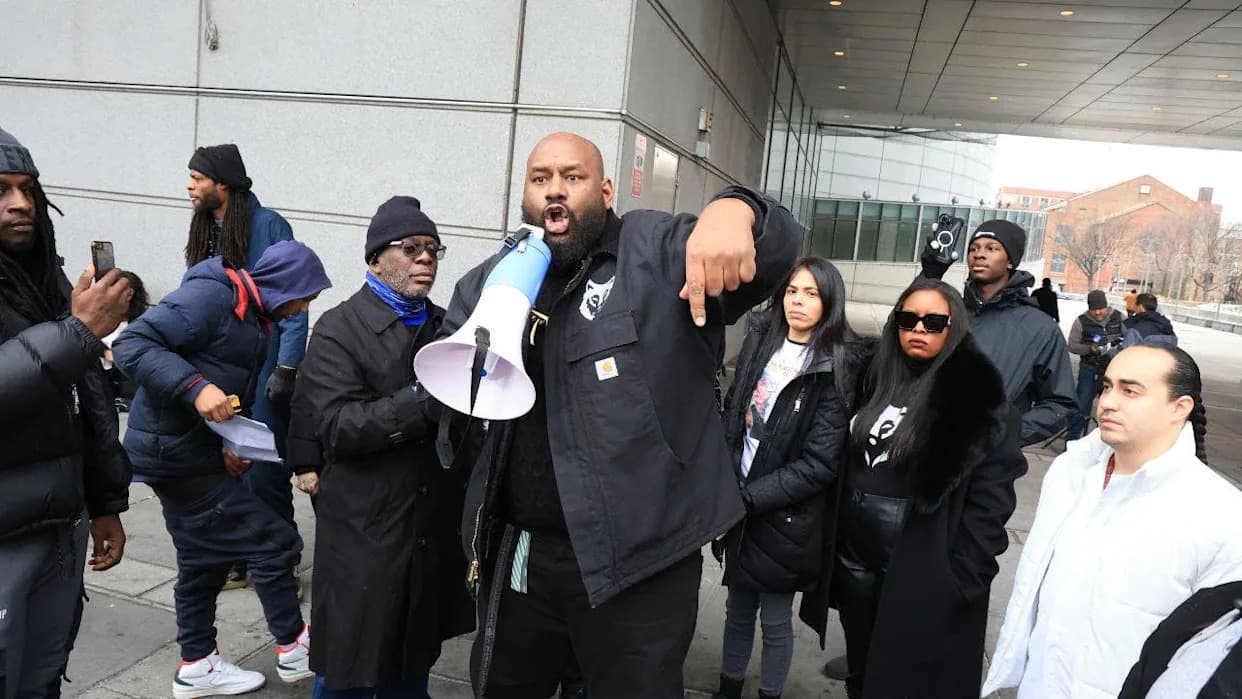
Others argued the deployment threatened community wellbeing. A Democratic member of Congress criticized the presence of federal agents, saying it endangered trust between residents and law enforcement. Community advocates noted that factors such as Charlotte’s growing immigrant population, the presence of an immigration court and a large ICE field office could also explain the federal focus on the region.
The operation prompted widespread concern among residents: schools reported unusually high absentee rates and local businesses said employees stayed home amid heightened enforcement. The county school system recorded more than 30,000 absences — roughly 20% of average enrollment across hundreds of schools — on one school day during the operation, a disruption county leaders attributed in part to community fear.
Law enforcement perspectives and internal disputes
National law enforcement leaders praised McFadden’s credentials and noted he has taken an active role in the sheriffs’ community. Locally, however, some police leaders have criticized McFadden’s approach. The head of the Charlotte-Mecklenburg Fraternal Order of Police has described the sheriff as self-serving and said the lodge has not had a working relationship with him, while pointing to staffing shortages and public-safety concerns as reasons to request federal assistance.
That lodge’s letter requesting federal aid referenced a high-profile September killing on public transit that drew national attention; local leaders used the incident to underline broader safety concerns.
Allegations inside the sheriff’s office
McFadden’s tenure has been marked by personnel disputes and lawsuits. A former business director filed a federal suit alleging wrongful termination after reporting pay disparities and refusing to alter expense records; McFadden has denied those claims. Several former employees have publicly criticized his leadership style, with some accusing him of emotional mistreatment and autocratic behavior. One former chief deputy resigned and released an audio recording alleging inappropriate language; McFadden later posted a video apologizing for that language and addressed the departures in a message to staff.
What’s next
McFadden has announced a bid for a third term as sheriff. As federal and state officials, local leaders and community groups continue to debate the causes and consequences of the recent operation, questions about cooperation between local law enforcement and federal immigration authorities — and about leadership and workplace culture inside the sheriff’s office — are likely to remain central to public discussion in Mecklenburg County.
Help us improve.