The Johannesburg G20 summit revealed deep geopolitical divisions, highlighted by a U.S. boycott and urgent European consultations over a unilateral U.S. proposal on Ukraine. Leaders warned that rising unilateralism and protectionism risk weakening the G20's ability to coordinate on global crises. A joint declaration addressed climate, energy, debt and a call for a "just" peace in several conflict zones, but diplomatic friction persisted over representation and the future relevance of the forum.
G20 at a Crossroads: Leaders Warn Geopolitical Rift Is Undermining Crisis Response

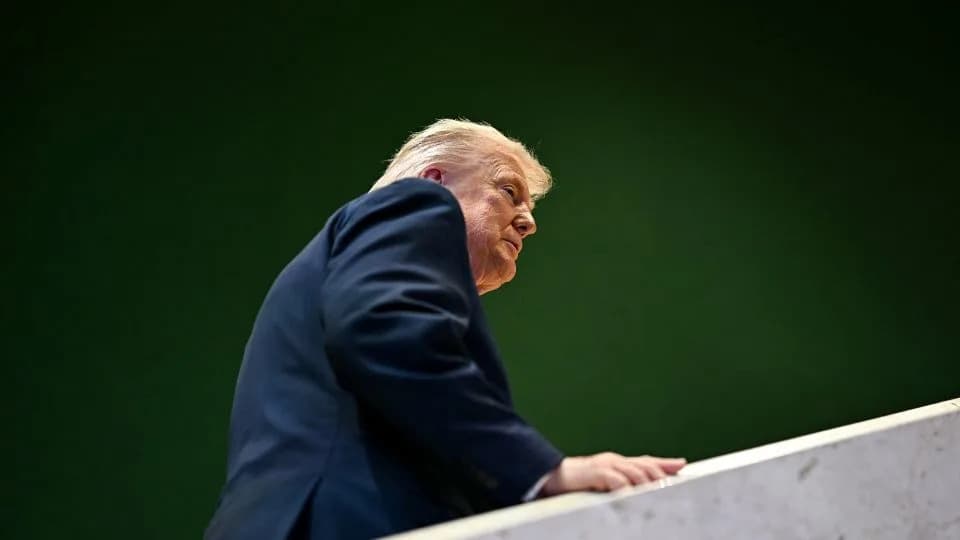
The Johannesburg G20 summit — the first held on African soil — exposed deep geopolitical divisions that leaders warned could weaken the grouping's ability to respond to global crises. The meeting was overshadowed by a U.S. boycott and intense sideline consultations by European leaders over a unilateral proposal from U.S. President Donald Trump aimed at ending the war in Ukraine.
French President Emmanuel Macron opened the summit with a stark appraisal of the challenges, saying leaders were struggling to collaborate and suggesting the G20 "may be coming to the end of a cycle."
"We are struggling to resolve major crises together around this table," Macron said.
British Prime Minister Keir Starmer echoed the concern, calling the road ahead difficult and urging renewed constructive engagement. Chinese Premier Li Qiang warned that unilateralism and protectionism were rising and questioned what was happening to global solidarity. Host President Cyril Ramaphosa defended the forum, arguing it still underlines the importance of multilateral cooperation.
Attendance and declaration
The summit included leaders and ministers from across the G20 membership, though several top leaders were absent: President Xi Jinping did not attend and was represented by Premier Li Qiang, and Russia dispatched Kremlin official Maxim Oreshkin instead of President Vladimir Putin. Despite the absences and tensions, participants adopted a summit declaration addressing climate, energy, debt sustainability and a critical-minerals pact, and issued a joint call for a "just" peace for Ukraine as well as for the Democratic Republic of Congo, Sudan and the Occupied Palestinian Territory.
Argentina's foreign minister, representing an absent president, raised objections to how the Israel-Palestine issue was framed, but those concerns did not prevent the adoption of the declaration by participating leaders, including India, Brazil and Turkey.
European consultations on a U.S. proposal
Immediately after the opening ceremony, Prime Minister Starmer met with President Macron and German Chancellor Friedrich Merz to discuss President Trump's 28-point plan for Ukraine, which critics say would oblige Kyiv to make territorial and military concessions. That meeting expanded to include other European leaders and representatives from Australia, Canada and Japan as officials sought to rework the U.S. proposal into a form more acceptable to allies.
European sources said they had communicated with Washington but planned no delegations to travel to see the U.S. president in person. European leaders emphasized that any settlement for Ukraine would require the joint support and consensus of European partners and NATO allies.
US handover and diplomatic friction
Although Washington said it would remain engaged and intends to host the next G20 summit, it announced it would send only its chargé d'affaires in South Africa for the ceremonial handover. South African officials insisted that a higher-level U.S. representative is required for the transfer of the G20 presidency, saying the South African president would not hand over the presidency to a chargé d'affaires.
U.S. plans include holding the 2026 summit at a Florida venue owned by President Trump, a move that drew criticism for its optics amid broader questions about the G20's unity and relevance.
As the summit concluded, leaders and officials faced the twin challenges of preserving common ground on shared crises while responding to unilateral initiatives and geopolitical competition that threaten to erode the collaborative spirit the G20 was created to foster.
Help us improve.