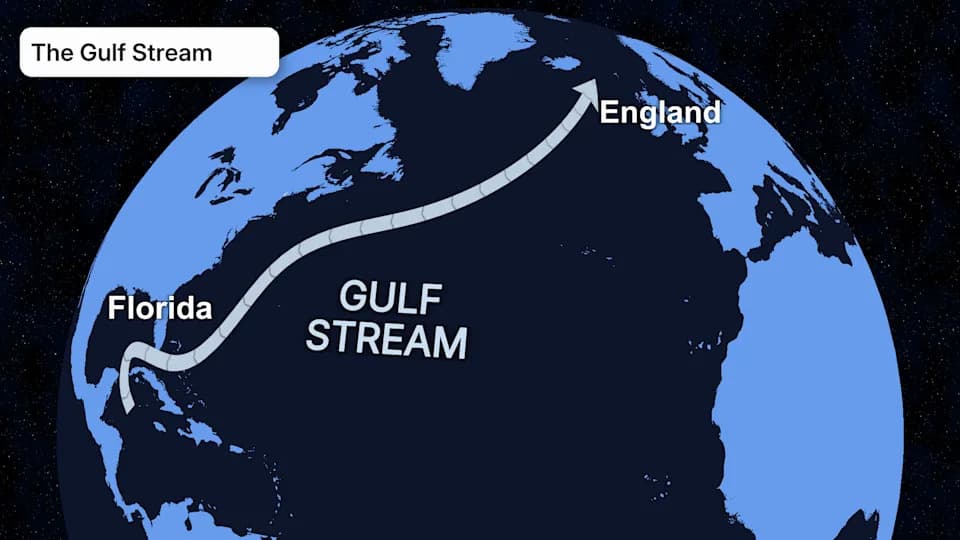
NOAA's analysis of satellite-altimeter data (1993–2023) shows the Gulf Stream weakened from ~2005–2014, then rapidly intensified from 2014–2023 while shifting northward and becoming less meandering. The study focuses on the free‑flowing current downstream of Cape Hatteras; upstream transport through the Florida Straits remained relatively steady. For surfers, a stronger, more northerly Gulf Stream can alter how storm-generated swells propagate — steepening waves or shifting incoming directions — but the study does not establish a direct link to hurricane or nor'easter frequency.
Gulf Stream Is Speeding Up — Should East Coast Surfers Care?
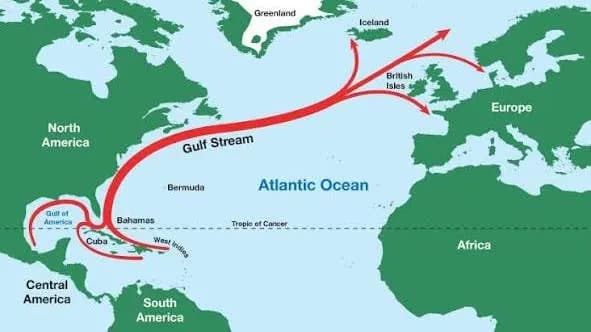
The Gulf Stream current in the Atlantic Ocean.NOAA
NOAA's new analysis of three decades of satellite-altimeter data paints a more dynamic picture of the Gulf Stream than the familiar "slowdown" narrative: after a prolonged weakening, the free‑flowing current downstream of Cape Hatteras rapidly intensified and shifted northward. What that means for surfers is nuanced — the current won't create swells, but it can change the way storm swells arrive at the coast.
What NOAA Found
Researchers examined satellite-altimeter observations from 1993–2023 and identified a clear multi-year pattern: a weakening trend from about 2005–2014, followed by a pronounced acceleration from 2014–2023. The Gulf Stream's jet also moved northward and became steadier and less meandering during the recent intensification.
"The Gulf Stream's story is far more dynamic than a simple slowdown narrative," said NOAA oceanographer and study lead Shenfu Dong.
Scope And Limits Of The Study
The study specifically analyzes the portion of the current after it separates from the U.S. coast (downstream of Cape Hatteras). NOAA notes that upstream transport through the Florida Straits remained relatively steady over the same period — the finding does not imply the entire Atlantic overturning circulation suddenly sped up.
Why Surfers Should Pay Attention
Currents affect waves by changing wave speed, steepness and direction. When an opposing current meets a swell, it can compress the wave field, producing steeper, more closely spaced waves; when swells cross a strong, angled current, incoming directions can shift. During Hurricane Matthew (2016), for example, interactions with the Gulf Stream produced zones of wave steepening and altered coastal wave arrival angles by as much as ~20°.
So, a stronger or more northerly Gulf Stream could alter how storm swells propagate across the western Atlantic. Local outcomes depend on many factors: storm track, wind, the current's exact position, coastal bathymetry and tides. That means surf impacts are possible but not uniform or predictable from this study alone.
Broader Climate And Coastal Implications
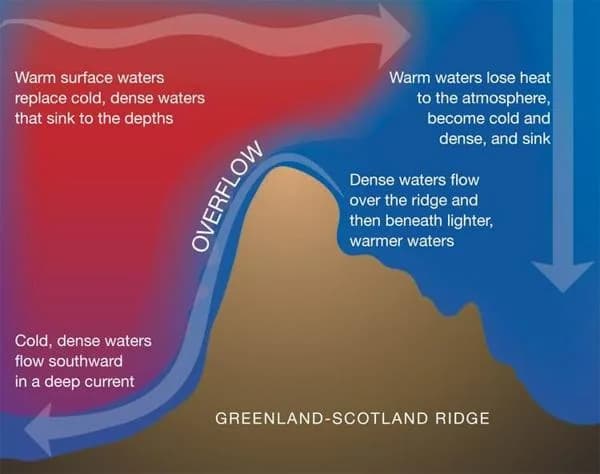
An intensified Gulf Stream can transport more heat poleward, warming the upper ocean and increasing heat release to the atmosphere. The current's strength and latitude also influence regional weather patterns, sea level differences, marine ecosystems and the broader North Atlantic climate.
Bottom Line For Surfers
The NOAA study adds an important variable to the long list surfers already track — storm track, wind, fetch, pressure gradient, swell period, bathymetry and tides. It doesn't tell us whether next season will bring better or worse surf at any particular break, but it does mean the Atlantic's "river in the sea" is changing in ways that could alter how storm energy reaches the coast. Continued monitoring and improved coupled ocean-atmosphere models will be needed to translate these changes into reliable surf forecasts.
Originally published by Surfer on Oct 5, 2026. Analysis based on NOAA satellite-altimeter data (1993–2023).
Help us improve.