Water bankruptcy describes when human–water systems chronically withdraw more renewable water income than they receive and, in doing so, damage the natural capital that produces usable water. Unlike temporary scarcity or crises, bankruptcy implies effectively irreversible losses that require mitigation, protection and adaptation to a new normal. Climate change accelerates the risk, but policy choices—over‑extraction, pollution, subsidies and land use—are key drivers. Responses must combine technology with strict accounting, cross‑sector policy alignment and equity-centered governance.
Water Bankruptcy Explained: 13 Misconceptions To Avoid
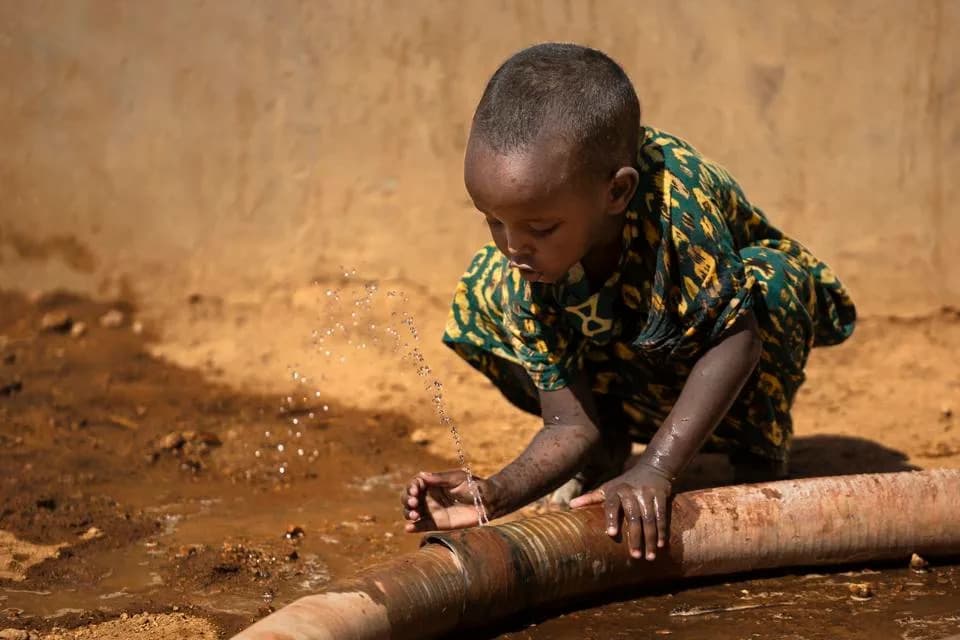
A young girl drinks from a spray leaking from a punctured hose used by a water truck crew delivering water aid to villagers and their livestock, in Hawara village near Rhamu, on January 21, 2026. In drought-hit northeastern Kenya, villagers have been forced to drag their dead livestock to distant fields for burning to keep the stench of death and scavenging hyenas away from their homes.Mandera county along Kenya's borders with Ethiopia and Somalia, has seen no rain since May and is now on the point of a full-blown water emergency. (Photo by Tony KARUMBA / AFP via Getty Images)AFP via Getty Images
What Is Water Bankruptcy?
"Water bankruptcy" describes a human–water system that chronically withdraws more renewable water income than it receives and, in the process, degrades the natural capital—rivers, aquifers, wetlands, soils, glaciers and ecosystems—that produces and regulates usable water. When that overspending leads to effectively irreversible damage, returning to the old normal may be unrealistic.
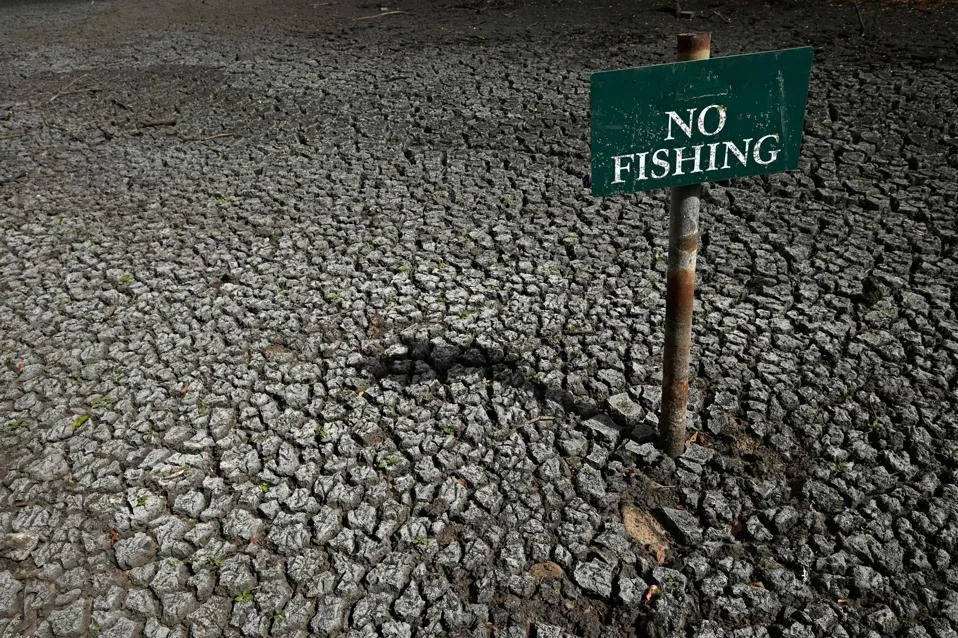
TOPSHOT - A 'No Fishing' sign is pictured in the dried up Falmer Pond in Falmer, East Sussex, south of London on August 5, 2026. England and Wales both experienced the "driest July on record", the UK Met Office weather agency said on August 3, based on provisional figures. (Photo by GLYN KIRK / AFP via Getty Images)
This framing, formalized in a January 2026 paper in Water Resources Management and the United Nations University's Global Water Bankruptcy Report, moves the conversation beyond temporary "crisis" language and toward responses that combine mitigation, protection of remaining assets and adaptation to new hydrological realities.
Why The Term Matters
Calling a situation "bankruptcy" shifts priorities: it requires honest diagnosis, halting further irreversible damage, stabilizing what remains and planning equitable, long-term transitions—rather than only investing in short-term crisis relief or technologies that may enable continued overspending.
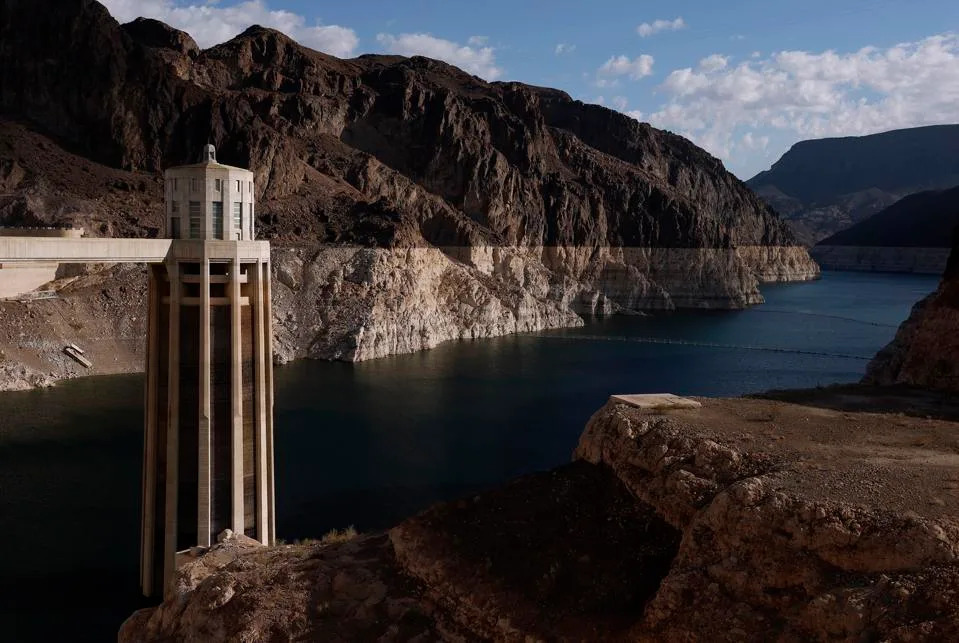
LAKE MEAD NATIONAL RECREATION AREA, ARIZONA - SEPTEMBER 01: Water intake towers at the Hoover Dam stand next to a bleached "bathtub ring" on the banks of Lake Mead on September 01, 2026 in Lake Mead National Recreation Area, Arizona. Lake Mead, the nation's largest reservoir, has fallen to its lowest level since it began filling nearly 90 years ago and is now just 26% full. In July, the combined storage of Lake Mead and Lake Powell, the country's two largest reservoirs, fell to its lowest level since 1957, prompting the U.S. Department of the Interior to mandate twenty percent cuts in water usage for the next two years for Arizona, California and Nevada. Seven U.S. states and Mexico depend on the Colorado River Basin, which supplies water to more than 35 million people and is the water source for Lake Powell and Lake Mead. (Photo by Justin Sullivan/Getty Images)
13 Misconceptions To Avoid
1. Misconception: It Is Just Water Scarcity
Clarification: Scarcity means supply is insufficient relative to demand. Bankruptcy implies persistent overspending plus irreversible damage to the systems that produce usable water.
2. Misconception: Insolvency Equals Bankruptcy
Clarification: Insolvency (recurring deficits) is necessary but not sufficient. Bankruptcy also requires effective irreversibility—losses that cannot reasonably be restored.
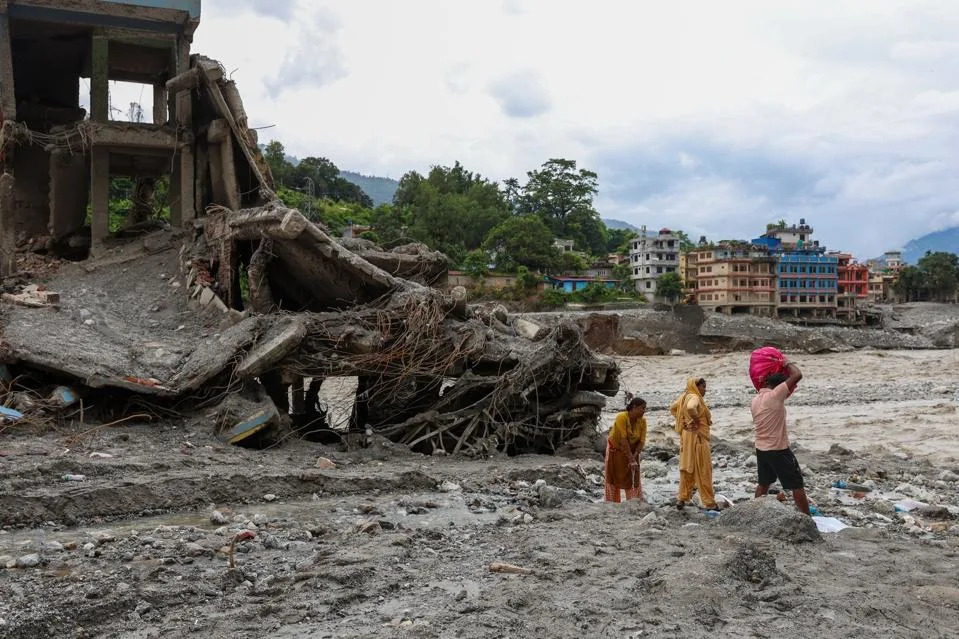
TRISHULI, NEPAL - SEPTEMBER 02: Displaced residents search for salvageable clothes from their destroyed houses, amid the aftermath of the flash flood, in Trishuli, Nepal, on September 2, 2026. While rescue efforts are still under way to search for possible survivors trapped in a Nepal hydropower power plant, the death toll from the apocalyptic flash flood in areas near the Nepal-China border has risen to over 1,100, with thousands of locals and foreign nationals remain missing, including those from the United States, Australia, China, South Korea, Ukraine, Japan and Germany. (Photo by Daniel Ceng/Anadolu via Getty Images)
3. Misconception: It’s Merely A Temporary Crisis
Clarification: Crises are temporary and reversible; bankruptcy calls for mitigation where possible, prevention of further irreversible loss, and adaptation to a new baseline.
4. Misconception: Natural Variability Alone Causes Bankruptcy
Clarification: Natural droughts and variability occur, but bankruptcy is a condition of human–water systems driven by persistent demand that exceeds renewable income and damages natural capital.
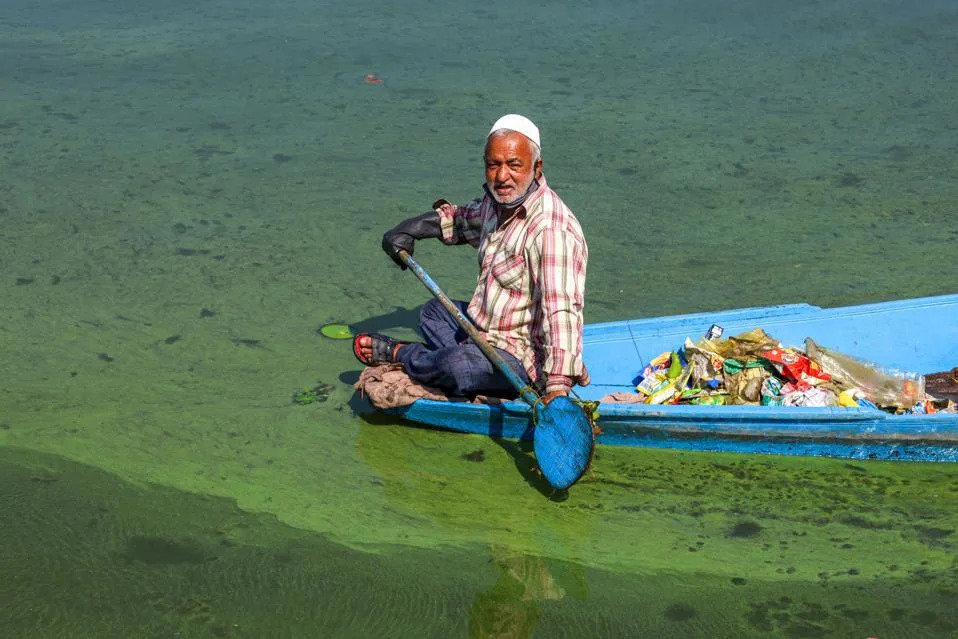
A boatman collects floating garbage and plastic waste from the algae-covered waters of Dal Lake in Srinagar, Jammu and Kashmir, on June 27, 2026. Dal Lake, a prominent tourist destination in Kashmir, faces significant ecological challenges. Tens of millions of liters of untreated sewage enter the lake daily, along with approximately 80,000 tonnes of silt annually and solid waste from nearby settlements and houseboats. Elevated nutrient levels, such as nitrogen and phosphorus, have increased the growth of aquatic weeds and algae, reduced dissolved oxygen levels, and disrupted the lake's ecosystem. The declining water quality has impacted fish habitats, breeding, and survival, leading to a decrease in native fish populations and affecting the livelihoods of local fishing communities. Environmentalists and conservation authorities express concern over these issues. (Photo by Firdous Nazir/NurPhoto via Getty Images)
5. Misconception: It Means The Whole Planet Is Out Of Water
Clarification: The planet still has water. The concern is that more human–water systems are losing the ability to return to historical norms, creating cascading social, economic and geopolitical risks.
6. Misconception: Climate Change Is Solely To Blame
Clarification: Climate change accelerates and deepens stress by reducing incomes, eroding reserves and increasing extremes, but policy choices—over‑extraction, pollution, subsidy-driven demand and poor land use—are primary drivers of bankruptcy.
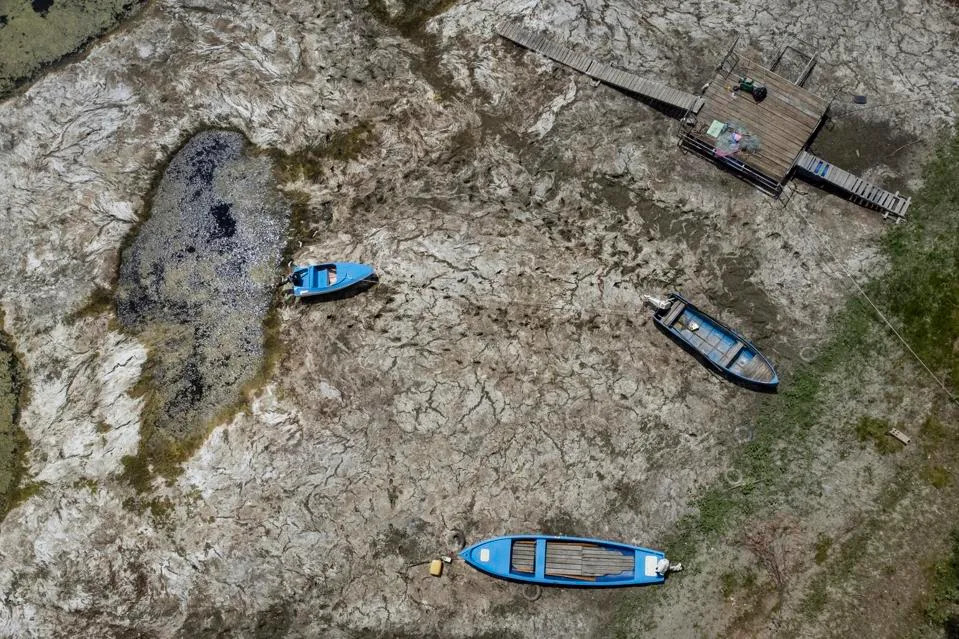
An aerial photograph taken on July 22, 2026 shows boats laying on the dried Danube river bed in front of the Calafat-Vidin bridge, connecting Bulgaria and Romania near the village Antimovo, southeastern Bulgaria. At the Romanian town of Corabia on the banks of the Danube river, some boats are stranded in shallow water full of algae in the touristic port, which lies deserted as ships can no longer dock due to sandbars (Photo by Nikolay DOYCHINOV / AFP via Getty Images)
7. Misconception: Pollution Isn’t Part Of The Equation
Clarification: Contamination can turn water into a "toxic asset"—present on paper but unusable in practice. Water bankruptcy therefore involves both quantity and quality losses.
8. Misconception: Only Dry Or Poor Regions Can Become Bankrupt
Clarification: Wealth and abundance buy resilience but not immunity. Even water-rich or wealthy regions can degrade natural capital and become water-bankrupt if they chronically overspend.
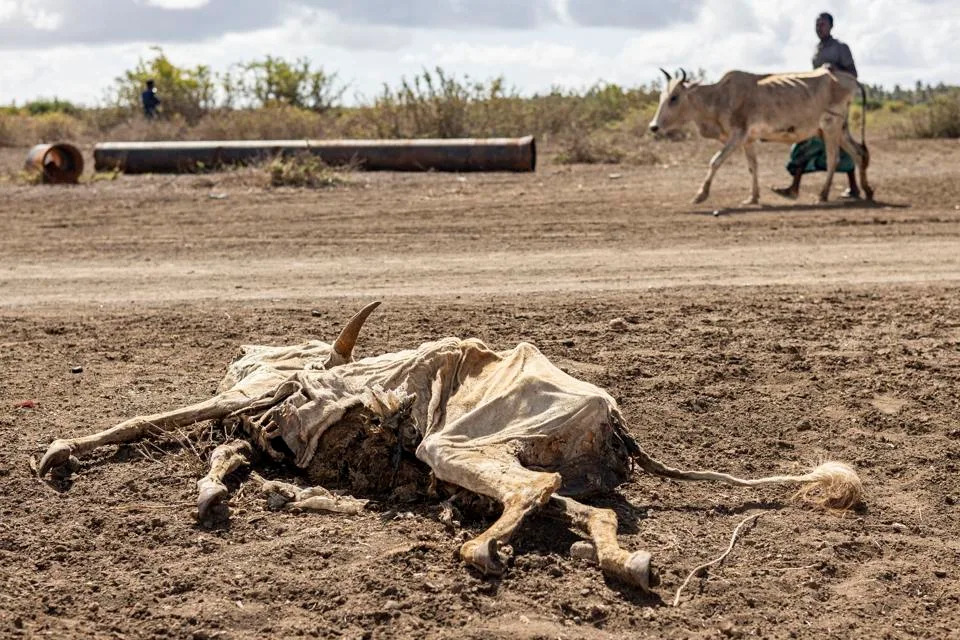
A man affected by drought walks past a livestock carcass, next to a camp for displaced people in the outskirts of Kismayo town, on April 21, 2026. Millions of people in Somalia are facing the repercussions of a severe drought after three consecutive failed raining seasons. Kismayo, the capital of Jubaland State in southern Somalia, is one of the largest IDP-receiving cities in the Horn of Africa country, receiving hundreds of thousands of people fleeing the prolonged drought and conflict. Save the Children provides health and nutrition services across the camp. (Photo by SIMON MAINA / AFP via Getty Images)
9. Misconception: Water Produces Itself
Clarification: Rivers, aquifers, wetlands, soils, glaciers and ecosystems are the "machinery" that captures, stores, cleans and times water. Protecting supply without safeguarding these systems risks future collapse.
10. Misconception: Technology Alone Will Solve It
Clarification: Desalination, reuse and transfers expand supply but can enable continued overconsumption if not paired with limits, accounting, demand management and natural-capital protection.
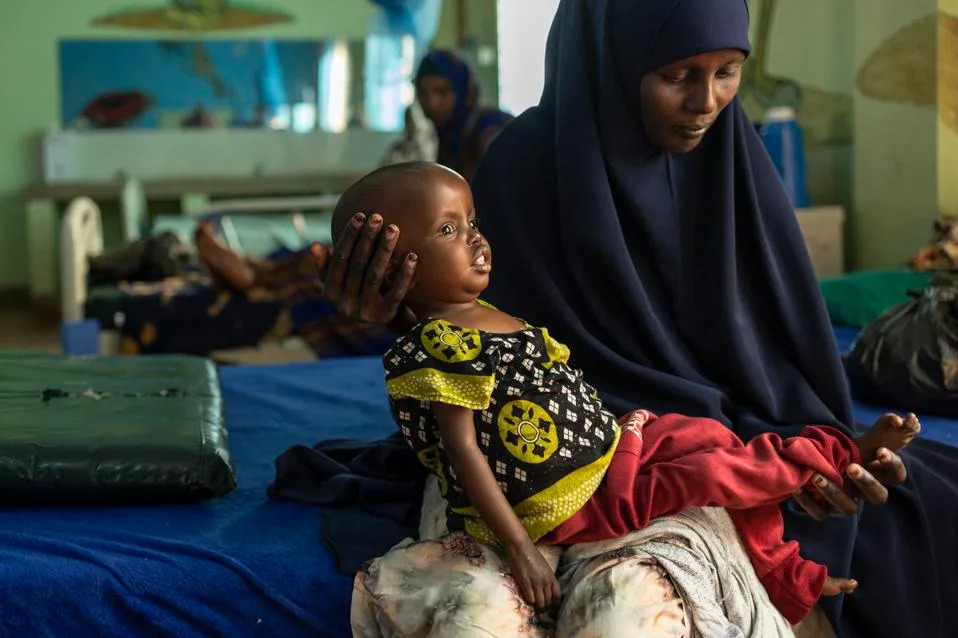
A mother sits with her child in a ward for severely malnourished children at Banissa Sub-County Referral Hospital in Banissa, on January 20, 2026. In drought-hit northeastern Kenya, villagers have been forced to drag their dead livestock to distant fields for burning to keep the stench of death and scavenging hyenas away from their homes.Mandera county along Kenya's borders with Ethiopia and Somalia, has seen no rain since May and is now on the point of a full-blown water emergency. (Photo by Tony KARUMBA / AFP via Getty Images)
11. Misconception: It’s Only A Water-Sector Problem
Clarification: Agriculture, energy, urban planning, trade and finance shape water demand and liabilities. Effective responses require cross-sector policy alignment and political-economy reforms.
12. Misconception: Bankruptcy Is Inevitable Doom
Clarification: Naming bankruptcy is a pragmatic diagnosis, not surrender. Honest acknowledgement enables protection of remaining assets, prevention of further irreversible loss and planning for equitable adaptation and transformation.
13. Misconception: Justice Can Wait
Clarification: Who pays, who adapts and who bears losses are political choices. Equity must be central to governance of water bankruptcy to avoid deepening social harms and injustice.
Real-World Signals And Consequences
Recent reporting and photos underscore the stakes: Lake Mead fell to historic lows and prompted mandated cuts along the Colorado River; Dal Lake in India is suffering severe contamination; parts of the Danube have been stranded by low flows; drought in Kenya and Somalia has produced displacement and humanitarian crises; and flash floods in Nepal have caused catastrophic losses—illustrating how hydrological extremes, degraded natural capital and social vulnerability intersect.
What To Do About It
- Pair engineering solutions with strict water accounting, enforceable allocation limits and demand management.
- Protect and restore natural capital (wetlands, recharge areas, soils and forests) that produce and regulate water.
- Align agricultural, energy, urban and trade policies with sustainable water limits.
- Center equity—ensure vulnerable communities are protected and costs fairly shared.
- Use the diagnosis as an opportunity for transformation: design resilient livelihoods and systems within new hydrological boundaries.
Bottom line: Water bankruptcy reframes some water problems as systemic, often irreversible losses. That reality demands honest diagnosis, cross‑sector action, protection of natural capital and equitable transitions—not just short-term crisis fixes.
Help us improve.