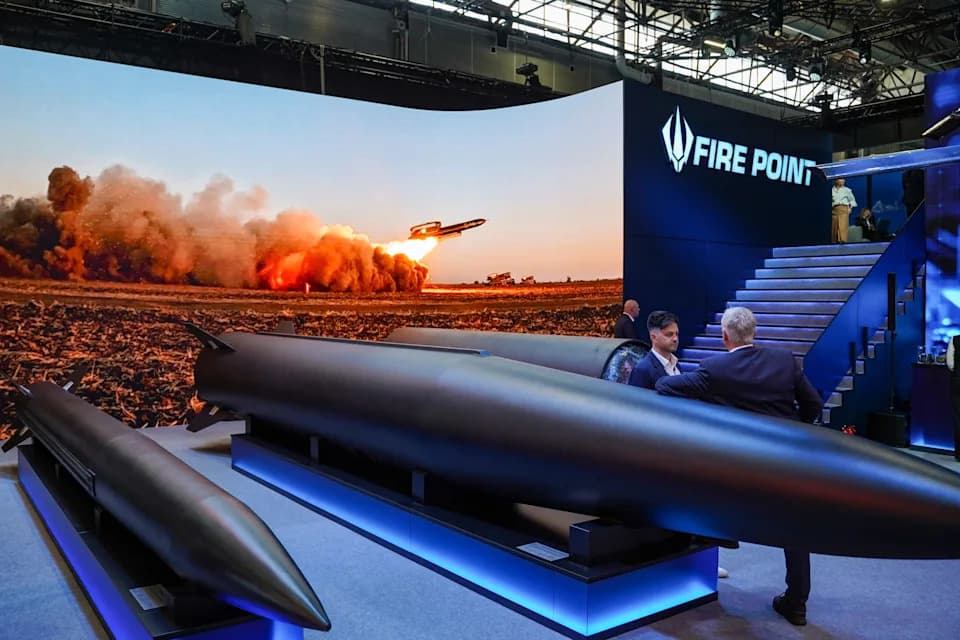
Fire Point, a Ukrainian private missile and drone company, confirmed the FP-7 tactical ballistic missile was used in combat and said an extended-range variant is in development; the company is also slated to contribute to the pan-European Freyja missile defense prototype expected in early 2027. Leaders at the Helsinki Security Forum warned of growing Russian hybrid threats and pledged investments in air defense and modernization. Separately, Iceye and Nokia announced a 2028 LEO satellite communications partnership, Finland received the first two F-35s of 64 ordered, and Patria will deliver Trackx armored vehicles in 2027.
Missiles, Satellites and Fighters: Ukraine and Europe Fast-Track Key Arms Projects Amid Hybrid Threats
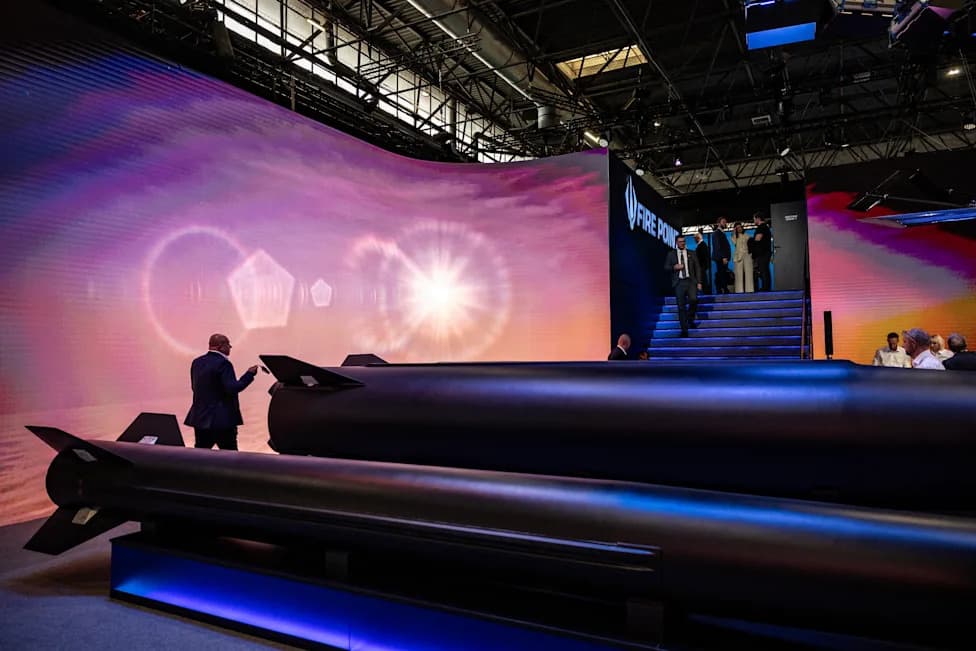
Visitors walk at the stand of Ukrainian defense technology company Fire Point during the Eurosatory trade fair at the Paris-Nord Villepinte Exhibition Centre in Villepinte, north of Paris, on June 15, 2026. (Guillaume Baptiste / AFP via Getty Images)
WARSAW, Poland — At the Helsinki Security Forum, industry and government leaders outlined a rapid expansion of European and Ukrainian defense projects driven by concerns over intensifying Russian hybrid operations. Fire Point, a private Ukrainian drone and missile developer, confirmed the combat use of its FP-7 tactical ballistic missile and said it is developing an extended-range variant while contributing to the pan-European Freyja anti-ballistic missile program.
Fire Point, FP-7 And Freyja
Fire Point CEO Iryna Terekh said the company’s FP-7 was used in combat for the first time on Oct. 1 and described plans for a longer-range version to be delivered this year. The company’s flagship missile has been proposed for integration into Freyja, a pan-European anti-ballistic missile defense initiative whose prototype is expected in the first half of 2027.
“Yesterday we launched our ballistic missile onto Russian territory for the first time. It is a tactical ballistic missile for [a range of] 300 kilometers maximum. We are working on a longer [range] version that will also come this year,” Terekh said, noting the missile was developed by Fire Point within two years as a private firm.
Terekh argued the capability is vital for Ukraine, placing it among a small group of states operating independent tactical ballistic missiles without an external remote kill switch. She also highlighted that using a private firm accelerated development by cutting bureaucracy and enabled lower costs compared with competitors.
Security Forum: Hybrid Threats And Regional Responses
The forum was opened by Finnish President Alexander Stubb and Moldovan President Maia Sandu, who warned of sustained hybrid threats to Europe. Sandu said Russian drones had entered Moldova's airspace more than 45 times this year, and cited recent attacks that hit border crossings and killed two people.
“Our answer is to grow stronger. We are investing in air defense, modernizing our Army and raising defense spending,” Sandu said.
President Stubb emphasized that Russia is conducting traditional kinetic warfare in Ukraine while applying hybrid methods across Europe, including cyberattacks and sabotage attempts.
Satellites: Iceye And Nokia Partnership
On Oct. 1, Finnish satellite operator Iceye and telecoms giant Nokia announced a partnership to build sovereign low Earth orbit (LEO) broadband satellite communications for governments and defense customers, with initial launches planned for 2028. Iceye already supplies radar satellites to several European partners, and CEO Rafal Modrzewski noted Germany's December 2025 order for a 40-satellite constellation as a milestone for a continental tactical system.
“Sovereignty doesn't exist without competitiveness. Sovereignty without competitiveness is isolation,” Nokia CEO Justin Hotard said, describing the partnership as a response to states’ desire for resilient, sovereign communications.
F-35 Deliveries And European Industrial Links
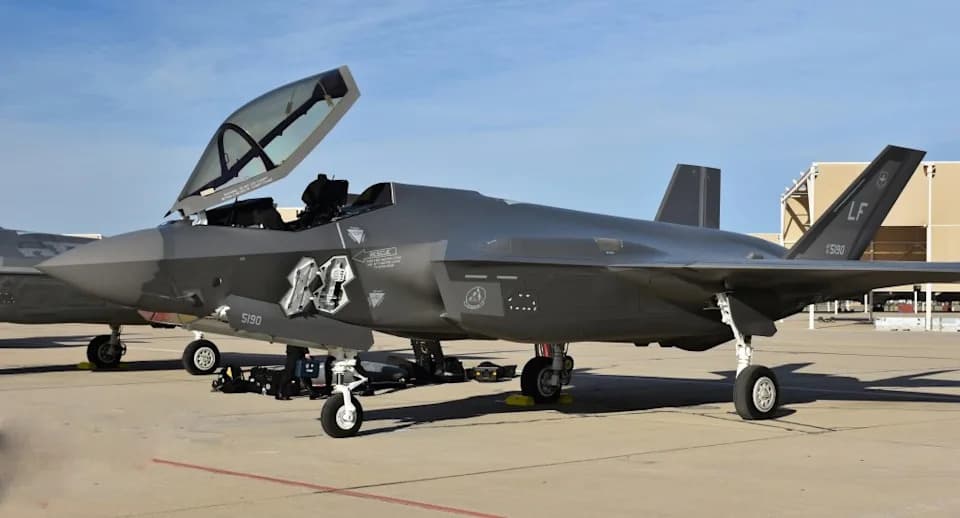
Finland formally received the first two of 64 F-35 fighters ordered from Lockheed Martin. Elizabeth Parcella, Lockheed Martin’s vice president for Strategy and Business Development for Aeronautics, said the deliveries boost Finland’s defense and expand industrial collaboration in Europe — with roughly 25% of an F-35’s value expected to be produced by European partners going forward.
Patria, a Finnish defense firm, will manufacture forward fuselage components and contribute to the supply chain with partners such as Pratt & Whitney. Patria CEO Panu Routila also highlighted the new Trackx light armored personnel carrier, developed to meet Arctic mobility demands.
Patria said deliveries of Trackx vehicles to Finland and Sweden will begin in 2027, followed by national and some joint field trials to assess operational suitability.
Why This Matters
The announcements at the forum signal closer transatlantic and intra-European cooperation on defense procurement, manufacturing and sovereign capabilities — from tactical missiles and air defenses to secure satellite communications and modern aircraft. These moves aim both to close capability gaps quickly and to reduce reliance on distant suppliers amid heightened geopolitical tension.
Help us improve.