St Luke's Hospital in Bradford has introduced DERM, an AI tool that analyses photos of suspicious moles to speed triage of skin cancer referrals. The clinic now sees about 32 patients per session (up from 24) and reports a roughly 10% fall in unnecessary biopsies. All AI results are reviewed by clinicians, and NICE has approved a three‑year evaluation while DERM is rolled out across 40 NHS trusts.
Bradford NHS Clinic Uses AI to Spot Skin Cancer Sooner, Cutting Waits and Unnecessary Biopsies
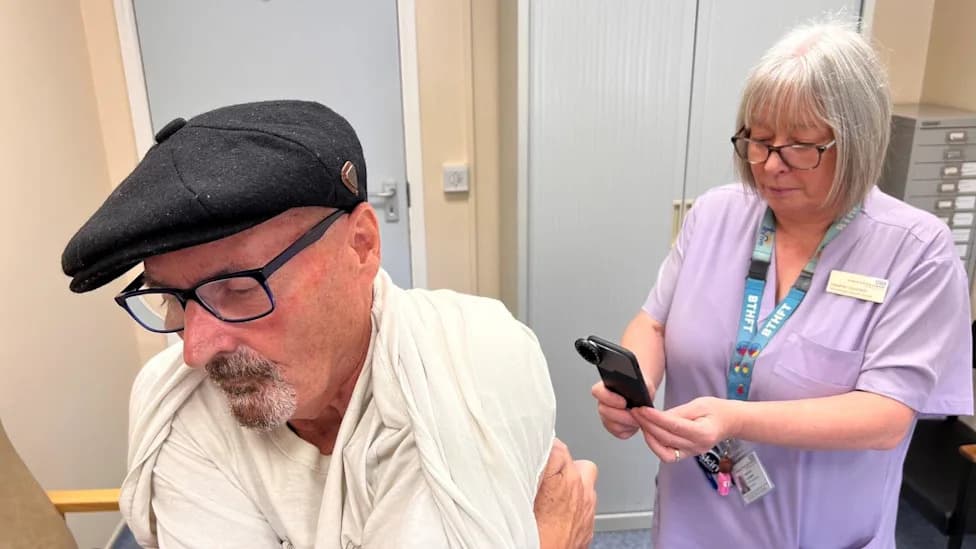
The artificial intelligence analyses images of suspicious skin lesions in minutes [BBC]
Staff at St Luke's Hospital in Bradford say a new artificial intelligence (AI) system introduced in April is transforming how suspicious skin lesions are assessed and could be a "game changer" for dermatology referrals.
Faster Triage With DERM
The clinic now uses DERM (Deep Ensemble for the Recognition of Malignancy) to scan photographs of moles and lesions during one‑stop clinics. A healthcare assistant takes three photos of a suspicious lesion and uploads them to the system, which returns an analysis in minutes. According to the company behind the technology, Skin Analytics, DERM can rule out melanoma with 99.9% accuracy; in Bradford every AI result is double‑checked by a clinician as an essential safety step.
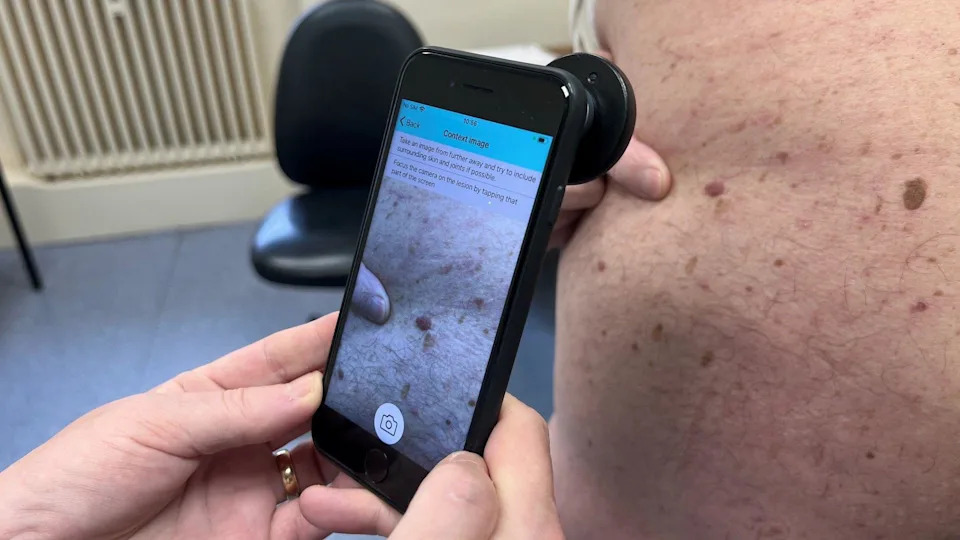
The hospital trust said artificial intelligence has helped staff see one-third more patients in clinics [BBC]
More Patients Seen, Fewer Unnecessary Procedures
Because assessments are faster, the dermatology team can see roughly 32 patients per session compared with about 24 before AI was introduced — an increase of around one‑third. The trust reports a roughly 10% reduction in unnecessary biopsies since rollout, freeing clinicians to focus on patients who need urgent care.
"This has had a big impact on all the bottlenecks — from waiting times to unnecessary investigations and being seen by a clinician," said consultant plastic surgeon Mr Zakir Shariff.
Patient Case
One patient, 73‑year‑old Lawrence Patten, who has multiple myeloma and a previous squamous cell carcinoma, was referred urgently for a suspicious mole on his back. The AI flagged the lesion as suspicious, but a specialist's assessment suggested it was likely benign. The mole will be removed and sent for pathology to confirm the diagnosis. Patten said he was relieved to be seen quickly: "It's not ticking away in my mind... The sooner they find things, the quicker they can sort it."
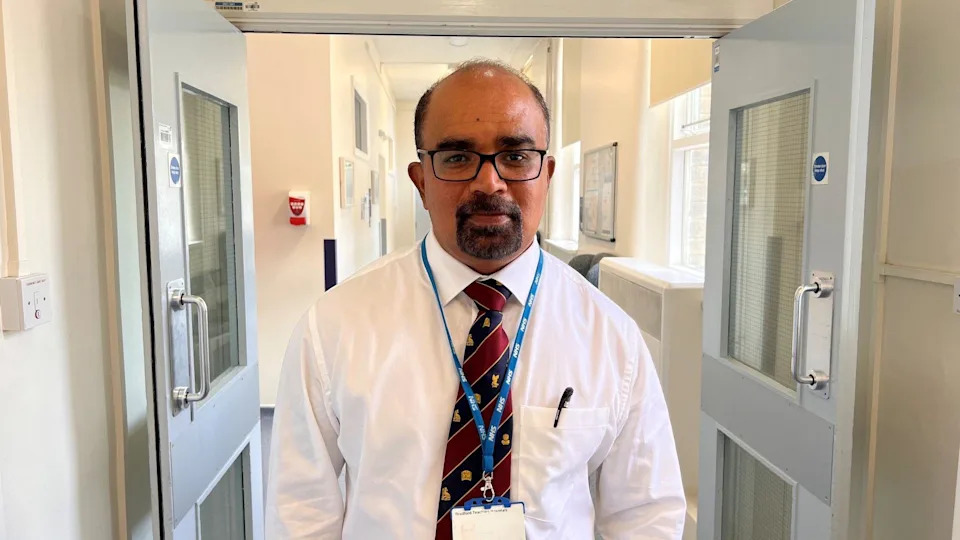
Plastic surgeon Zakir Shariff said the AI has had a big impact on waiting times [BBC]
National Guidance and Deployment
The National Institute for Health and Care Excellence (NICE) has recommended the system for use in the NHS for a three‑year evaluation period while more evidence is collected. DERM is already deployed across about 40 NHS hospital trusts, and Bradford Teaching Hospitals was the first trust in Yorkshire to adopt it.
Tom White, the trust's general manager for dermatology, said early data suggest AI could significantly reduce the number of urgent referrals that require dermatologist review, shorten waiting times and allow specialists to prioritise the most critical cases. The trust handles around 5,000 suspected skin cancer referrals a year, of which roughly 8% (about 400 patients) are confirmed malignant.
Safety and Next Steps
Local practice in Bradford keeps a clinician double‑checking every AI assessment to ensure accuracy and patient safety. As NICE collects further evidence during the three‑year evaluation, trusts using the technology will continue to monitor outcomes, biopsy rates and waiting times to validate the early benefits reported.
Help us improve.