Experts across industries are teaching AI systems the skills of their professions while debating whether that work will protect or replace human jobs. Companies such as Mercor employ large numbers of freelancers to train models, and some roles pay $20–$200 an hour. Economists and tech leaders warn of rapid, widespread disruption—McKinsey forecasts 11 million U.S. workers may need new careers by 2035, and Daron Acemoglu cautions automation could sharply increase unemployment without policy action. Proponents argue AI can remove repetitive tasks and let humans focus on higher-value work, but leaders emphasize the need for reskilling and deliberate policy choices.
Experts Teach AI Their Jobs — Hope, Risk and a Race to Reskill

Experts are training AI how to do their jobs
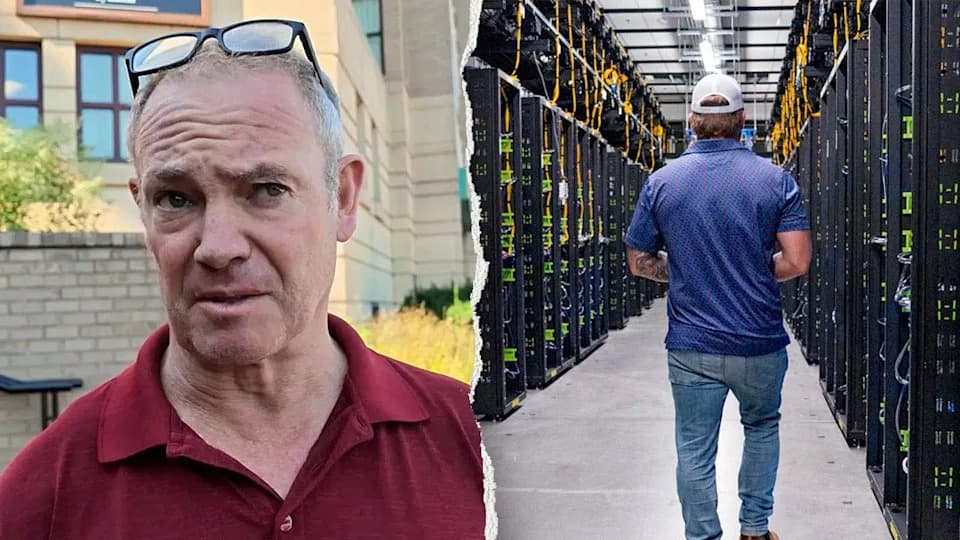
Music producer Robbie Hiser says he is confident that creative professionals will still have a role, even though he has taught artificial intelligence some techniques from his trade. Hiser worked with Mercor, a firm that helps improve large language models such as ChatGPT and Claude across many subjects, from finance to poetry.
Mercor, a multibillion-dollar company, has assembled more than 100,000 freelancers from diverse industries to share domain knowledge with AI systems. Hiser and other contractors who train these models maintain they are not preparing their own obsolescence; he argues that deeply human acts like great songwriting will continue to need a human touch.
"AI doesn't have any life experience to pull from," Hiser said. "An AI never had a girlfriend break up with it."
Public Anxiety and Economic Projections
Public concern about AI's impact on employment is widespread. A Pew Research Center study found nearly three-quarters of Americans fear AI could cost people their jobs. A September report from the McKinsey Global Institute projected that AI could push 11 million U.S. workers into new careers by 2035.

Robbie Hiser. / Credit: CBS News
Brendan Foody, CEO of Mercor, frames these shifts as part of a natural evolution: AI can remove repetitive tasks from people's workloads, freeing them to focus on more meaningful and creative responsibilities. For some freelancers, AI training gigs at companies like Mercor pay between roughly $20 and $200 an hour, and LinkedIn lists AI training among America's fourth-fastest-growing job categories.
How Firms Are Using AI Personas
The technology rollout is already underway in a range of workplaces. In Columbus, Ohio, law firm Vorys, Sater, Seymour and Pease collaborated with Stanford University's LiftLab to create AI personas modeled on the experiences and philosophies of some of its senior partners. Those personas can review documents and offer feedback that reflects the perspective of specific partners.
"AI is never going to walk into the courtroom and give an opening statement to the jury," said trial lawyer and partner Kim Herlihy. "But it helps us have additional tools to use as we prepare that opening statement."
Herlihy emphasizes the technology is meant to optimize the firm’s work rather than replace the fundamentally human elements of legal practice. "You call your lawyer because you want to look in their eye and say, 'What should I do about this issue?'" she said.

Kim Herlihy. / Credit: CBS News
Warnings From Economists and Tech Leaders
Not everyone shares the optimistic view. Nobel Prize-winning economist Daron Acemoglu warns that the current pace of automation is unprecedented. "The first phase of the Industrial Revolution took 80 years. Today it's taking place in one or two years and it's taking place across many different sectors at the same time," he said. In a worst-case scenario, Acemoglu warns unemployment could triple over the next decade if policymakers do not act.
Research already shows uneven effects: Stanford finds hiring is down for young people in the occupations most exposed to AI, including some software roles, and U.S. Census data indicate hiring and wages among recent college graduates in AI-exposed majors have declined.
Clara Shih, who led major AI groups at Salesforce and later at Meta, described how product development once involved dozens of people; now a handful using AI agents can complete similar tasks. Alarmed by the implications for young workers, she left her tech role to found a nonprofit that helps young people navigate the changing economy.

Clara Shih. / Credit: CBS News
"It's never just about the jobs. It's people's sense of self-worth. It's the fracturing of communities," Shih said.
Policy Choices and Possible Paths Forward
Both Acemoglu and other leaders stress policy choices matter. Companies could intentionally design AI to augment human workers rather than replace them; governments could adjust tax incentives to encourage hiring. Many experts argue honest public discussion and targeted policies—training, wage supports, and incentives to preserve human roles—can shape a more inclusive transition.
With time limited, Acemoglu urged action: "Because the future is so uncertain, because the future is so much subject to our choice and agency, it is all the more important that we have this discussion."
Read the full transcript for more details and context.
Help us improve.