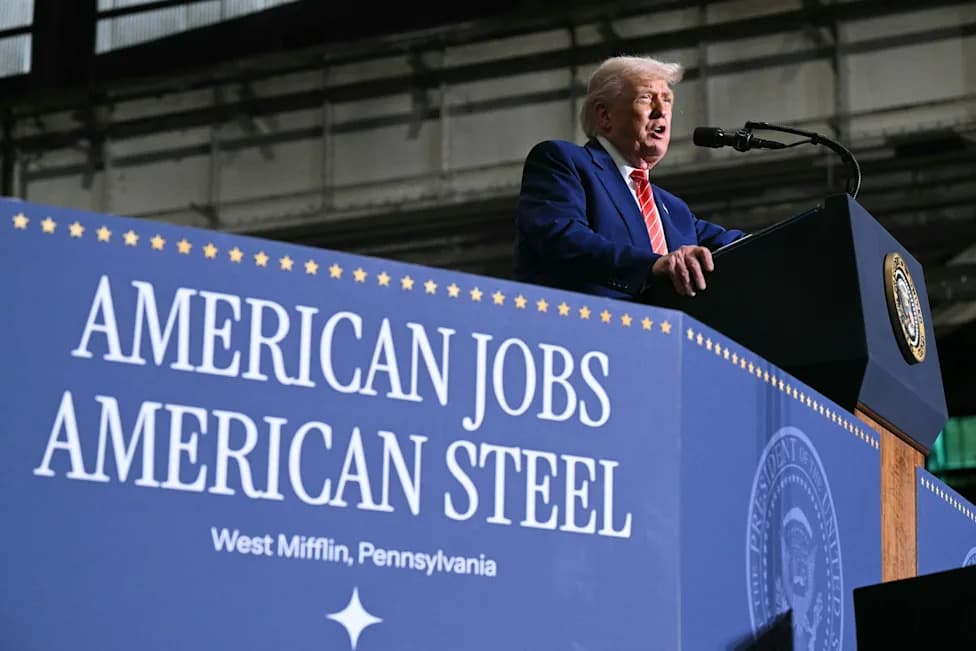
Republicans are campaigning on fears of the Democratic Party's leftward shift, highlighting proposals such as municipal, city-run bodegas. Yet the Trump administration has increased direct state involvement in strategic industries, committing more than $10 billion to stakes in firms like Intel and securing options in Westinghouse. V-Dem data show the U.S. dropped from 2nd to 16th in state-ownership ranking in 2025, prompting debate over whether this is strategic industrial policy or a slide toward personalist statism. Analysts note that while Trump centralizes power, the complexity of the U.S. economy may limit any full turn to autocracy.
Republicans Denounce 'Communism' — While Trump Expands State Control Over Industry
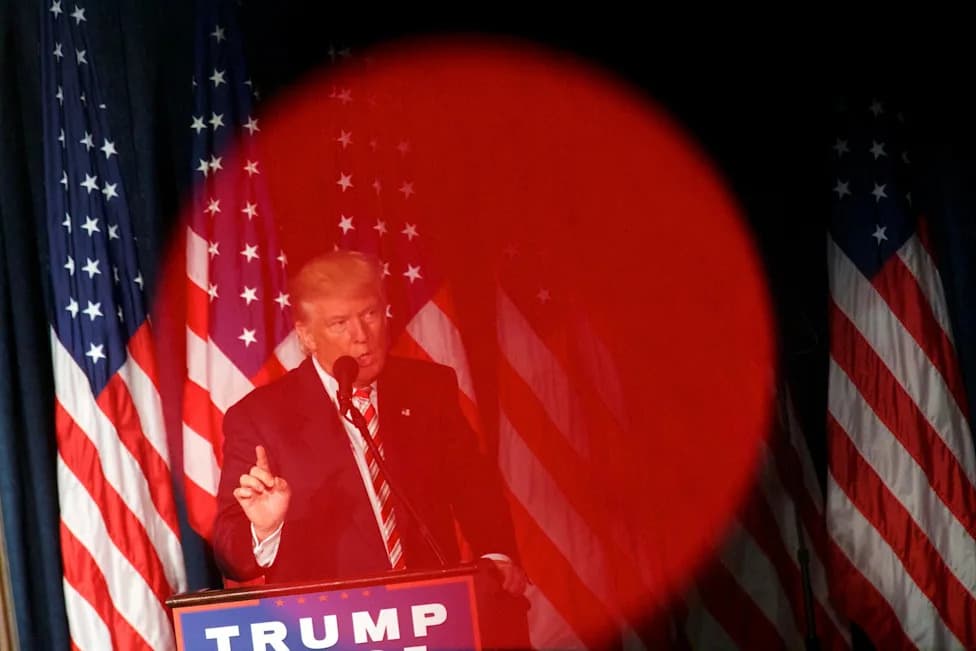
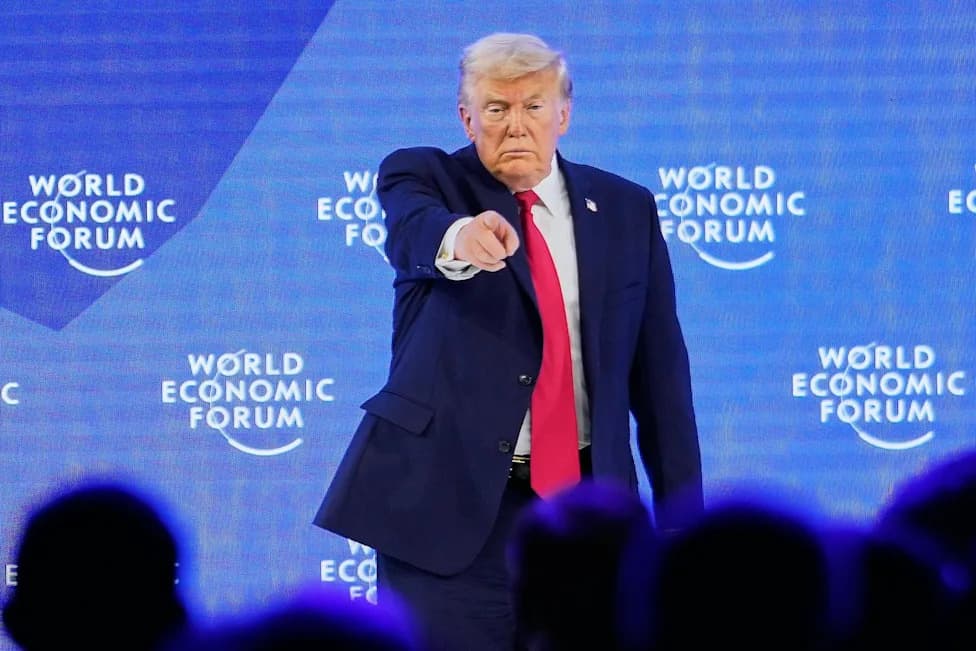
'The president's statist leanings mark a dramatic break with the market-focused presidencies of his recent predecessors, Democrat and Republican.'Photograph: Mark Makela/Getty Images
Republicans are betting that voters will recoil at what they portray as the Democratic Party's leftward drift — from municipal bodegas to broader democratic-socialist programs — and that fear will energize the GOP coalition in upcoming elections. At the center of that argument is Donald Trump, who has positioned himself as the defender against a red tide: "Together, we will defeat communism," he declares in recent ads.
Yet the facts suggest a striking irony: while Trump rails against "communism," his administration has overseen a marked increase in direct state involvement in strategic sectors of the U.S. economy. Data from the V-Dem project in Sweden, highlighted by Cullen Hendrix of the Peterson Institute for International Economics, show that between 2002 and 2024 the United States consistently ranked among the four countries with the least state ownership of the economy. In 2025 — the first year of Mr. Trump's second term, according to V-Dem's metric for "state ownership of the economy" — the U.S. slipped from 2nd to 16th place on that measure.
By November of the most recent year, the Trump administration had committed more than $10 billion to acquire stakes in companies it labeled essential to national security — from Intel to ventures exploring critical-minerals extraction — and had taken an option to invest in Westinghouse, the nuclear-reactor maker. Washington also extracted a so-called "golden share" from Nippon Steel as a condition of approving a US Steel transaction.
To be clear, America is far from a Soviet-style command economy. V-Dem still ranks U.S. state ownership lower than in 163 countries, and many market economies retain government-owned firms (Norway's state stake in its oil champion is a prominent example). Even the People's Republic of China relies heavily on private enterprise — private firms account for roughly 60% of Chinese GDP.
Security Rationale — And Strategic Weaknesses
There is a defensible argument for selective state investment in industries critical to national security and technological leadership, especially in competition with a subsidized rival like China. Yet observers say Mr. Trump's approach lacks the strategic discipline of coherent industrial policy. Instead of a coordinated, technocratic plan, critics see ad hoc acquisitions, political leverage and a tendency to treat public resources as discretionary.
That pattern shows up in multiple ways: the Supreme Court rebuffed an effort by the administration to seize trade authority from Congress, but the president continues to threaten measures such as "STOP TRADING WITH COUNTRIES WITH WHICH WE HAVE A DEFICIT." Promises like $5,000 to every American if Republicans control Congress further suggest a transactional view of the public purse. And some of the president's public-relations campaigns, including anti-communist ads, have been financed with taxpayer dollars.
Not Socialism — A Different Statism
Mr. Trump's posture is not driven by loyalty to Marxist doctrine or a commitment to uplift the working class. Instead, analysts argue his pattern more closely resembles personalist or authoritarian statism: using state power to centralize control, reward allies and strengthen political dominance. That model is different from the disciplined, long-term industrial strategy pursued by China's leadership, which relies on a large technocratic apparatus to pursue technological superiority.
Observers compare Trump's style less to Xi Jinping's technocratic state and more to personalist leaders who treated the state as a vehicle for private enrichment — from Vladimir Putin's Kremlin-centered patronage to Cold War–era Latin American strongmen who used public power to bolster family fortunes. Even interactions with industries such as cryptocurrency have raised questions about whether public office is being treated as a pathway to private gain for insiders.
Karl Marx's reflection in "The 18th Brumaire of Louis Bonaparte" — that specific social tensions can create the conditions for an unlikely figure to seize outsized power — offers one lens on Mr. Trump's rise.
That does not mean the United States is destined to become an autocracy. As Cullen Hendrix notes, it is far harder to impose personalist control over a modern, complex economy than over a simpler, resource-dependent one. Still, the willingness of many Americans to tolerate or cheer expanded executive intervention in private industry raises a pointed question: if voters recoil at proposals for city-run bodegas, why do many accept — or even applaud — an administration that consolidates private assets under political authority?
As the election cycle unfolds, that tension between rhetoric and practice will be central to debates about the role of the state, the limits of executive power, and the future shape of American capitalism.
Author: Eduardo Porter is a journalist who covers economics and politics and writes the newsletter Being There on Substack.
Help us improve.