Researchers at Deakin University blind-tested fresh meals against versions refrigerated for 24 hours and reheated to see whether leftovers taste better. From an initial shortlist, four dishes were tested by 65 adults: beef lasagna, butter chicken, dhal, and apple crumble. Only butter chicken was clearly preferred day-old (nearly 64% of paired comparisons); dhal and apple crumble were often detectable as different but not consistently preferred, and lasagna showed no reliable change. The authors conclude the "next-day effect" is modest and food-specific.
Do Leftovers Really Taste Better? Blind Tests Say One Dish Does

(Andrea Piacquadio/Pexels)
There’s a familiar pleasure in opening the fridge and finding yesterday’s meal waiting for you. Many people insist that leftovers somehow taste better the next day. A research team at Deakin University in Australia put that kitchen belief to the test using a blind sensory experiment.
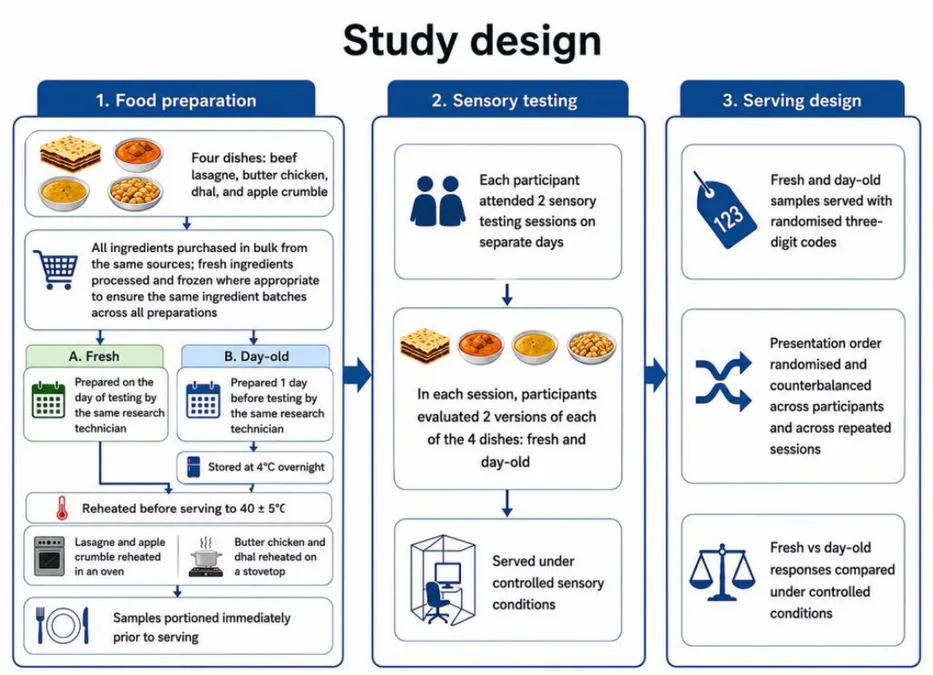
A graphical summary of the experiment. (Keast et al., Preprints.org, 2026)
Study Design
The study, available as a preprint (not yet peer-reviewed), began with a shortlist of 25 common dishes. Thirty university staff and students picked the four meals they most strongly believed improve overnight: beef lasagna, butter chicken, dhal, and apple crumble. A separate group of 65 adults then took part in controlled tastings across two sessions.
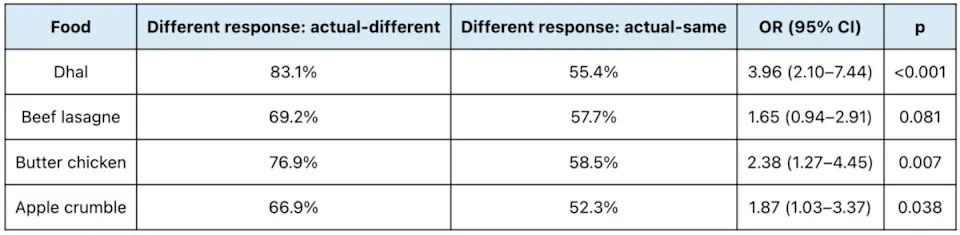
Same-different discrimination results. (Keast et al., Preprints.org, 2026)
For each dish, participants received randomly coded samples: some prepared the same day and others prepared 24 hours earlier, refrigerated, and reheated. Tasters were blind to sample age to limit expectation bias. For every food they completed three tasks: (1) a same-or-different discrimination, (2) a paired taste preference (fresh vs day-old), and (3) independent liking ratings for single samples.
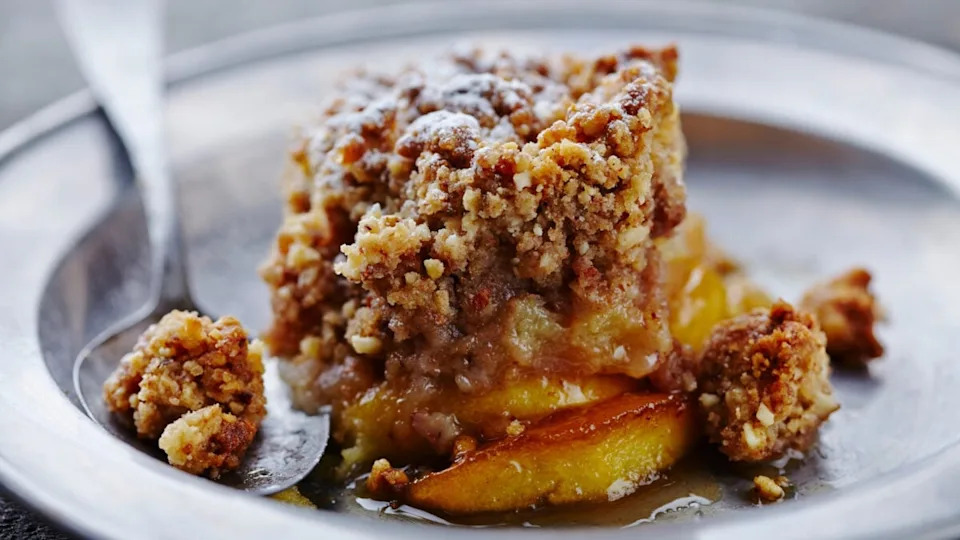
The study found no evidence that a sleepover in the fridge improves this dessert. (loooby/Canva)
Key Results
The ability to detect a change depended on the dish. Dhal was easiest to discriminate: when samples actually differed, participants said "different" 83% of the time (versus ~50% when samples were identical). Butter chicken and apple crumble were also frequently recognised as changed after refrigeration and reheating. By contrast, beef lasagna was difficult to tell apart — the study found no statistically reliable ability to distinguish fresh from day-old lasagna.
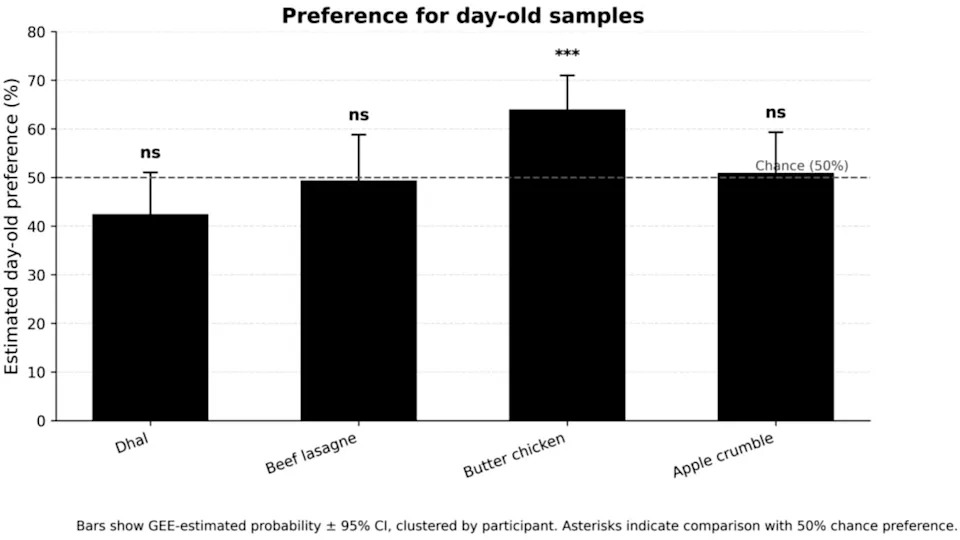
Estimated preference for day-old samples. (Keast et al., Preprints.org, 2026)
Detection did not always imply preference. Of the four dishes, only butter chicken was clearly preferred in its day-old form: nearly 64% of paired comparisons favoured the refrigerated-and-reheated butter chicken. For dhal and apple crumble, tasters often noticed differences but were about as likely to prefer the fresh version as the leftovers. Lasagna showed no meaningful preference either way. When samples were rated on their own (without side-by-side comparison), there were no statistically significant differences in overall liking scores between fresh and day-old versions for any dish.
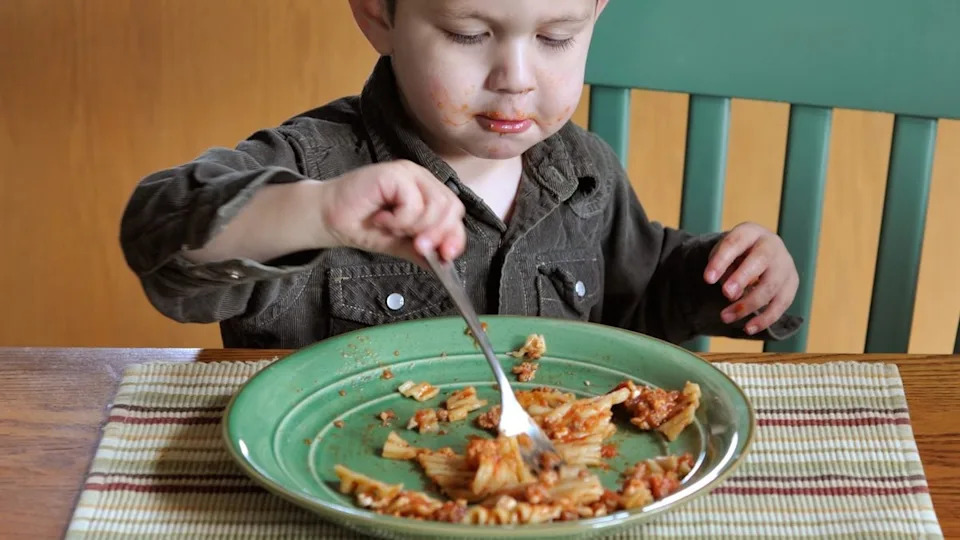
Is this from yesterday? (southsidecanuck/Canva)
Possible Explanations
The experiment measured sensory outcomes rather than chemistry, but several established food‑science mechanisms may help explain the findings:
- Multisensory integration: Flavor combines aroma, taste, texture, temperature, and memory. Sauce-rich dishes like butter chicken may change more overnight as aroma and flavor compounds redistribute.
- Warmed-over flavor: Stored and reheated meats can develop stale or cardboard-like notes from fat oxidation. Spices and sauce may mask these off-notes in some dishes.
- Retrogradation: Rice and pasta can firm up after cooling as starch molecules recrystallize, which may harm the texture of layered pasta dishes like lasagna.
- Expectation effects: Belief that a dish will taste better can alter subjective ratings and brain responses; blind testing reduces but does not eliminate such influences.
Limitations and Takeaway
The authors caution that this is a preprint and the sample size (65 participants tasting four recipes) limits broad generalisation. They published their exact recipes in supplementary materials for replicability. The study’s central conclusion is precise: the "next-day effect" is modest and food-specific — some dishes (but not all) may taste better after a night in the fridge, and butter chicken stood out in this experiment.
"The next-day effect should therefore be understood as a product-specific sensory outcome rather than a general property of meat-based, curry-style, or savory foods," the researchers write.
So the next time someone claims their curry is always better the day after, you can tell them science says: it depends on the dish.
Reference: Keast et al., Preprints.org (2026). The study is a preprint and has not completed peer review.
Help us improve.