Study Finds Homework Practices Often Reinforce Class Inequality. Interviews and report-card analysis show teachers tend to reward homework completion—benefitting students with college-educated, supportive parents—while judging students from lower-income families more harshly when homework is incomplete. Research indicates homework produces larger gains for higher-income students and that parents with limited schooling may struggle with modern math methods. The authors argue that current homework policies can widen achievement gaps and reflect a meritocratic belief that overlooks structural disadvantage.
“There’s Only So Far I Can Take Them”: How Homework Policies Reinforce Inequality

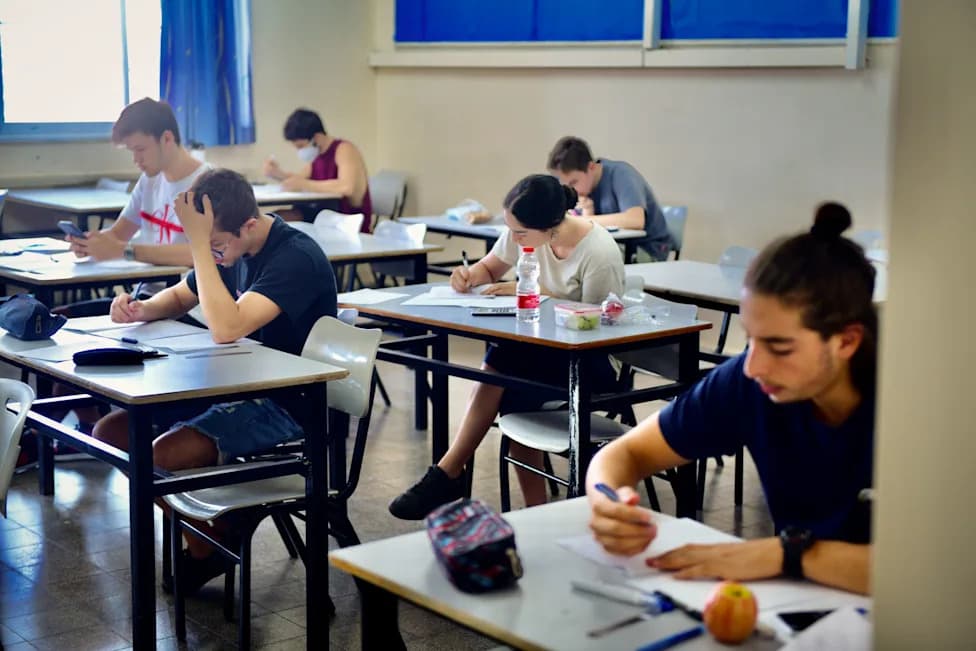
Middle-class students often enjoy many advantages that other students don't when it comes to getting help at home with their homework.Kentaroo Tryman via Getty Images
When “Gina,” a fifth grader at a suburban public school on the U.S. East Coast, completed her math homework she rarely worried about getting help at home. Her mother—a married, college-educated mid-level manager—re-explained lessons, taught concepts in different ways and checked Gina’s work.
By contrast, “Jesse,” who attends the same school, lives with a single mother who struggled in school and still finds some fifth-grade math incomprehensible. Jesse is eligible for free lunch and his mother often cannot provide the same kind of homework support.
What We Investigated
We analyzed report cards and interviewed teachers, students and parents to understand whether teachers reward students who complete homework and penalize those who do not—and whether those judgments correlate with family income and parental education.
Key Findings
Across the schools we observed, teachers routinely gave favorable marks and classroom advantages to students from middle-class families whose parents are college educated and actively support homework completion. Students from lower-income families, whose parents often have limited formal education or are juggling multiple responsibilities, were more likely to be judged pessimistically when homework was incomplete.
“I feel like there's a pocket here — a lower income pocket. And that trickles down to less support at home, homework not being done, stuff not being returned and signed. It should be almost 50-50 between home and school. If they don't have the support at home, there's only so far I can take them,” one fourth-grade teacher told us.
Some teachers explicitly expect parents to check homework and contact teachers if answers are wrong. One seventh-grade teacher described posting homework answers online and expecting students and parents to use them to identify areas needing extra help—an approach that favors students with parental guidance, technological access and time.
Why This Matters
Research shows homework produces larger achievement gains for higher-income students than for lower-income students. Studies from the U.S. and the Netherlands suggest that homework can widen achievement gaps rather than close them. Parents with limited schooling often find modern math methods unfamiliar or experience math anxiety, making it harder for them to help. Meanwhile, more privileged families are more likely to afford tutors or feel empowered to advocate for their children at school.
In many classrooms we observed, teachers explained these differences using the “myth of meritocracy”—the belief that students have equal opportunities and that differences in outcomes come down to effort alone. That framing can obscure structural disadvantages and lead everyday classroom practices to reinforce inequality.
Implications
We argue that teachers and schools should account for economic and social disparities when designing instruction and grading. Possible changes include assigning homework that can be meaningfully completed in class, offering more in-school time for practice and feedback, simplifying parent-facing materials, proactively reaching out to families, and creating alternative ways for students to demonstrate learning that do not rely solely on out-of-school support.
About This Article: This piece is based on interviews and report-card analysis conducted for a study published in The Conversation on September 26, 2022, by Jessica Calarco (Indiana University) and Ilana Horn (Vanderbilt University).
Help us improve.