Nikole Hannah-Jones publicly reflected on the consequences of keeping her daughter in neighborhood public schools out of equity-driven principles, later acknowledging that the choice left her daughter underprepared for selective high school admissions. Observed problems included inconsistent teaching, ungraded work and weak academic expectations; intensive tutoring helped Najya recover. The critic argues that, beyond historical racism, policy choices—union rules, discipline policies and flawed teaching methods—also shape outcomes, and points to charter networks as examples of practices that appear to raise achievement.
When Principles Collide With Parenting: Nikole Hannah-Jones’s Schooling dilemma
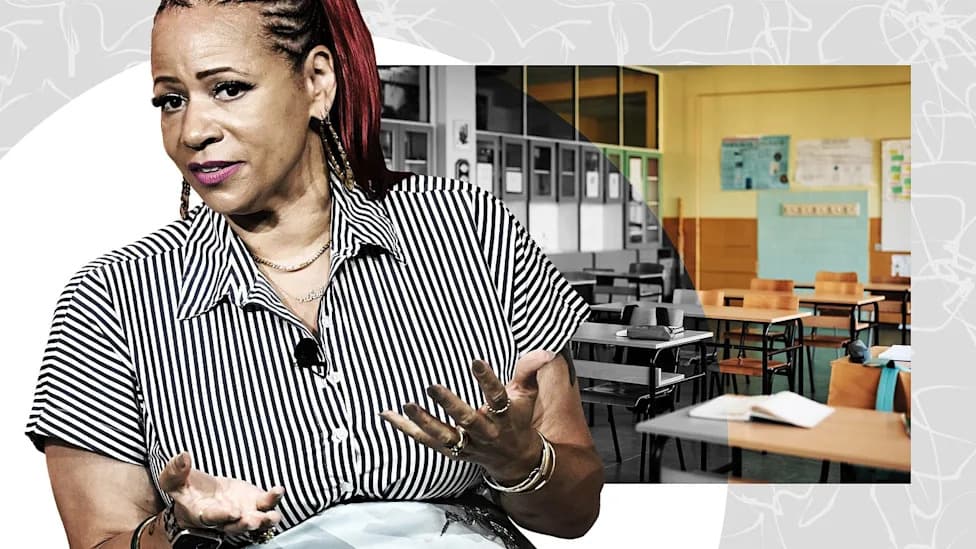
(Photo illustration by Bill Kuchman/The Bulwark| Photos: Getty, Shutterstock)
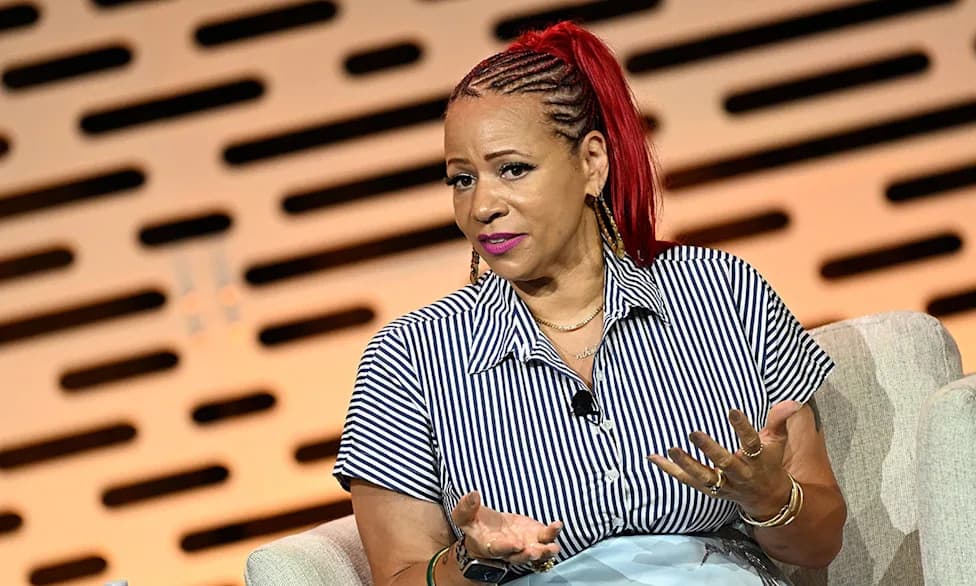
Nikole Hannah-Jones, the journalist behind the 1619 Project, has publicly reflected on a painful parental decision: to keep her daughter, Najya, in neighborhood public schools out of a commitment to equity—and later to question whether that choice left her daughter academically unprepared for selective high school options.
The Moment That Sparked The Debate
According to Hannah-Jones, the confrontation came when Najya, now a high-school junior, realized she lacked the preparation to qualify for one of New York City's most selective public high schools. Najya challenged her mother:
"So you had money to send me to one of the best schools, and you chose not to? Because other kids are disadvantaged, you didn't want to put me in a great school?"
Hannah-Jones answered with candor:
"Najya was asking what I'd accomplished by not choosing the 'best' school for her. And the honest answer is, I don't know. When it comes to the choices my husband and I have made about public education, these days I feel that I failed both my values and my child."
What Happened In School
The family placed Najya in PS 307 for elementary school and Unison for middle school. Hannah-Jones describes a familiar pattern in struggling schools: inconsistent teacher attendance, under-supervised classrooms during lunch, substitute teachers who did little instruction, and slow administrative responses to parental concerns. In middle school she discovered ungraded tests and uncorrected work, yet her daughter received high marks and no regular homework—symptoms, she argues, of low institutional expectations and weak instruction.
The transition to a more demanding high school revealed substantial learning gaps. After diagnostic tutoring, Najya was found to lack core arithmetic skills—long division and fractions—as well as foundational algebraic understanding. Intensive tutoring and school support helped her pass algebra and finish her first year with As and Bs, but the recovery was hard-won and not guaranteed for many students in similar circumstances.
Broader Causes The Critic Raises
While Hannah-Jones emphasizes structural racism and inequality as root causes of unequal schooling, the critic who wrote the original piece adds additional explanations that they feel were underemphasized:
- Union work rules and contractual protections that can limit accountability for some teachers.
- Discipline and classroom-management policies that may prioritize nonpunitive strategies but sometimes fail to support instruction.
- Pedagogical fads—such as the "whole language" approach to reading or the "new math" of past decades—that critics say left cohorts of students without essential skills.
Examples Of What Works
The article highlights charter networks like KIPP and Success Academy as counterexamples: publicly funded schools that, proponents argue, maintain strict behavioral expectations, emphasize academic fundamentals and often post strong test results for low-income Black and Hispanic students. Success Academy's founder, Eva Moskowitz, is quoted with the network's reported outcomes:
"At Success Academy, 91 percent of our students test proficient in English and 96 percent in math, compared with about 50 percent and 57 percent of their district-school peers, respectively... 95 percent of graduates this year passed at least three AP exams, and 60 percent passed at least seven."
Supporters say these examples show that focused practices and strong expectations can produce results despite historical disadvantage; skeptics counter that lotteries, selection effects and intensive school cultures complicate comparisons.
A Personal Note And A Modest Proposal
The critic adds a personal anecdote: attending a low-performing urban school through third grade left them with persistent arithmetic weaknesses after switching to a suburban school. Their conclusion: the legacy of racism and poverty is central, but so are policy choices, instructional approaches and school management. Rather than only diagnosing historical injustice, they urge attention to specific practices that raise outcomes for disadvantaged students—strong curriculum, reliable instruction, meaningful accountability, and effective school cultures.
Conclusion: The Hannah-Jones episode is a painful illustration of the trade-offs families and advocates face when values about equity intersect with the urgent, day-to-day needs of children's learning. The debate it provokes—about responsibility, reform and what strategies actually serve students—remains essential for anyone concerned about educational opportunity.
Help us improve.