The USPS is piloting forward-facing Nextbase dashcams in about 100 Washington, D.C. delivery vehicles that start recording when trucks pull out of the facility. USPS says the cameras record no audio and do not use ALPR, but key questions remain about footage retention, who can access recordings, whether identifying details will be redacted, and whether vendors could reuse data commercially. Given USPS’s recent multi-billion-dollar losses, independent safeguards, clear retention rules, and public oversight are needed before any wider rollout.
USPS Tests Forward-Facing Dashcams in Mail Trucks — Key Privacy and Oversight Questions Remain
Image: Deposit Photos
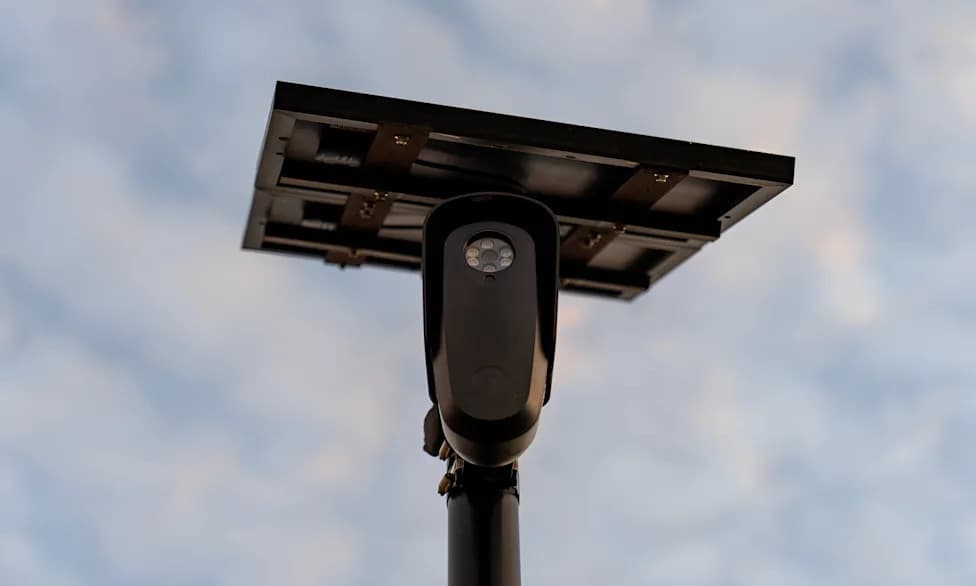
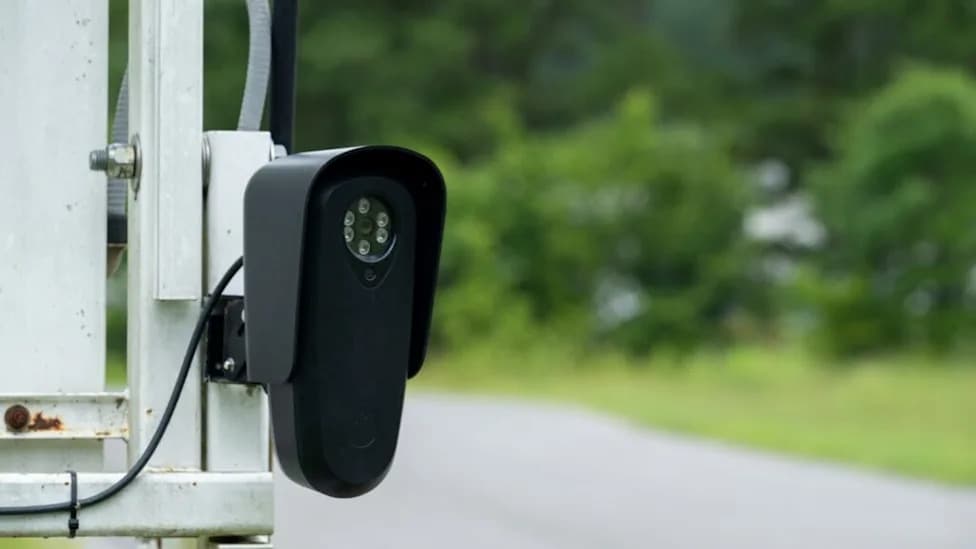
The United States Postal Service is running a small pilot that installs forward-facing Nextbase dashcams in roughly 100 delivery vehicles around Washington, D.C. According to a labor-relations notice sent to National Association of Letter Carriers President Brian Renfroe and reporting by 404 Media, the cameras begin recording when a vehicle leaves the postal facility and is put in drive, capturing roads, signs, sidewalks and whatever lies ahead.
USPS says the trial includes privacy safeguards: the cameras record no audio and do not use automatic license-plate-reader (ALPR) software. But those assurances do not eliminate broader privacy and governance concerns about how recorded imagery will be stored, processed, accessed or shared.
What We Know—and What We Don’t
The agency has explained the pilot’s goal plainly: to take advantage of the Postal Service’s extensive, frequent coverage of streets across communities. As the labor-relations communication put it:
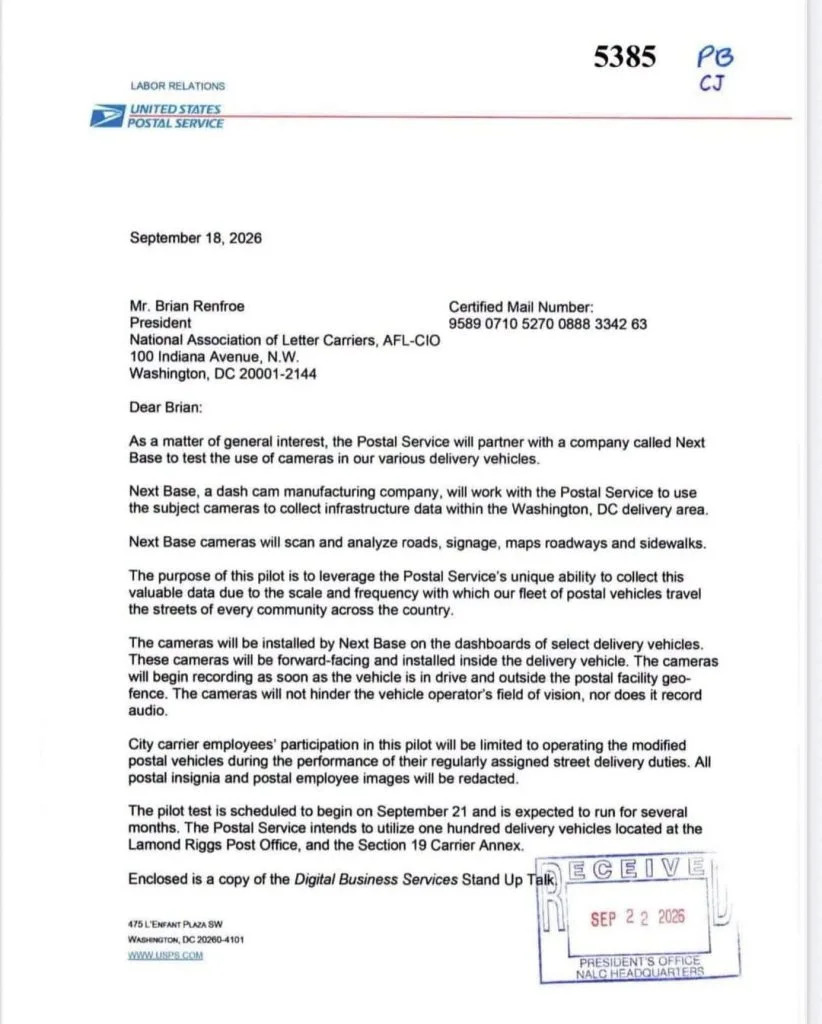
Image: Facebook – NALC Branch 238
"The purpose of this pilot is to leverage the Postal Service's unique ability to collect this valuable data due to the scale and frequency with which our fleet of postal vehicles travel the streets of every community across the country."
That rationale may be sound for road and accessibility data, but important operational and privacy details remain unconfirmed:
- Retention: How long will raw footage and processed imagery be kept?
- Access: Who inside USPS — and which vendors or outside agencies — can view the recordings?
- Processing: Which Nextbase model is in use, and is video analyzed onboard the vehicle, in the cloud, or both?
- Redaction: Will faces, license plates, and house numbers be automatically blurred or otherwise redacted?
- Commercial Use: Could vendors or the manufacturer use footage to train machine-learning models or license imagery to third parties?
- Employee Use: May supervisors review footage for employee performance evaluation, discipline, or route auditing?
- Legal Sharing: Under what legal authority could footage be shared with law enforcement or other government agencies?
Why This Matters
USPS reported a $9 billion GAAP net loss for fiscal year 2025 and projects an $8.1 billion loss for FY2026. That financial pressure creates an incentive to extract additional value from the agency’s existing assets, including its nationwide delivery network. While there is no public evidence that USPS intends to sell neighborhood imagery to mapping companies or insurers, similar programs (e.g., Google Street View, deployments by autonomous-vehicle firms) show how valuable repeated, high-resolution street-level data can be.
Using delivery vehicles as a sensing platform could provide legitimate public benefits — such as monitoring road conditions, identifying accessibility problems, or supporting public-works planning — but those goals require a clear governance framework to protect privacy and public trust.
Recommended Safeguards Before Scaling
- Publish explicit data-retention limits and deletion policies for raw and processed footage.
- Require vendor contracts that prohibit commercial reuse, resale, or model training without express public consent.
- Mandate automated redaction for identifying details where feasible (faces, license plates, house numbers) and document what redaction methods are used.
- Prohibit routine use of footage for employee performance evaluations unless negotiated with bargaining units and subject to clear rules.
- Establish independent oversight and public reporting before any expansion beyond the pilot.
If USPS intends to scale this program, the burden of transparency lies with the agency. Clear answers about retention, access, redaction, legal sharing, and potential commercial use are the minimum required to assess whether the program serves the public interest without eroding privacy protections.
Help us improve.