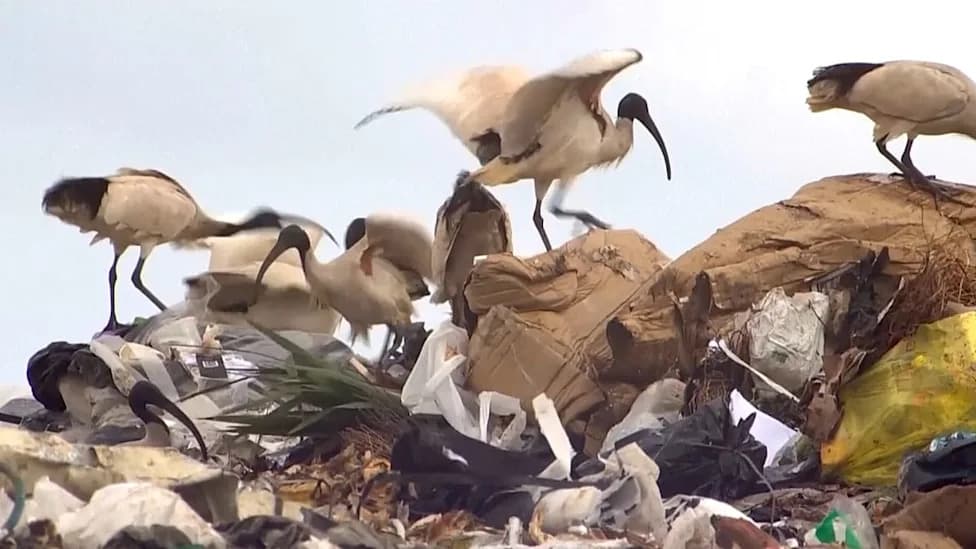
Ecoalf partners with nearly 5,000 fishermen through its Upcycling The Oceans initiative to recover marine waste and transform it into textile raw materials. Since 2015 the project has retrieved over 2,000 tonnes of debris and processes plastic bottles into a fibre called Ocean Yarn, which is then made into fabric at Ecoalf's Madrid facilities. Founded in 2009, Ecoalf now reports roughly €65 million in annual revenue, employs about 300 people and champions eco-design and circularity — while acknowledging recycling alone cannot solve the wider problem of overproduction and overconsumption.
From Ocean Waste to Wardrobe: Inside Spain’s Ecoalf-Led Sustainable Fashion Revolution
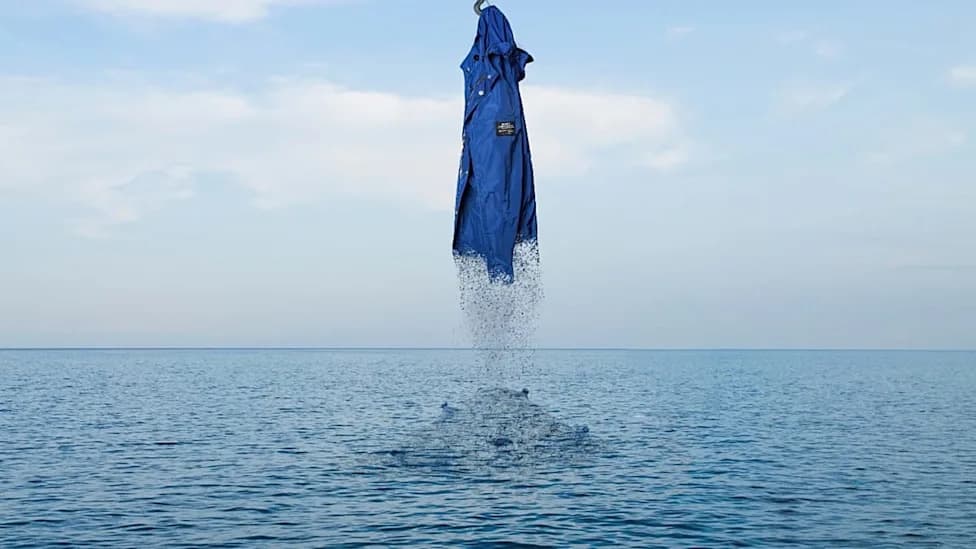
From ocean waste to fabric: inside Spain’s sustainable fashion revolution
Nearly 5,000 fishermen work with a single non-profit foundation behind Spanish sustainable brand Ecoalf. Each day those fishers pull debris from their nets, and the Ecoalf Foundation has built a processing chain that converts recovered waste into raw materials and, ultimately, textile.
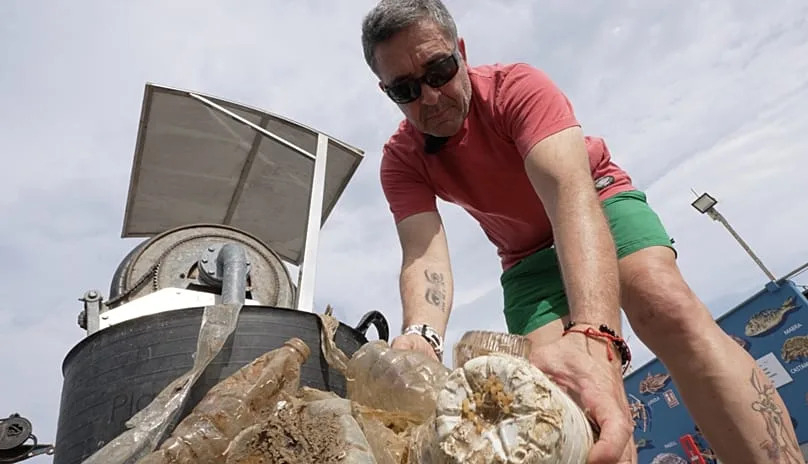
Fisherman Tony Beltrán showing some of the waste caught in the nets off the coast of Gandía, south of Valencia. September 2026. - © Monica Pinna, Euronews
Turning Marine Rubbish Into Fabric
"Plastic alone now accounts for around 80% of everything we bring up. This is our daily reality," says fisherman Tony Beltrán as he displays the debris his nets collected off the coast of Gandía, south of Valencia. "Even before recycling became popular, we were already collecting it; the only difference was that we didn't separate it."
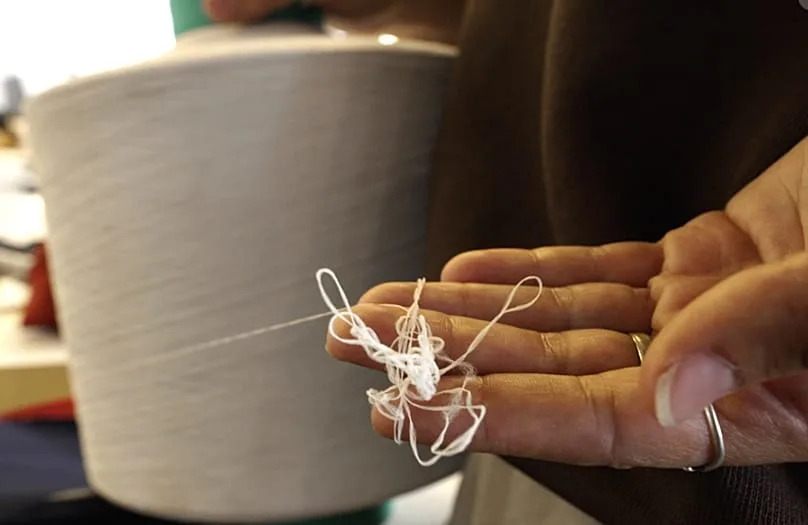
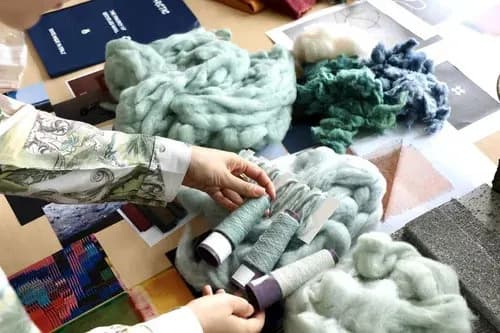
Ocean Yarn, the fiber produced from plastic bottles recovered from the sea. - © Monica Pinna
Launched in 2015 alongside the Ecoalf Foundation, the Upcycling The Oceans project has recovered more than 2,000 tonnes of marine waste — roughly the equivalent of 100 truckloads. The initiative now operates in about 80 ports and has expanded beyond Spain to France, Italy, Greece, Egypt and Thailand. Still, the Foundation warns the effort is modest compared with the scale of the problem: it estimates that every minute an amount of plastic equal to a truckload enters the world's oceans.
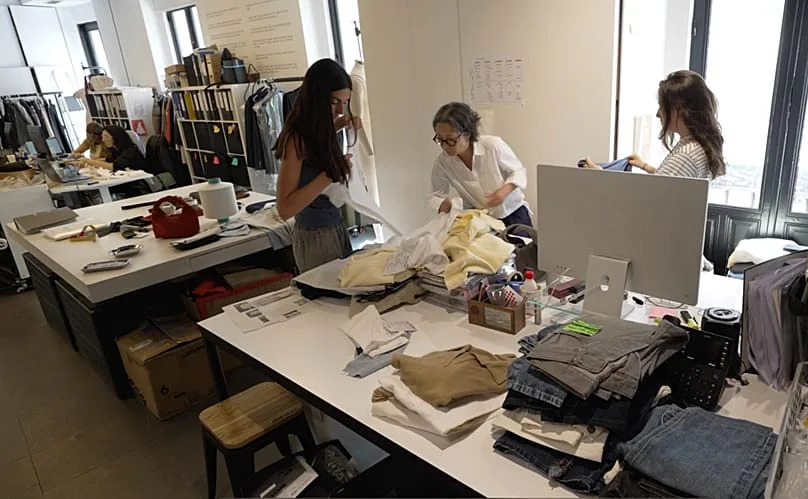
Julie Sohn, Ecoalf's Creative Director at Madrid's headquarters. - © Monica Pinna
"Our goal has always been to bring together 10,000 fishermen across the Mediterranean so that, together, we can help clean up the Mediterranean Sea,"
From Bottles And Nets To Ocean Yarn
Most recovered items — glass and metal, for example — follow standard recycling streams. Only about 5% of the material pulled from the water consists of plastic bottles. Ecoalf processes those bottles into a material it calls Ocean Yarn. As Ángela Pérez, Ecoalf’s textile innovation and sustainability expert, explains: "The first step, once the waste has been collected, is to shred it and turn it into flakes and then pellets — that's the stage before spinning."
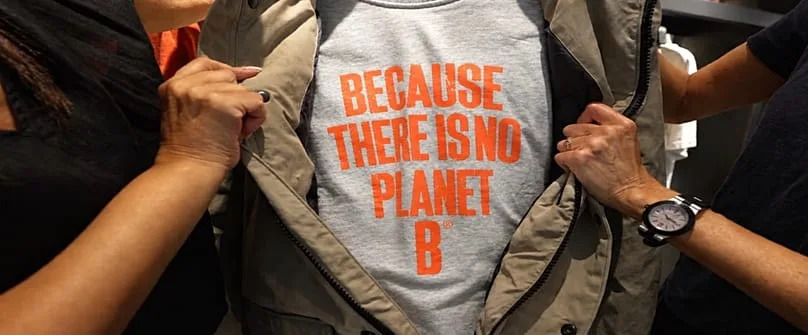
Ecoalf's slogan, "There is no Planet B," is featured throughout its collections. - © Monica Pinna
At Ecoalf's Madrid headquarters, Ocean Yarn and other recycled inputs are converted into finished fabrics. Since its founding in 2009, Ecoalf has broadened its feedstock beyond bottles to include reclaimed fishing nets, old tyres and recycled natural textiles such as cotton and wool. The company says this mix reduces the environmental footprint of both production and the finished garment while preserving appearance and quality.
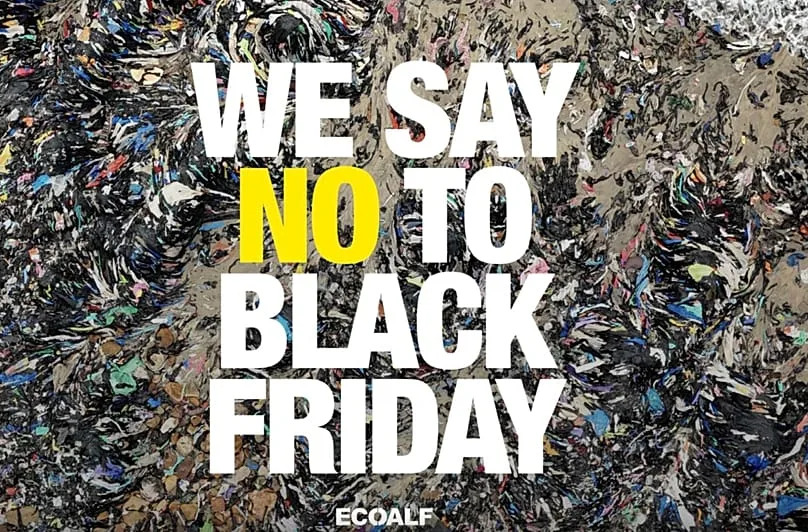
Ecoalf anti Black Friday campaign. - © Ecoalf
Designing For Circularity
Ecoalf applies circularity to design choices from the outset. "Circularity influences the decisions a fashion designer makes throughout the design process," says Julie Sohn, Ecoalf's creative director. "It changes everything from the very beginning. Everything is designed so the garment can be completely disassembled without extra processing and re-enter the circular economy."
The company began with a clear mission: prove that a business can be commercially successful while helping to transform one of the world’s most polluting industries. Seventeen years on, Ecoalf has grown into a global brand reporting annual revenues of about €65 million, employing some 300 people and operating dozens of stores worldwide. Its slogan, "There Is No Planet B," appears across collections and campaigns as a constant environmental reminder.
"The problem we've been facing in recent years is mass overconsumption and overproduction. Brands need to move beyond sustainable capsules or focusing on a single material. We need to learn to design with eco-design principles from the very beginning,"
The Bigger Question
Ecoalf is a striking example of the circular economy in action, but its work also highlights a harder truth: recycling existing waste can mitigate harm, but it cannot alone compensate for ongoing overproduction and rampant consumption. The company’s efforts showcase an important piece of a much larger puzzle — policy, industry-wide change and shifts in consumer behaviour remain essential to reduce new waste at source.
Location note: Waste recovery efforts described here are concentrated in the Mediterranean and ports connected to the Upcycling The Oceans project; processing and fabric production take place at Ecoalf’s Madrid facilities.
Help us improve.