Summary: The Trans‑Caspian Corridor, backed by the EU, aims to cut transit times from about 35 days to 15–20 by combining targeted infrastructure upgrades with strengthened "soft connectivity": digital documentation, harmonised customs and streamlined border procedures. Stakeholders at the Tashkent conference highlighted TRACECA’s role and called for corridor‑wide coordination and predictable transit times. Key risks include western capacity bottlenecks and Black Sea security; the China–Kyrgyzstan–Uzbekistan rail link could add up to 15 million tonnes a year, increasing urgency for reform.
Trans‑Caspian Corridor Pushes To Halve Transit Times — EU And Central Asia Back Faster, Predictable Trade
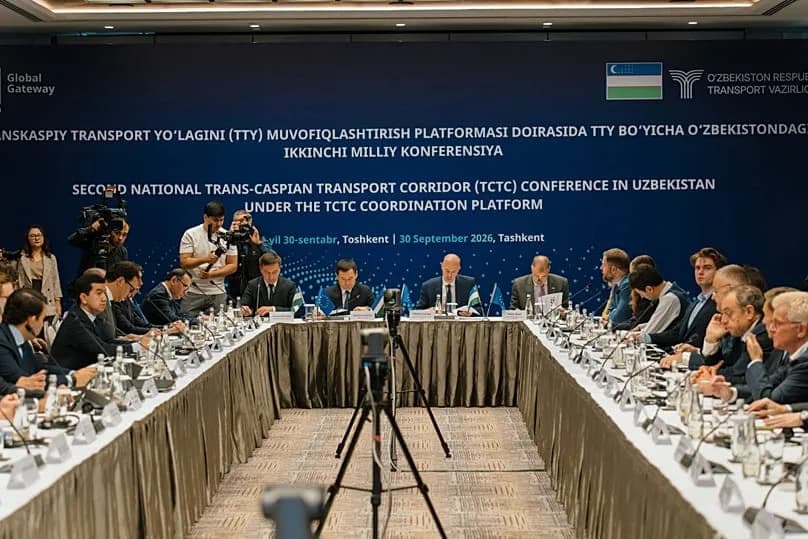
Second National Conference on the Trans-Caspian Transport Corridor in Tashkent - Delegation of the EU to Uzbekistan
Countries along the Trans‑Caspian Corridor, supported by the European Union, are pursuing a significant acceleration and smoothing of trade routes between Central Asia and Europe. The shared ambition is to cut current transit times from roughly 35 days to about 15–20 days by combining targeted infrastructure upgrades with streamlined cross‑border procedures and digital systems.
Route And Challenge
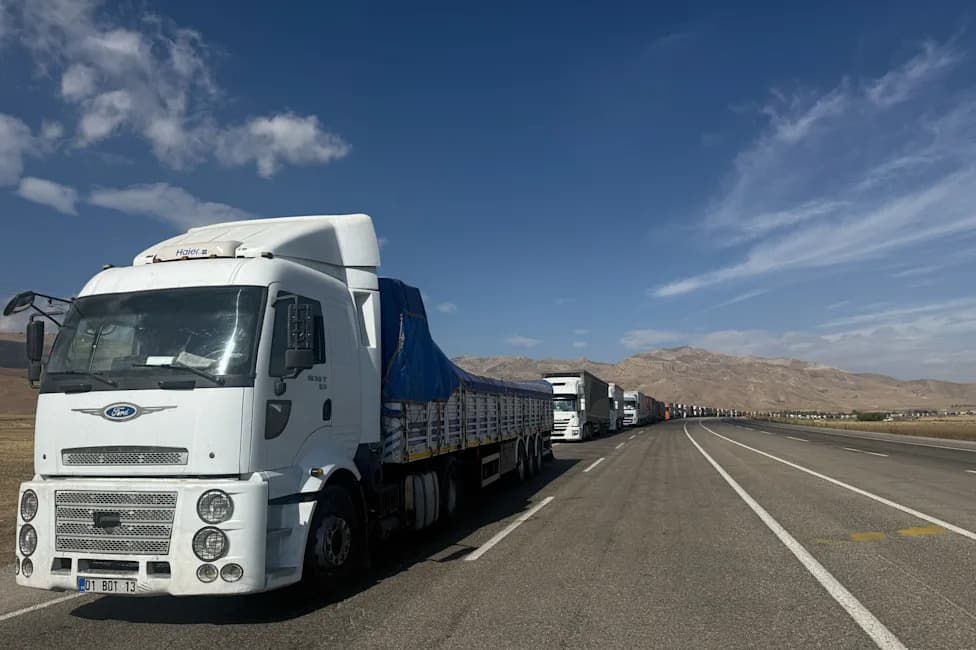
For freight moving west from Uzbekistan, the corridor typically runs through Kazakhstan to the Caspian Sea, crosses by ferry to Azerbaijan, then continues through Georgia and Türkiye toward European markets. The corridor links railways, roads, ports and maritime services, and its effectiveness depends on seamless cooperation across several national transport systems.
Conference In Tashkent: Focus On Interoperability
At the second National Conference on the Trans‑Caspian Transport Corridor in Tashkent, European and Uzbek officials, international financial institutions and transport operators discussed priority investments, project preparation, logistics, digitalisation and faster border procedures. Strengthening the interoperability of the corridor’s many components was a central theme.
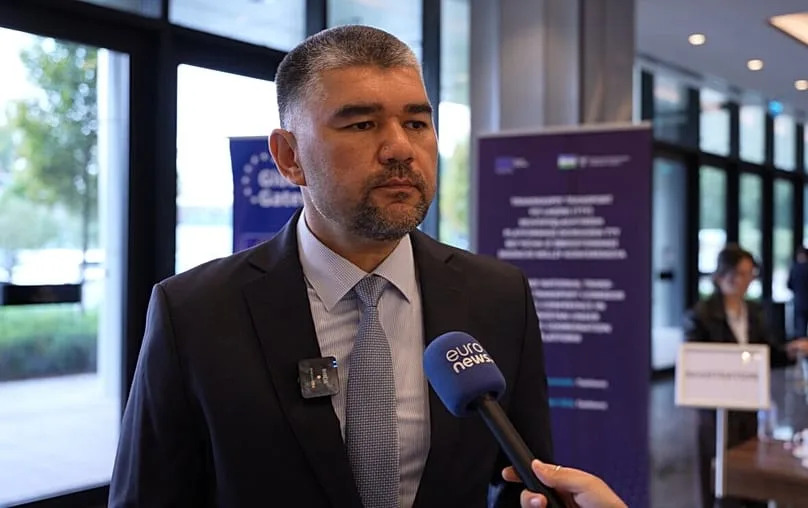
Jasurbek Choriyev, Secretary General of TRACECA - Euronews
"Digital connectivity and cross‑border facilitation and simplification of procedures will be the number one priority for the next four years," said Jasurbek Choriyev, Secretary General of TRACECA, underscoring a shift from solely physical investment toward so‑called "soft connectivity."
Pēteris Ustubs of the European Commission's DG INTPA urged a corridor‑wide approach: harmonised customs, widescale adoption of electronic documentation and closer operational coordination so that freight moves predictably end to end.
Soft Infrastructure: Electronic Docs And Single Permits
EU Ambassador Toivo Klaar emphasised that simplifying border procedures — for example, moving to agreed electronic documents and a unified permit system — would make the corridor far more competitive. "That is perfectly possible. It has been done elsewhere, and it is about political will. It is about cooperation," he said.
Capacity And Security Risks
Reducing transit times also means addressing capacity bottlenecks in the western segments of the route and maritime constraints. Choriyev pointed to new short rail links involving Azerbaijan, Armenia, Nakhchivan and Türkiye that can better integrate the network. At the same time, the International Maritime Organization’s warnings about renewed attacks on civilian merchant ships in the Black Sea and the Sea of Azov have raised concerns about maritime safety and ferry capacity for corridor traffic.
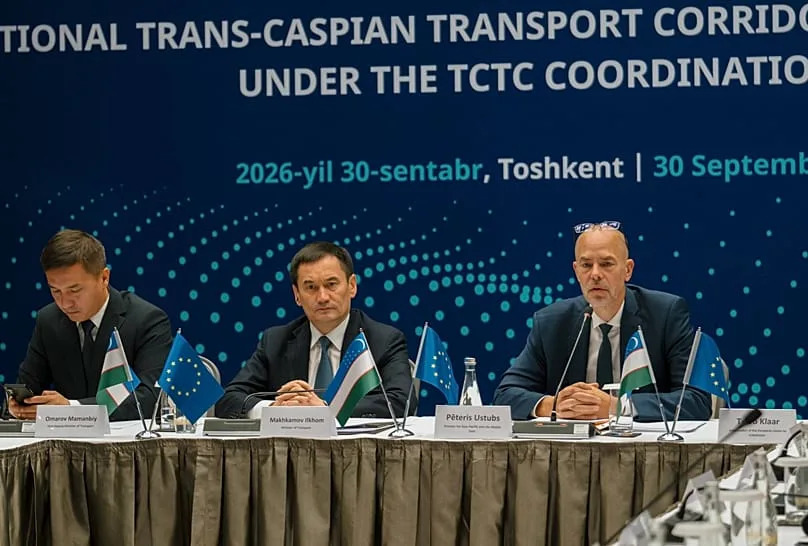
Transport Minister Ilkhom Makhkamov and Pēteris Ustubs, Director for Asia and the Pacific DG, INTPA - Delegation of the EU to Uzbekistan
Uzbekistan’s Strategy
As one of two doubly landlocked countries, Uzbekistan faces high transport costs that add materially to the price of its exports. Transport Minister Ilkhom Makhkamov said Tashkent is seeking stakes in Caspian and Black Sea port infrastructure, expanding ferry or barge capacity on the Caspian, and investing in related projects in Azerbaijan and Georgia.
Domestic capacity constraints matter too: shared passenger and freight lines limit cargo throughput. A planned high‑speed passenger line between Tashkent and Samarkand aims to free capacity for freight, which Hikmatulla Rahmetov of Uzbekistan Railways expects will "decrease the pressure on our cargo flow" and reduce operating costs.
New Eastern Flows
The China–Kyrgyzstan–Uzbekistan railway could channel substantial additional cargo into the corridor from the east. Uzbekistan Railways estimates the route might eventually carry up to 15 million tonnes a year, much of it destined for European markets — reinforcing the urgency of coordinated reforms and capacity upgrades.
Outlook: Achieving the 15–20 day target will require a combined push on hard infrastructure, digital systems and political coordination: harmonised customs, electronic documentation, single‑permit schemes, and targeted investments in ferry and port capacity — all implemented across multiple sovereign networks.
Help us improve.