UK Expansion: The Pharmacy First scheme has been expanded to cover five more minor conditions so pharmacists can assess and treat patients without GP referrals. Purpose: The policy aims to relieve pressure on GP surgeries and emergency departments and is supported by about £340 million in funding. Context: Scotland’s broader programme — used by roughly a third of residents annually — served as a model. Limitations: Experts warn the initiative cannot substitute for long-term investment to address chronic NHS underfunding and ongoing concerns about pharmacist training and remuneration.
U.K. Expands Pharmacy First — A Useful Triage Tool, But Not a Cure For NHS Underfunding
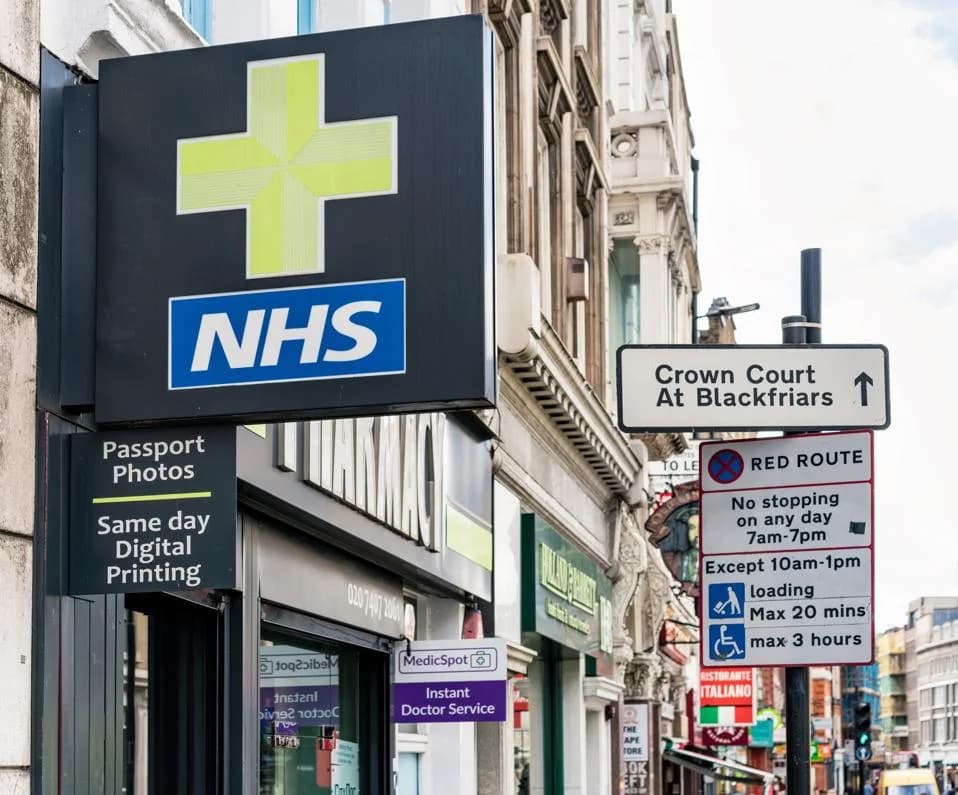
A street in Southwark, London, with a NHS Pharmacy in the foreground.getty
The UK government has expanded the NHS's Pharmacy First scheme, adding migraines, acne, scabies, ear infections and allergic rhinitis to the list of minor conditions that trained pharmacists can assess and treat without a general practitioner (GP) referral. The move aims to speed access to care, reduce pressure on GP appointments and ease demand at emergency departments, but many experts warn it does not address longer-term funding and capacity problems within the NHS.
What the Expansion Does
Pharmacy First, which launched in 2024 covering seven common ailments such as sore throats, earaches and urinary tract infections, now includes five additional conditions. The roll-out in participating community pharmacies follows what supporters call an encouraging initial uptake and is backed by roughly £340 million in recent investment. Under the scheme, pharmacists can diagnose and treat relatively straightforward problems in place of GPs, providing faster local care and acting as a triage point for minor illnesses.
Pharmacies as Primary Contact Points
Proponents describe community pharmacies as the "front door" of the NHS for minor ailments: convenient, local and able to prevent unnecessary emergency-room visits or long waits for GP phone lines and appointments. British pharmacists already provide a broader clinical role than many of their U.S. counterparts, advising on and dispensing a wider range of medicines without prescriptions—from statins to erectile dysfunction treatments—and Pharmacy First expands that remit.
Scotland’s Example
Scotland’s NHS Pharmacy First Scotland, introduced in 2020, has often been cited as a blueprint. It covers a far wider set of roughly 30 ailments and reaches about one-third of Scotland’s population annually. Under that programme, the Scottish government pays pharmacies directly for consultations and patient care, and later expansions (branded Pharmacy First Plus) included management of more complex conditions, such as some eye infections. Debate continues over whether the reimbursement levels are adequate.
Funding And Capacity Concerns
Think tanks such as The King’s Fund have warned that recent budget increases announced by the Labour government are unlikely to be sufficient to repair years of underinvestment. Between 2010 and 2024, NHS spending grew by less than 3% in real terms, a period many analysts say left gaps across workforce, infrastructure and access to cost-effective treatments recommended by institutions such as the National Institute for Health and Care Excellence (NICE) and the Scottish Medicines Consortium.
Questions About Training And Remuneration
Critics argue that shifting clinical workload to community pharmacies raises two practical concerns: whether pharmacists receive adequate training to identify when symptoms signal a serious condition and whether the financial compensation for the additional workload is fair. Supporters counter that for straightforward problems the convenience for patients and the time saved for GPs make the scheme worthwhile, but both training and pay remain contested issues.
Bottom line: Pharmacy First can be an effective triage and access tool for minor conditions, but it is not a substitute for sustained investment to resolve the deeper, systemic funding shortfalls that affect other NHS services and technologies.
Policymakers face a choice: scale up community-based care as part of a broader redesign that includes funding, workforce and infrastructure commitments—or risk relying on stopgap measures that relieve pressure in the short term but leave structural problems unaddressed.
Help us improve.