Lake Koroneia in northern Greece has shrunk from 34.4 km² in 2016 to just 2.7 km² today. Scientists point to a decade of reduced catchment rainfall (about 400 mm per year, roughly 150 mm below historical averages) and higher temperatures increasing evaporation by 100–150 mm annually. Farmers pumping the remaining pools, along with reduced spring flow, have worsened the decline. Authorities have increased monitoring after a 2013 EU court ruling found inadequate protection.
Lake Koroneia’s Collapse: How Drought and Over-Irrigation Turned a Thriving Wetland Into a Mud Plain
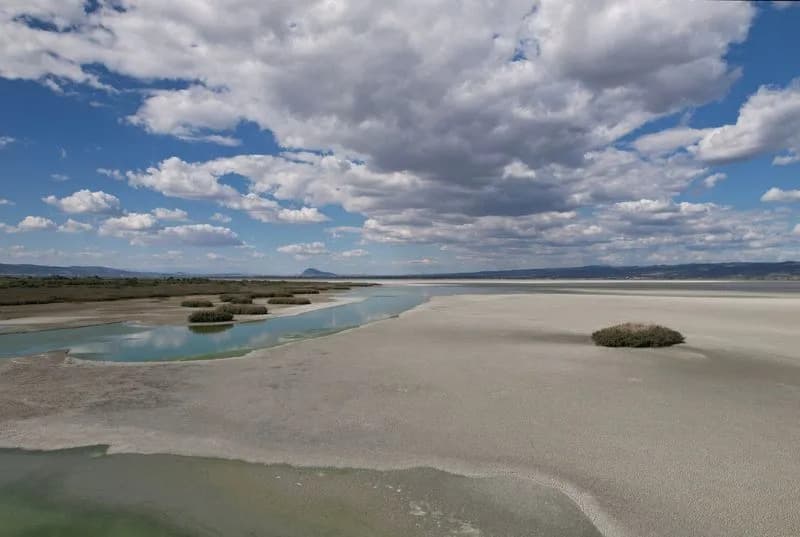
A drone view shows the dried-up Lake Koroneia, Greece, September 23, 2026. REUTERS/Alexandros Avramidis
LAKE KORONEIA, Greece — Once a protected wetland and stopover for thousands of migratory birds, including flamingos, Lake Koroneia in northern Greece has been reduced to a fraction of its former size after a decade of low rainfall and intensive irrigation.
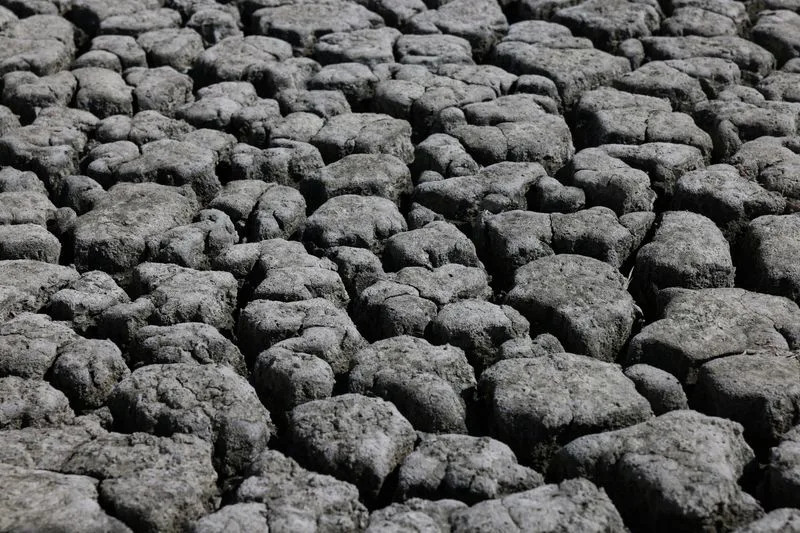
A detailed view of the dried-up Lake Koroneia, Greece, September 23, 2026. REUTERS/Alexandros Avramidis
From Wetland Haven to Cracked Mud
Satellite data from the National Observatory of Athens show the lake’s surface area shrinking from 34.4 square kilometres in 2016 to just 2.7 square kilometres today. What remains is a chain of murky pools; exposed lakebed has become a cracked, bleached plain under prolonged heat.
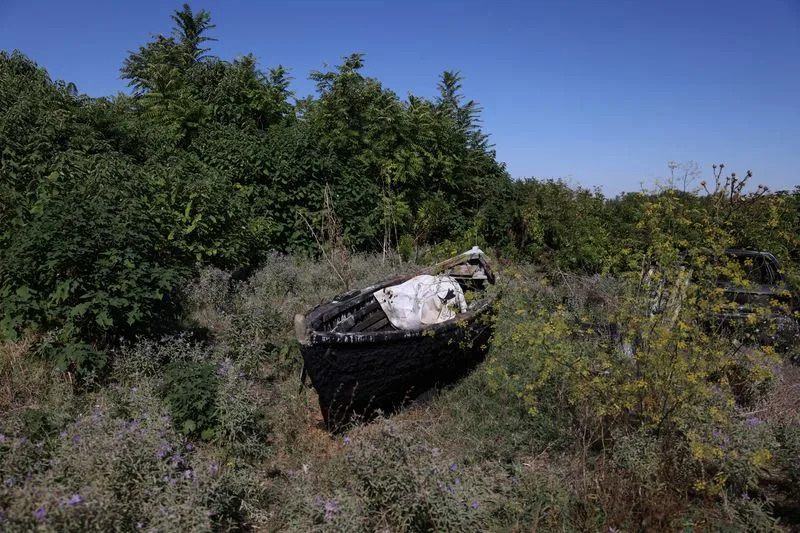
An abandoned traditional fishing boat in a field at the village of Agios Vasileios, located at the banks of Lake Koroneia, Greece, September 23, 2026. REUTERS/Alexandros Avramidis
Climate Stressors and Human Pressures
Scientists trace the decline to the end of a wet 2015–2016 season. Since then, the lake’s catchment has averaged roughly 400 millimetres of rainfall per year—about 150 millimetres less than in previous decades—while rising local temperatures have increased evaporation by an estimated 100–150 millimetres annually. These changes have reduced spring flows that once replenished the lake.
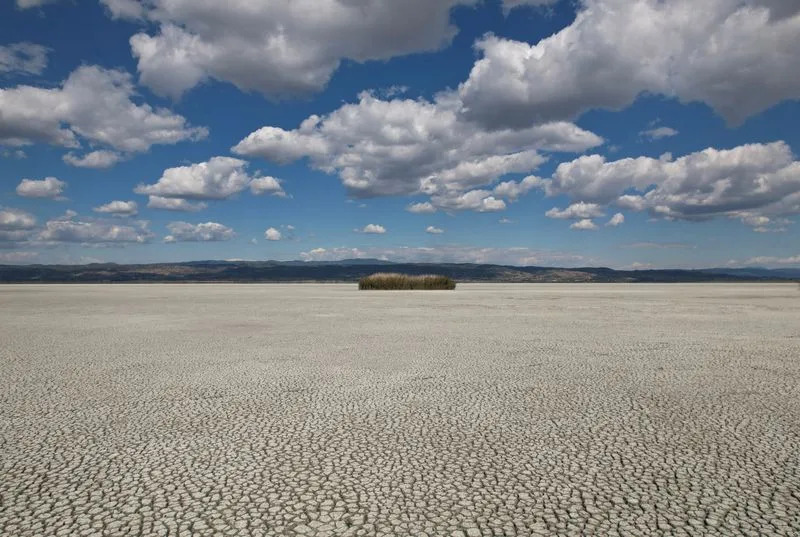
A drone view shows the dried-up Lake Koroneia, Greece, September 23, 2026. REUTERS/Alexandros Avramidis
Local farmers, facing water shortfalls for crops and livestock, have increasingly pumped water from the lake. Reuters reporters observed farmers using large pumps to draw water from remaining pools, a practice that officials say has compounded the lake’s decline.
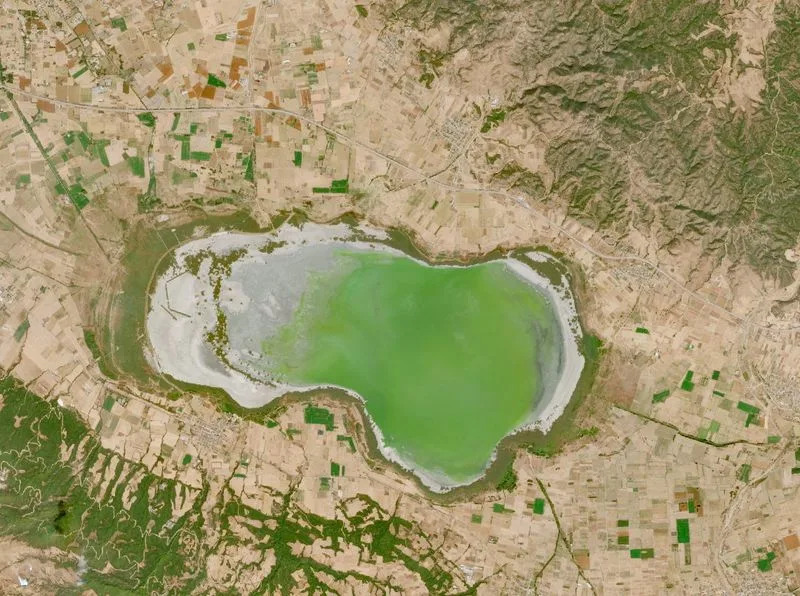
A satellite image shows Lake Koroneia near Thessaloniki, Greece, September 24, 2025. EUROPEAN UNION/COPERNICUS SENTINEL-2/Handout via REUTERS
"We knew the lake in its good days, with fishermen, with plenty of water, a wonderful park, and beautiful scenes with birds. Today, what we see is a disappointment," said Costas Hatzivoulgaridis, head of the lakeside community of Agios Vassilios.
Policy Response
Authorities have stepped up monitoring and enforcement after a 2013 European Union court ruling found Greece had not adequately protected Koroneia from over-irrigation, illegal drilling and pollution. Petros Varelidis, secretary general for water resources at the Greek Environment Ministry, told reporters that intensified oversight aims to curb excessive irrigation and illegal water withdrawals.
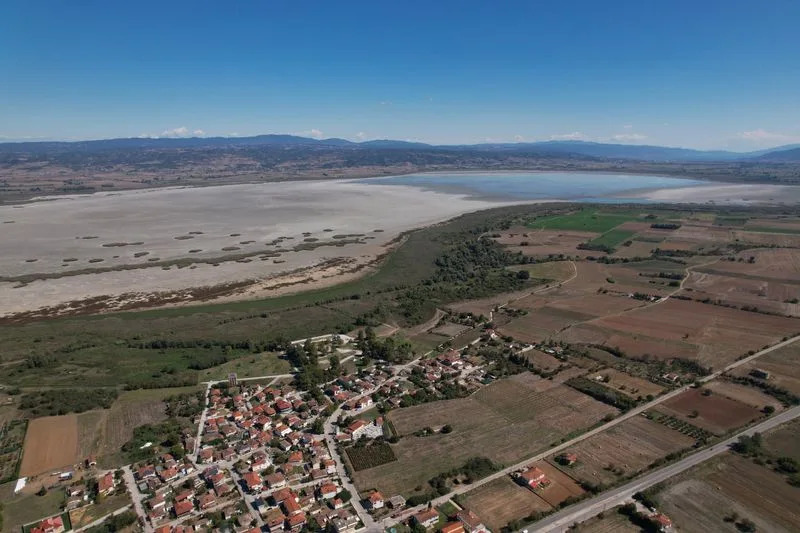
A drone view shows the village of Agios Vasileios at the banks of the dried-up Lake Koroneia, Greece, September 23, 2026. REUTERS/Alexandros Avramidis
Broader Context
Koroneia’s collapse mirrors a wider pattern across Europe this summer, when heatwaves and scant rainfall pushed rivers and lakes to decades-low levels, disrupting transport, agriculture and energy production. The site stands as a visible example of how climate variability and unsustainable water use interact to rapidly degrade vital ecosystems.
Reporting: Alexandros Avramidis. Additional writing and editing by Reuters staff.
Help us improve.