Michigan has awarded a $7.5 million grant, matched by federal funding, to begin exploring geologic hydrogen — a naturally occurring subsurface gas similar to petroleum that can offer low‑carbon energy when burned. A USGS prospectivity map ranks Michigan highest in the nation for potential, and Governor Whitmer’s Executive Directive 2026-1 launched a state initiative to assess recoverability, safety, leasing and economic impacts. Four agencies will deliver readiness reports, and more detailed plans are expected in early 2027.
Michigan Commits $7.5M To Explore Geologic "White" Hydrogen — Potential New Low‑Carbon Energy And Revenue Source
Electric power lines at dusk in Muskegon, Mich.getty
Michigan has launched a coordinated effort to probe underground hydrogen reserves, awarding a $7.5 million state grant to begin exploration, research and development of geologic hydrogen — sometimes called "white" or "gold" hydrogen. Officials say the resource is stored in subsurface rock formations much like petroleum and could provide a low‑carbon energy option if recoverable at scale.
The Grant, Goals and Timeline
The award comes from the Make It In Michigan Competitiveness Fund and will be matched by federal funds, according to the Michigan Infrastructure Office. State leaders plan to identify specific exploration activities this year and publish more detailed plans in early 2027.
Why Michigan?
A U.S. Geological Survey (USGS) prospectivity map, released last year, ranks Michigan as the state best positioned in the nation for geologic hydrogen potential. The USGS map — the first public prospectivity map for geologic hydrogen in the U.S. — also highlights promising regions across parts of Kansas, northern Texas, southern Oklahoma, western North Dakota and eastern Montana, and the Four Corners area of Arizona, Utah, Colorado and New Mexico.
What Is Geologic Hydrogen?
Geologic hydrogen occurs naturally in the Earth's subsurface in ways comparable to petroleum reservoirs. While exploration remains in an early stage and high‑concentration discoveries are still relatively rare, hydrogen is of interest because burning it produces water as the primary byproduct, offering a low‑carbon energy pathway when produced sustainably.
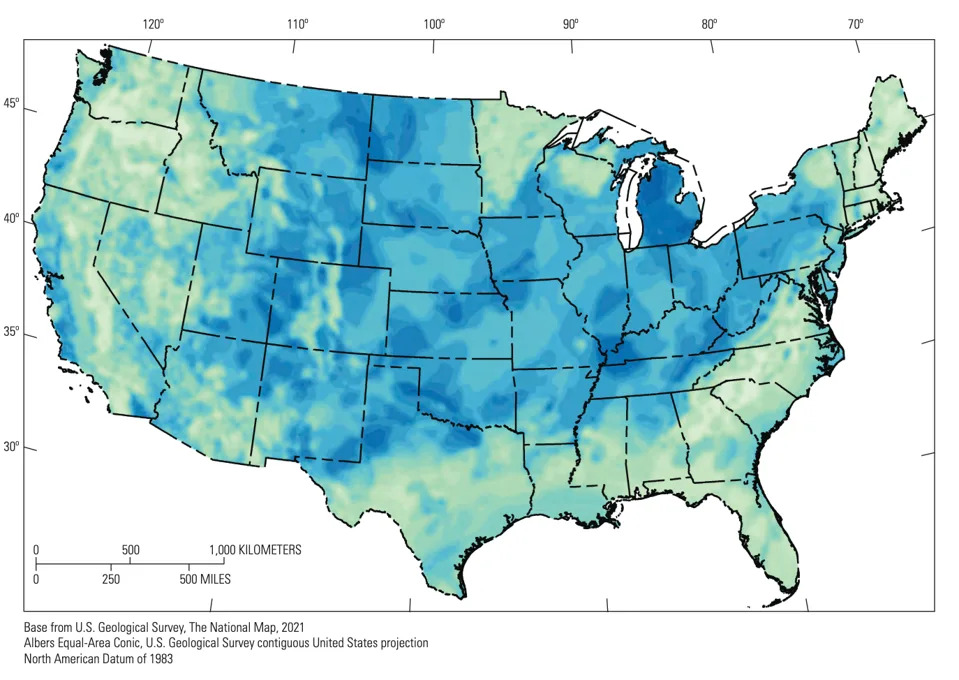
Prospectivity mapping for geologic hydrogen. The darkest colors indicate the highest potential.
“The next step is proving what is there and whether it can be safely and economically recovered,” said Kevin Mehren, director of the Michigan Infrastructure Office, when the grant was announced. “This investment puts Michigan in a position to answer those questions.”
State Coordination And Oversight
In January, Governor Gretchen Whitmer issued Executive Directive 2026-1, establishing the Michigan Geologic Hydrogen Exploration and Preparedness Initiative. The directive mobilized four state agencies to produce readiness reports addressing:
- Permitting, well safety and underground storage
- Potential economic impacts and revenue models
- Leasing of hydrogen on state-owned lands
- Integration of hydrogen into energy systems, including pipeline and safety standards
The governor has noted that the Midcontinent Rift beneath Michigan could, if commercially viable, generate tens of millions of dollars in direct state revenue and catalyze broader economic activity tied to a growing U.S. hydrogen economy.
Outlook
Michigan’s initiative is an early step: exploration, verification, and demonstration of safe, economical recovery will determine whether geologic hydrogen becomes a meaningful part of the state’s energy and revenue mix. Given the potential economic upside, other states identified by the USGS may pursue similar assessments and pilot programs.
Originally published on Forbes.com; adapted for clarity and flow.
Help us improve.