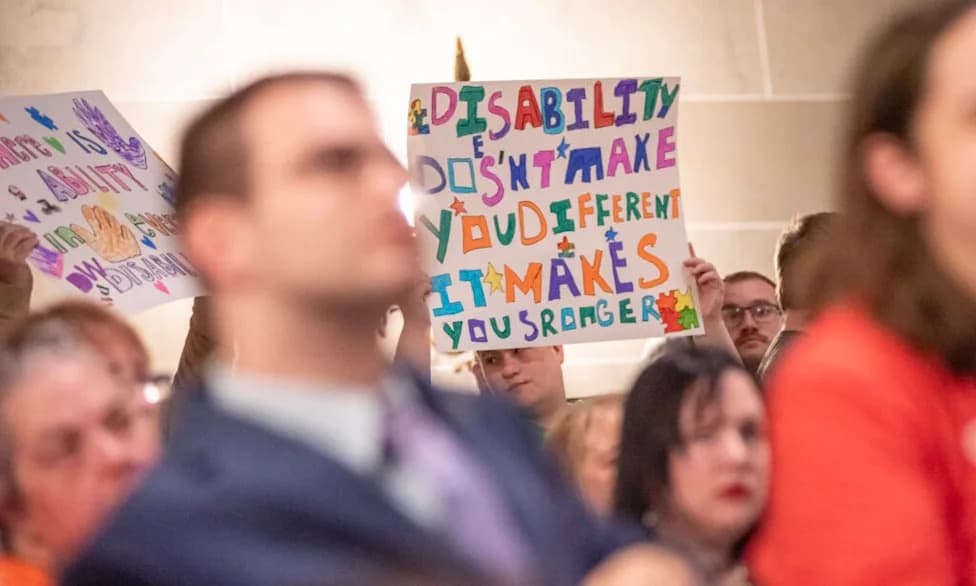
The Disability Community + Movement North Star Memo, convened by Disability Culture Lab, presents a shared vision shaped by disabled leaders and over 20 organizations. It advances a U.S. political model of disability that links the unequal distribution of disability to policy choices, structural harms and corporate decisions, and it elevates interdependence as a political strategy. The memo offers practical recommendations for employers, funders and policymakers to treat care as infrastructure, fund disability-led agenda setting, and include disabled people early in policymaking.
North Star Memo Reframes Disability as a Political Issue — A Roadmap for Employers, Funders and Policymakers

Disability Culture Lab points to figures showing that more than half of trans people and around 30% of both Black and Indigenous women live with a disability, disparities it connects to medical bias, environmental racism, poverty, police violence, workplace injury and the chronic, inflammatory stress of living under sustained discrimination.Justin Kaneps, photographer for the inaugural All in Frame Collection
The Disability Community + Movement North Star Memo, convened by Disability Culture Lab and released this fall, lays out a unified vision for disability justice developed by more than 20 organizations and nearly 50 disabled leaders. The memo reframes disability not only as a medical or social condition but as a political outcome shaped by policy choices, structural harms and power. It connects stark disparities—more than half of trans people and roughly 30% of Black and Indigenous women live with a disability—to medical bias, environmental racism, poverty, police violence, workplace injury and the cumulative stress of sustained discrimination.
How the Memo Was Built
The memo emerged from a yearlong democratic visioning process led by Disability Culture Lab’s Founding Executive Director Meier Galblum Haigh and Managing Director Kenrya Rankin. Community editors — including leaders such as Marissa Ditkowsky (Crip the Law), Kay Ulanday Barrett, Jasmine Williams-Jacobs (BlackRemoteShe), Dennis Tran and designer Sky Cubacub — collaborated to refine shared language, goals and ambitious policy priorities. Over 20 organizations signed on, mapping the movement’s breadth and reflecting decades of disability justice organizing.
The U.S. Political Model of Disability
Traditional frameworks tend to locate disability in the individual (medical model) or in barriers and attitudes (social model). The memo advances a distinct "political model" that asks who becomes disabled and who makes the choices that push people onto those paths. It begins from two premises: disability is a natural part of life that most people will experience, and its unequal distribution is the product of policy, corporate decisions and social systems.
"Systemic oppression is disabling," the memo’s leaders write—treating policies and violence that cause disability as harms in their own right.
Interdependence as Strategy
Interdependence — mutual support and shared responsibility for care — is presented as a political strategy rather than simply a personal arrangement. Kenrya Rankin argues that "diversity isn't enough" and that building interdependent communities—where care is treated as infrastructure and caregivers are valued—is essential to democratic resilience and to resisting authoritarian pressures.
Practical Implications
For Employers
The political model reframes workplace injury, inflexible scheduling, precarious jobs and employer-tied health care as choices that shape who becomes disabled and who is excluded from the labor market. Employers should redesign roles, benefits and accommodations with the understanding that most people will experience disability at some point in their careers. Concrete steps include flexible scheduling, predictable and safe workloads, disability-inclusive benefits that persist through life changes, and proactive accommodation design.
For Funders
The memo itself is a model of disability-led agenda setting. Funders should prioritize long-term, flexible capital that enables disabled-led organizations to set priorities, build infrastructure and sustain movement work. Investments that center leadership, capacity building and participatory strategy development are more likely to produce durable, systemic change.
For Policymakers
The memo insists that disability policy intersects with housing, climate, criminal justice, labor and health policy. Policymakers must involve disabled people early in policy design—especially as decisions about artificial intelligence, public benefits and the future of work accelerate. Treating care as infrastructure and designing benefits that do not punish work, savings or family formation are core policy implications.
Why This Matters
Approximately one in four Americans is currently disabled, and most others will experience disability during their lives. The North Star Memo shifts the narrative from individualized pity or charity toward power, collective care and shared prosperity. It challenges leaders to ask whether their current decisions move society toward a future of joy, care and collective liberation—or away from it.
The full memo is available in plain-language and large-type versions. Leaders in business, philanthropy and government would benefit from reading it and from centering disabled leadership in the policy and program choices they make this year.
Help us improve.