The cost of filling a 50-litre diesel tank has surged in some low-wage European countries, reaching as much as 15.4% of Bulgaria's gross monthly minimum wage — up from 9.9% before the Iran conflict disrupted shipping through the Strait of Hormuz. Rising pump prices are increasing pressure on workers who already spend a large share of their income on essentials.
Price Moves Since February
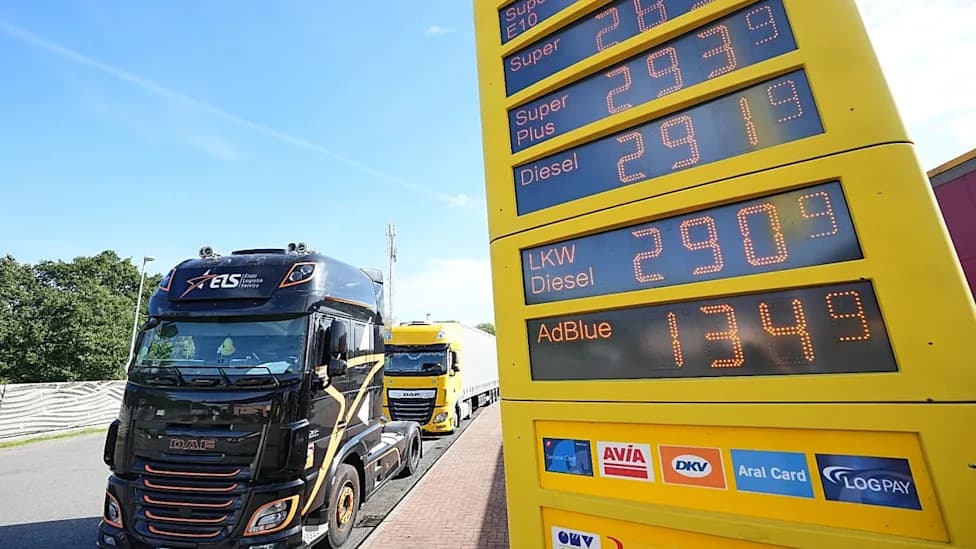
According to the EU Weekly Oil Bulletin, EU average consumer prices climbed sharply between 23 February 2026 and 21 September 2026: petrol (Euro 95) rose from €1.637 to €2.092 per litre (+27.8%) and diesel rose from €1.594 to €2.226 per litre (+39.6%). These jumps reflect the impact of an Israeli–US strike on Iran that effectively blocked the Strait of Hormuz, a key oil transit route.
Who Is Most Affected?
Low‑paid and minimum‑wage workers are hit hardest because they spend a larger portion of their income on housing, food and transport. Torsten Müller, senior researcher at the European Trade Union Institute, explains that cross‑country differences in the share of wages spent on fuel largely reflect wide gaps in statutory minimum wages and differing price levels across countries.
“One litre of diesel is only marginally cheaper in Bulgaria while the minimum wage is less than a fourth of the one in Luxembourg,” Müller told Euronews Business.
Key Country Findings (21 September)
Using gross monthly minimum wages (before taxes and social security) and pump prices for 22 EU countries plus Turkey, the analysis finds:
- Petrol: The share of a monthly minimum wage needed to fill a 50-litre petrol tank ranged from 3.3% (Luxembourg) to 13.4% (Bulgaria). Several countries exceeded 10% (Latvia, Turkey, Romania, Greece, Czechia, Estonia, Slovakia).
- Diesel: The share for a 50-litre diesel tank ranged from 3.8% (Luxembourg) to 15.4% (Bulgaria). Countries where minimum-wage workers now spend more than 10% on a diesel tank include Latvia (13.9%), Turkey (13.8%), Romania (12.7%), Czechia (11.2%), Estonia (11.2%), Hungary (10.8%), Greece (10.4%) and Portugal (10.3%).
- By contrast, Ireland, Germany, Belgium and the Netherlands were among the countries where a tank takes the smallest share of minimum pay (around 4–6%).
Recent Changes And Their Impact
Most countries did not change statutory minimum wages in the period studied; Estonia recorded the largest eurozone increase (6.8%). The largest increases in the share of the minimum wage needed for diesel were in Bulgaria (+5.5 percentage points) and Turkey (+5.3 pp). Latvia, Czechia and Estonia also saw rises of more than 3 percentage points, reflecting sharp local fuel-price inflation.
To put purchasing power into perspective: on 21 September a minimum-wage earner could buy 324 litres of diesel in Bulgaria versus 1,311 litres in Luxembourg — illustrating how nominal wage gaps translate into very different real outcomes.
“When the average cost of rent is already more than a third of the minimum wage, spending another 15% of your entire wage on fuel is just not possible,” said Esther Lynch, general secretary of the European Trade Union Confederation. She warned that people may be forced to give up jobs in areas with poor public transport, worsening labour shortages for employers.
How The Comparison Was Made
The comparison uses gross statutory monthly minimum wages and EU fuel price data on two reference dates (23 February and 21 September 2026). Figures are presented for 22 EU member states plus Turkey, an EU candidate country. The analysis highlights both the percent of pay required to fill a standard 50-litre tank and the volume of fuel a minimum wage can purchase.
Takeaway
Global energy shocks can rapidly translate into household strain, especially in lower-wage parts of Europe. Rising petrol and diesel prices erode the real value of minimum wages and can force difficult trade-offs — between travel, work and other essential costs — for the most vulnerable workers.
Sources: EU Weekly Oil Bulletin; Euronews Business interviews with European Trade Union Institute and European Trade Union Confederation representatives; country minimum‑wage data (gross amounts).