Two Field Museum interns, Payton Kohlberg and Allison Sefcovic, co-authored the description of a new proto-amphibian species, Jeanerpeton mazonensis, named for their mothers. The specimen, from Illinois' famed Mazon Creek and about 309 million years old, preserves exceptional details including eye impressions, dorsal scales and gastralia. Previously misidentified as Amphibamus grandiceps, close study revealed distinct anatomical traits that justify the new species designation. The find underscores the scientific value of museum collections and the Field Museum's Women in Science internship.
Students Name 309-Million-Year-Old Fossil After Their Mothers — Jeanerpeton mazonensis
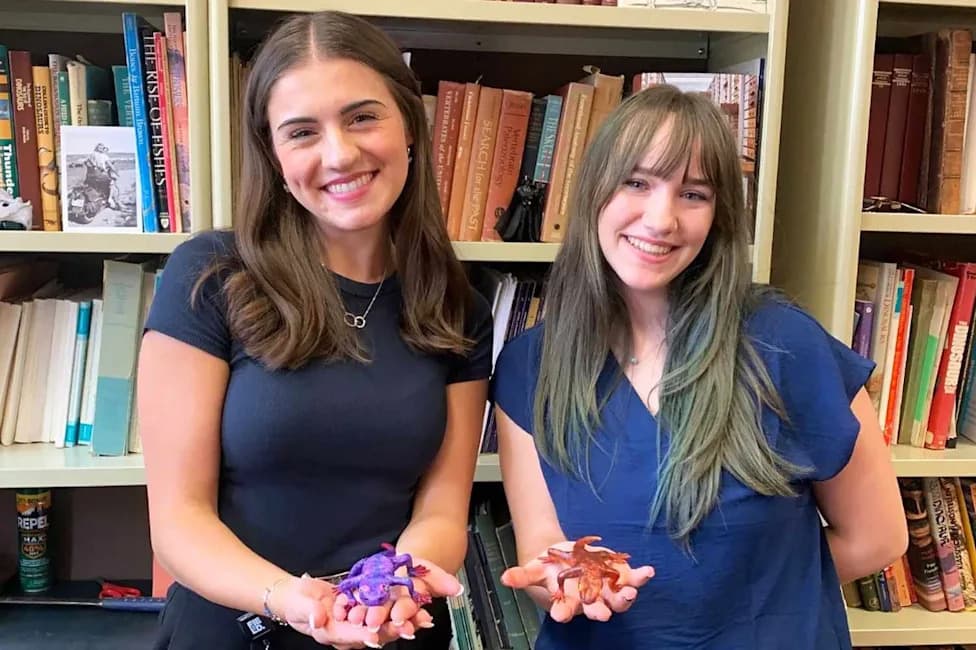
Allison Sefcovic and Payton KohlbergCredit: Arjan Mann
Two student researchers at Chicago's Field Museum have reclassified a remarkably preserved fossil as a new proto-amphibian species and named it in honor of their mothers. Interns Payton Kohlberg and Allison Sefcovic are co-lead authors on the formal description of Jeanerpeton mazonensis, an animal that lived about 309 million years ago.
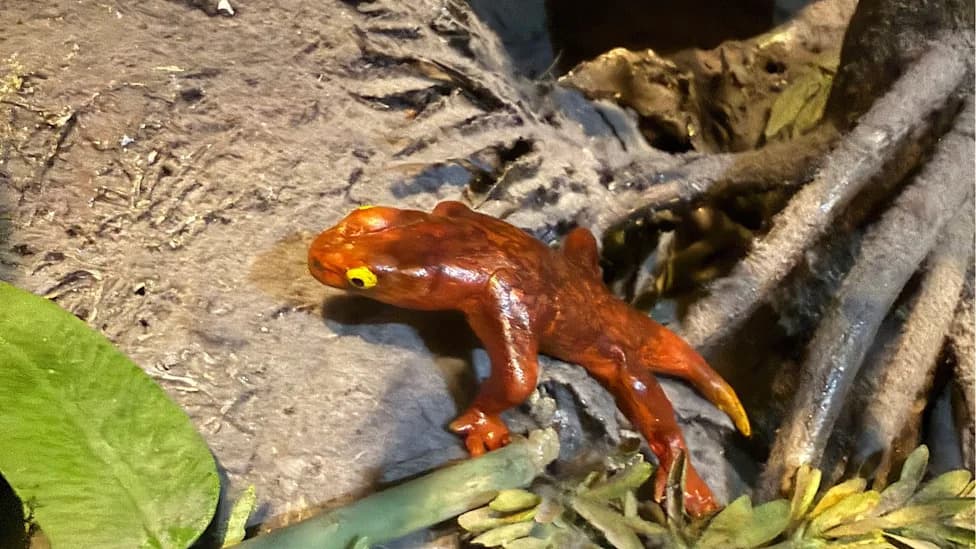
The binomial name means "Jean's crawler from Mazon Creek," a nod to the famous Illinois fossil site where the specimen was found. The research team interprets Jeanerpeton as an early relative of modern amphibians — imagine a squat, somewhat chubby salamander with a few frog-like proportions.
The fossil was originally collected years earlier by an amateur and donated to the Field Museum, where it had long been grouped with the better-known local species Amphibamus grandiceps. Detailed re-examination by Kohlberg, Sefcovic and colleagues revealed a distinct combination of anatomical features, prompting the researchers to name it as a new species in the Journal of Vertebrate Paleontology.
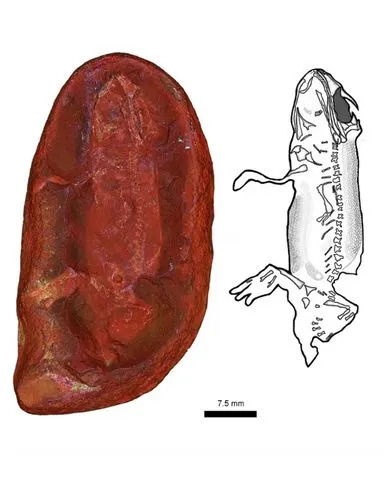
Jeanerpeton mazonensisCredit: Allison Sefcovic
Field Museum postdoctoral researcher Cam So, a co-author of the study, noted that the specimen had been previously assigned to a so-called "waste bin taxon," a catch-all classification used when fragmentary fossils are poorly understood. The new analysis provides sufficient evidence to recognize Jeanerpeton as anatomically distinct.
The Mazon Creek deposits formed in a swampy river-delta during the Carboniferous period and are known for exceptional preservation. In this specimen scientists can make out delicate details often lost to time: impressions of the eyes, scales on the back, and small ventral bones called gastralia (sometimes called "belly ribs"). Those preserved features give paleontologists a clearer window into traits that link early amphibian relatives to modern frogs and salamanders.
"In the fossil of Jeanerpeton, we can see some of the scales on its back and tiny 'belly ribs' called gastralia. You can even see the eye impressions! It's so cool to see," said Allison Sefcovic.
Kohlberg and Sefcovic's work grew from their participation in the Field Museum's Women in Science internship program and hands-on experience in the museum's Mann Lab. Kohlberg said she started with limited paleontology experience and gained confidence and practical skills through the project.
"It is scary to take on a project when you feel like you don't know as much as you should," Kohlberg said. "I learned with practical experience that it is possible to overcome that fear with hard work."
This discovery highlights two broader points: the continuing scientific value of museum collections and the importance of mentorship and training programs that open opportunities for early-career researchers. Careful re-examination of existing specimens can still reveal new species and refine our understanding of deep evolutionary history.
Help us improve.