Soybean cyst nematode (SCN) is widespread across much of North America and causes an estimated $1.5 billion in U.S. soybean losses annually. Long-term trials show SCN populations are overriding PI 88788 resistance—the primary resistance source used in most varieties—potentially reducing control to about 40% by decade's end. BASF's Bt trait Nemasphere (targeted for 2028) and integrated strategies—thorough soil sampling, rotating resistance sources and combining seed treatments like ILEVO—are recommended to protect yield.
Soybean Cyst Nematode Is Stealing Yield Before Symptoms Appear — What Growers Should Do Now
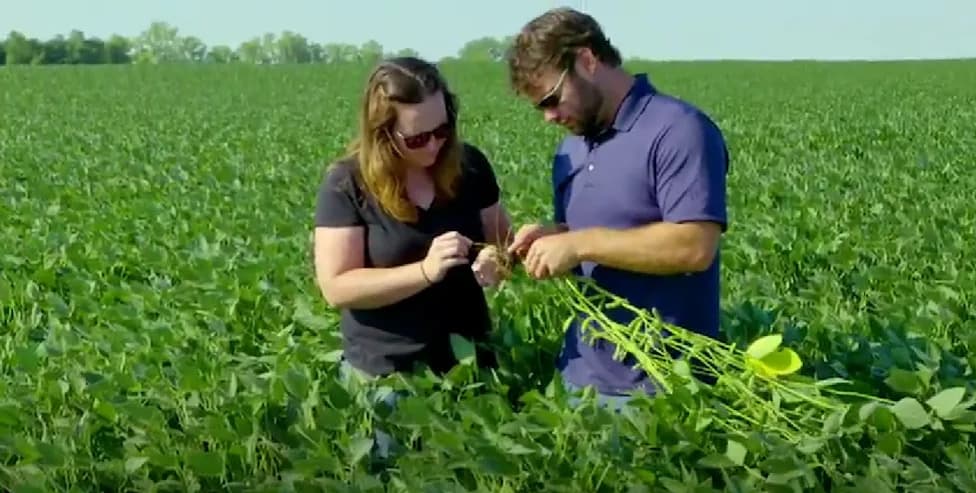
Image courtesy of The SCN Network and BASF
Growers in regions where soybean cyst nematode (SCN) is established are facing an increasingly stealthy threat: the pest is reducing yields long before above-ground symptoms are visible. Iowa State University estimates SCN causes roughly $1.5 billion in annual soybean losses in the United States, and the nematode has been detected in more than half of U.S. states and several Canadian provinces.
Why SCN Is Hard To Spot—and Hard To Control
SCN is a root-feeding parasitic nematode. It concentrates in field low spots where water or wind moves soil and can be carried between fields on machinery. Each cyst may contain hundreds of eggs that can remain viable for years, making detection and management essential.
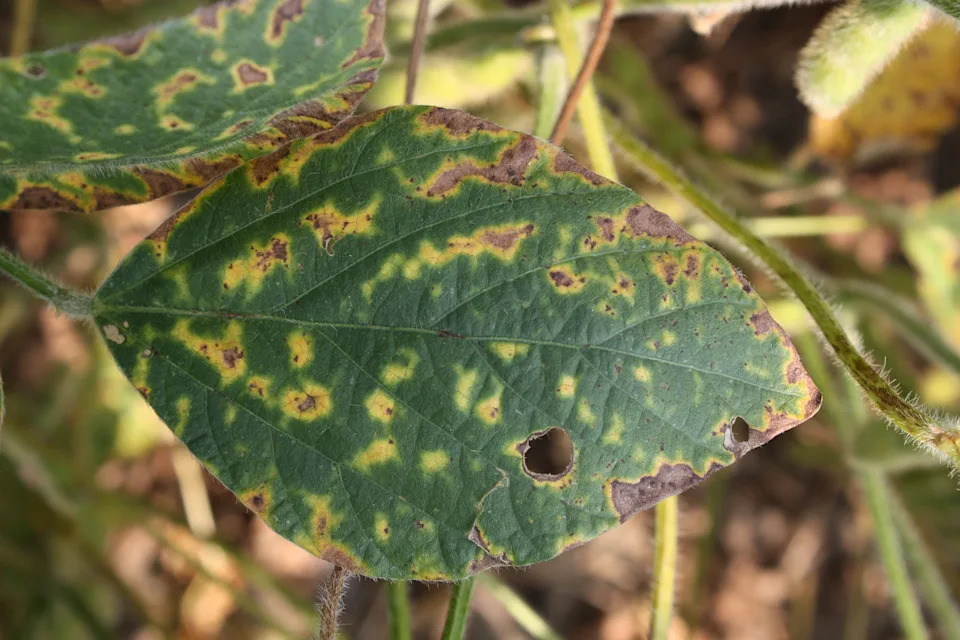
Foliar symptoms due to soybean cyst nematode (Image courtesy of The SCN Coalition)
"Farmers are realizing they're losing more to cyst nematode and that there's potentially more out there than they realize they have," said Jeff Mueller, seeds agronomist at BASF.
New Research Raises Concern About Existing Resistance
Long-term trials reviewed by Iowa State show SCN populations have adapted to PI 88788—the resistance source used in about 95% of resistant soybean varieties—since about 2000. The study warns PI 88788-based varieties could provide only roughly 40% control by the end of the decade, translating to average losses near 9 bushels per acre if no other measures are taken.
Industry Response: A New Trait and Integrated Protection
BASF is pursuing regulatory approval for Nemasphere, the first Bt-based transgenic soybean trait aimed specifically at SCN. Nemasphere is designed to be stacked with high-yielding Enlist E3 germplasm and paired with either PI 88788 or Peking native resistance to reduce the likelihood of resistance development. Pending approval, BASF expects to make Nemasphere available to growers in 2028.
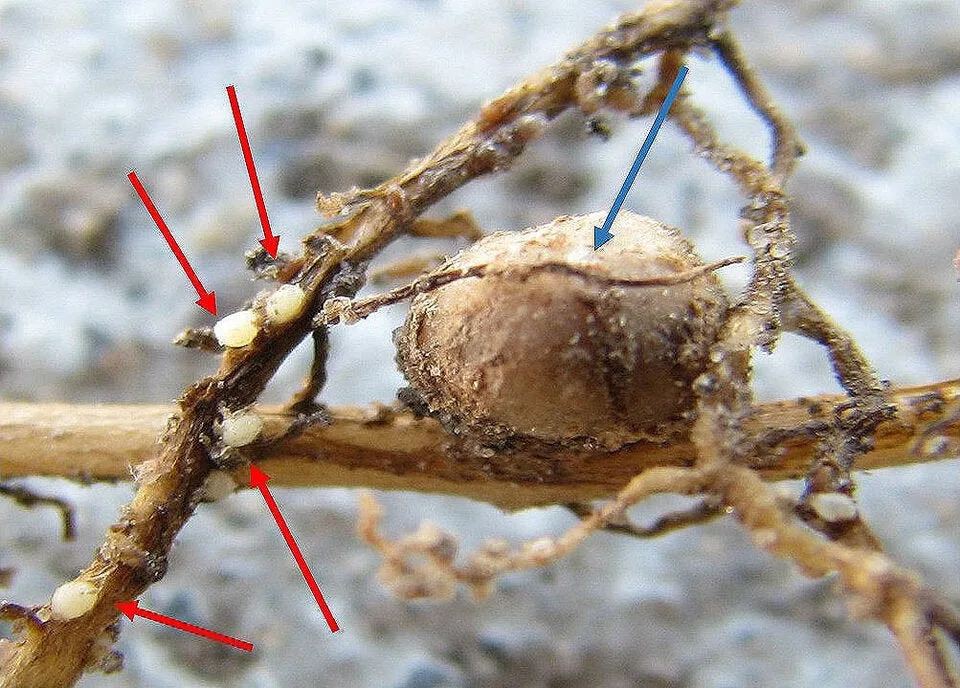
Rhizobium nodule (blue) and white SCN females (red) (Image via University of Nebraska-Lincoln)
Scott Kay, Vice President of U.S. Agricultural Solutions at BASF, said: "Nemasphere offers a completely different level of protection and yield potential to soybean farmers." Jeff Mueller cautioned that Nemasphere targets SCN specifically and recommended combining it with complementary tools such as ILEVO seed treatment to also manage sudden death syndrome (SDS).
SCN Life Cycle (Brief)
- In spring, eggs hatch when temperatures and moisture are favorable and juvenile nematodes emerge.
- Juveniles penetrate soybean roots, migrate to vascular tissue and establish feeding sites.
- Nematodes feed and mature; females ultimately rupture through root tissue, forming cysts that release eggs or persist in the soil.
Practical Steps Growers Should Take
- Soil Sampling: Conduct systematic sampling—BASF recommends 15–20 subsamples in a crisscross or zigzag pattern across fields (post-harvest is often easiest). Sampling hot spots and other areas reduces the risk of false negatives.
- Rotate Resistance Sources: Alternate PI 88788 and Peking-based varieties with years of non-host crops (e.g., corn) to reduce selection pressure on SCN populations.
- Use Integrated Tools: Combine resistant varieties or traits with seed treatments such as ILEVO to address both SCN and related diseases like SDS.
- Manage Equipment and Field Traffic: Clean soil from machinery to avoid moving cysts between fields and limit tillage patterns that can spread hotspots.
- Work With Agronomists: Use local testing, variety trials and economic analysis to select the best seed and management plan for each field.
What To Expect
Crop rotation (corn-soybean) can reduce nematode egg pressure by roughly 40%, but cysts may survive a decade or more, so rotation alone rarely eliminates the problem. Even low egg counts can cause significant damage when plants are stressed by drought, poor soils (especially sandy soils) or unfavorable pH. Because above-ground symptoms often do not appear until yield loss reaches about 30%, proactive below-ground management is critical.
In short: test fields thoroughly, rotate resistance and consider new genetic traits and seed treatments as they become available. Coordinated, integrated management is the best way to protect soybean yield from this increasingly adaptive pest.
Help us improve.