The Institute for Policy Studies' High Flyers 2026 finds a surge in private jet use is shifting costs to taxpayers and worsening climate pollution. Private jets represent about 16% of FAA-managed operations but contribute under 0.6% of taxes to the Airport and Airway Trust Fund; only about 256,000 people use them. The report highlights large public grants benefiting private jets, concentrated ownership among the ultrawealthy, lobbying by industry groups and policy proposals — including new taxes and removing tax breaks — to make users pay their share.
Private Jet Boom Shifts Costs to Taxpayers and the Climate, New Report Says
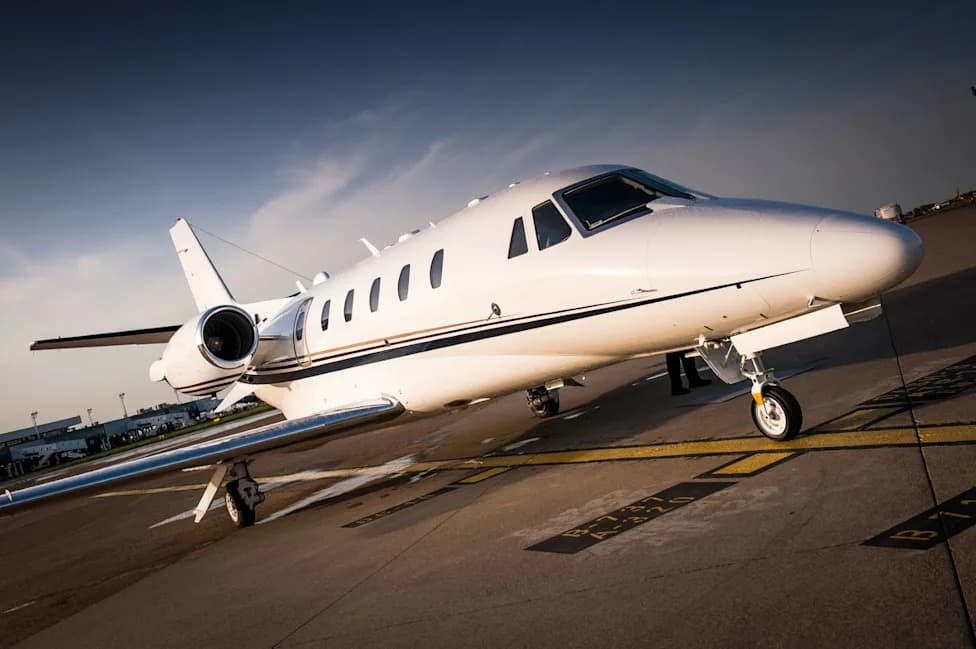
Photo Credit: iStock
A new analysis from the Institute for Policy Studies, High Flyers 2026, argues that a sharp rise in private jet travel is delivering convenience to a tiny slice of the ultrawealthy while shifting costs — in subsidies, airport spending and growing climate damage — onto the rest of the public.
Key Findings
The report finds that private jets and charter services account for about 16% of Federal Aviation Administration–managed operations, yet noncommercial private jets are estimated by the U.S. Department of Transportation to make up roughly 7% of airspace activity while contributing under 0.6% of taxes to the Airport and Airway Trust Fund.
Only an estimated 256,000 people — roughly 0.003% of the U.S. population — fly on private jets, including those using charter services and fractional ownership programs. Fractional ownership grew about 65% from 2019 to 2025, the report says.
Climate and Public-Costs
Private jets are far more carbon-intensive per passenger than commercial flights: the report estimates they emit about 10–14 times the direct carbon per passenger versus typical commercial air travel, excluding additional warming from high-altitude emissions.
"The rest of us should not have to pay for the luxury excess of the private jet billionaire class," said report co-author Chuck Collins. "Our hard-earned tax dollars shouldn't subsidize their reckless air travel habits that further harm our warming planet."
Ownership is heavily concentrated among the extremely wealthy: the median private-jet owner has an estimated net worth of about $190 million, and the report notes there are 3,428 billionaires worldwide. Rising corporate demand — for executive convenience and to avoid commercial-travel hassles — also helps drive growth.
Public Spending, Lobbying and Tracking
More than one-third of Airport Infrastructure Grants awarded through 2026 went to projects that may primarily benefit private jets, totaling over $1.13 billion. The report warns that industry claims about quickly scaling sustainable aviation fuels (SAFs) are optimistic and unlikely to solve the short-term climate challenge.
The National Business Aviation Association reportedly spent roughly $2 million on lobbying in 2025 to support legislation that would grant tax breaks to private-jet owners. To document activity, the institute assembled a Private Jet Emissions Tracker using a global network of more than 20,000 open-source aircraft trackers to map flights tied to high-profile events such as the Super Bowl and the Kentucky Derby.
Policy Recommendations
The report urges lawmakers to shift costs back to users and reduce subsidies by:
- Repealing accelerated bonus depreciation for private-jet purchases
- Raising taxes on private jet fuel
- Imposing a luxury tax on jet sales (one estimate: 10% on used jets, 5% on new jets could have generated >$3 billion in 2025)
- Removing a private-jet tax-avoidance provision from the pending ALERT Act
"Since we first released our analysis in 2023, we've seen a shocking and irresponsible rise in private jet use," said co-author Omar Ocampo. "The private jet lobby has worked to lower tax obligations for the ultrawealthy while the industry promotes inadequate climate fixes. It's time to stop making taxpayers subsidize luxury travel and invest in greener alternatives."
The report frames private aviation as a growing public-policy problem that touches tax policy, airport infrastructure, emissions and local disputes over airport expansion and access. It calls for clearer accounting of public subsidies and stronger policy tools to ensure the high costs of private aviation are borne by its users, not the general public.
Note: All figures and findings are taken from the Institute for Policy Studies' High Flyers 2026 report and related public sources cited therein.
Help us improve.