The University of Michigan team pooled fMRI data from eight prior studies to compare nine brain states, from light sleep to LSD. They measured synchronization, communication efficiency, and the variety of dynamic interaction patterns, finding that psychedelic states generally increased these metrics while sleep and propofol decreased them. The authors describe this as a 'mirror-image' pattern but caution that greater connectivity does not necessarily equal a simple increase in consciousness.
Brain Scans Reveal 'Mirror-Image' Patterns Between Psychedelics and Anesthesia
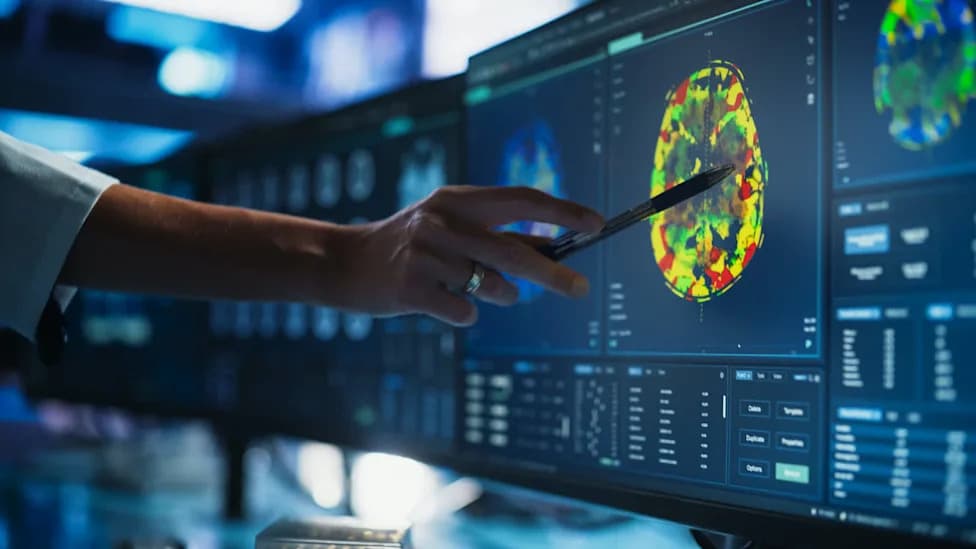
Photo Credit: iStock
Researchers at the University of Michigan report that brain scans reveal contrasting patterns of neural activity during psychedelic experiences versus sedative states — a finding that could reshape how scientists link brain dynamics to consciousness.
What the Team Did
The authors pooled functional MRI (fMRI) data from eight prior studies to compare nine distinct brain states side by side, ranging from light sleep to LSD. Rather than analyzing one altered state in isolation, the team evaluated each state using three complementary measures: the degree of synchronization between brain regions, the efficiency of information transfer across networks, and the repertoire or variety of dynamic interaction patterns that unfold over time.
Key Findings
Across psychedelic conditions such as LSD and psilocybin, those three measures generally increased, indicating greater global connectivity, more efficient communication, and a richer set of dynamic brain states. By contrast, natural sleep and propofol sedation produced decreases on the same metrics, with the reductions becoming more pronounced as anesthetic dose increased.
Psychedelic and sedative states exhibit a robust 'mirror-image' pattern of integration and segregation … whereas sleep and propofol sedation show the opposite configuration than psychedelics.
The study was led by Rui Dai (Department of Anesthesiology) together with Zirui Huang, director of the university's Center for Consciousness Science. The authors emphasize that their cross-condition comparison is unusual because prior work typically evaluated each drug or state separately.
Interpretation and Caveats
These results add nuance to the long-standing question of which features of brain activity best track conscious awareness. Psychedelics can amplify sensory and cognitive experience while subjects remain awake, whereas sleep and anesthesia generally reduce awareness — making the two classes useful opposites for comparison. The authors caution, however, that increased connectivity or efficiency during psychedelic states should not be taken as a simple, unitary 'boost' in consciousness: higher global integration is not automatically equivalent to a higher level of conscious awareness.
Overall, these results mean that during psychedelic states, the brain becomes more globally connected, more efficient in communication, and more dynamic, while anesthetic states are the opposite.
Why This Matters
By showing how different pharmacological interventions move brain networks toward opposite configurations, the study provides a clearer framework for investigating neural signatures of awareness and for understanding how distinct drugs alter brain function.
Related Findings
- In a clinical trial, a single dose of psilocybin showed promise versus placebo for treating cocaine addiction.
- Survivors of climate disasters have shown changes in brain function linked to trauma symptoms.
- Regular gardening has been associated with better cognitive sharpness later in life.
Publication: The analysis appears in the peer-reviewed journal Cell Reports.
Help us improve.