Latvia's defence minister Raivis Melnis urged NATO and Western defence firms to learn from Ukraine's wartime manufacturing practices. Ukrainian companies fragment production across multiple, sometimes underground, sites and plan for mobility so they can survive strikes. Melnis advocates direct partnerships so NATO firms can adopt combat-tested designs and closer industry–military cooperation. Several European firms are already shifting toward distributed production despite higher costs.
Latvia Urges NATO To Adopt Ukraine’s Wartime, Dispersed Weapons Production Model
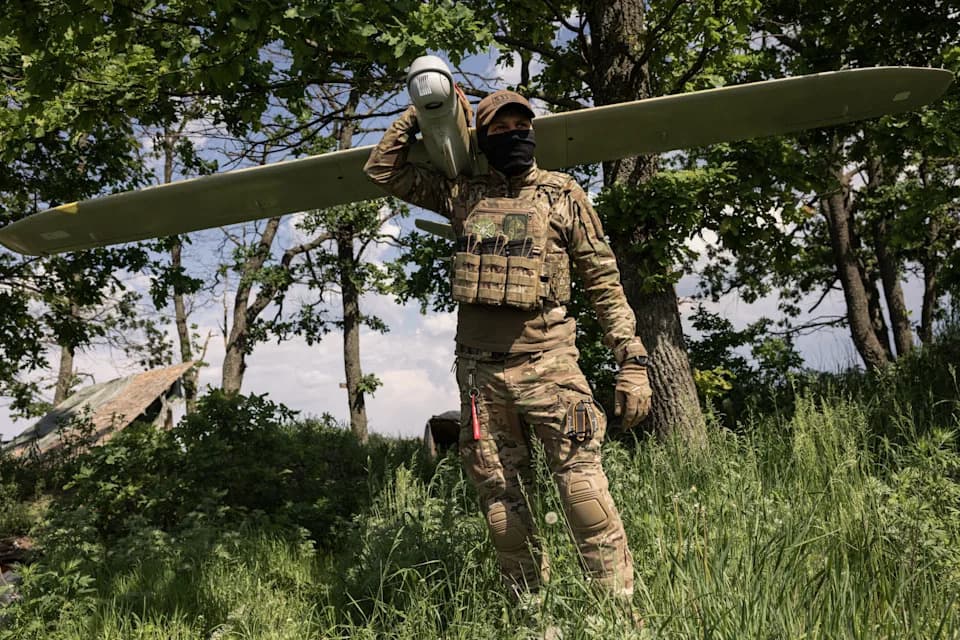
The companies making drones and other gear in Ukraine work across multiple sites, including underground, and are able to move far more easily than their Western counterparts.Diego Fedele/Getty Images
A senior NATO official and Latvia's defence minister, Raivis Melnis, warned that Western defence manufacturers remain organised for peacetime and may be vulnerable if conflict reaches alliance territory. Speaking to Business Insider, Melnis urged NATO countries and defence firms to learn from Ukrainian industry practices that allow production to continue under direct attack.
Why Dispersed Production Matters
Melnis argued that concentrated factories and single large production sites could become critical points of failure in wartime. "Our industry is a peacetime establishment," he said, noting it was built in conditions where "there is no threat." To remain resilient under fire, defence production needs to be able to operate across multiple sites, reconstitute quickly after strikes, and protect personnel and critical tooling.
How Ukrainian Firms Operate Under Fire
Ukrainian defence and drone makers fragment manufacturing across multiple locations, use underground facilities, and plan for mobility so operations can be moved or rebuilt quickly. Companies such as Frontline Robotics have designed processes to "endure the loss of any site," according to Mykyta Rozhkov, the firm's chief business development officer. TechEx executives say they routinely change locations to raise security and protect staff.
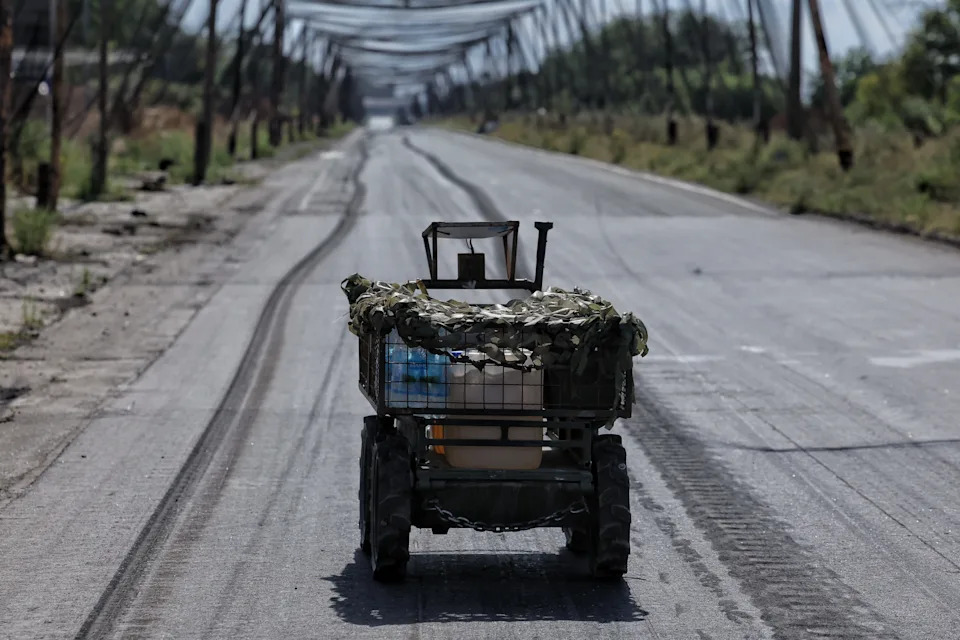
Latvia wants to learn from how Ukraine fights on the battlefield and the lessons its arms makers have learned.Yan Dobronosov/Global Images Ukraine via Getty Images
Western Vulnerabilities
Many European projects remain concentrated in larger facilities for cost and efficiency reasons. That model, Melnis warned, could prove dangerous if a conflict escalates on NATO territory: a single successful attack could cripple production of critical systems. Industry leaders in Latvia and across Europe are now asking whether supply chains and factories are organised to function from dispersed, lower-profile locations.
Latvia’s Proposal: Partnerships and Knowledge Transfer
To accelerate learning, Melnis is encouraging direct partnerships between Latvian companies and Ukrainian firms so Western manufacturers can adopt combat-tested methods. He said Latvia hopes to combine Ukrainian battlefield-proven solutions with Latvia’s peacetime research and engineering capacity. Kyiv’s system of compensating some businesses for damage and planned additional support also helps reassure industry that recovery and continuity are possible.
Industry Response Across Europe
Several European companies say they are already shifting strategy. Estonian drone maker Krattworks noted that while a single large facility would be cheaper and more efficient, Ukrainian makers cannot afford that risk. ORQA, a Croatian drone-technology firm, has embraced distribution as a core principle, calling distributed production "far more resilient to disruption." Executives from Ukrainian-Estonian Ark Robotics and TechEx echoed the need to avoid creating obvious, high-value targets.
Implications for NATO and Deterrence
Beyond industry resilience, Melnis framed the changes as a broader element of deterrence. Sustained Western production capacity under attack would help maintain support for Ukraine and strengthen NATO’s ability to supply allies during crisis. "Russia wants to destroy that support for Ukraine," he said. "Therefore, it is important for us to support, and we will be supporting Ukraine to build the victory."
Bottom line: Adopting dispersed, mobile and combat-tested production methods will carry economic costs but could prove essential to sustaining defence manufacturing under attack and strengthening NATO’s collective resilience.
Help us improve.