Latvian President Edgars Rinkēvičs told Fox News Digital at the U.N. General Assembly that Iranian-designed drones have materially assisted Russia’s war in Ukraine and are being modernized by Russian forces. Latvia has approved sending EOD diver specialists to the Strait of Hormuz to join a U.S.-led coalition. Rinkēvičs warned that Latvia’s most immediate risks are sabotage, cyberattacks and disinformation, and urged NATO to accelerate adaptation to drone and missile warfare while noting that more funding alone will not instantly fix readiness gaps.
Latvian President Warns Iran’s Drones Are Fueling Russia’s War Effort; Latvia To Send EOD Specialists To Strait Of Hormuz
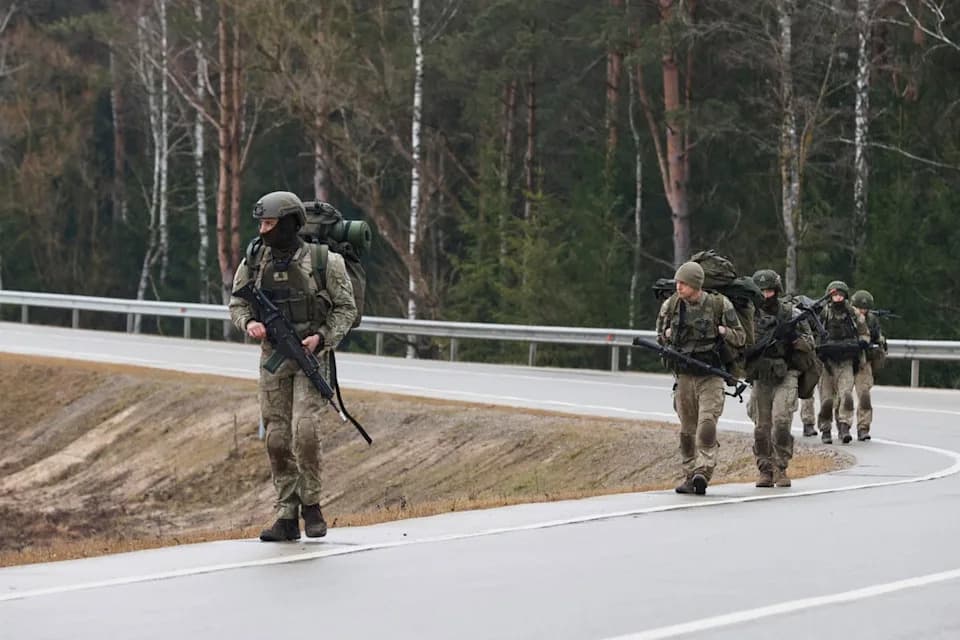
Soldiers walk along a road near a training range in Pabradė, north of the capital Vilnius, Lithuania, March 27, 2025.
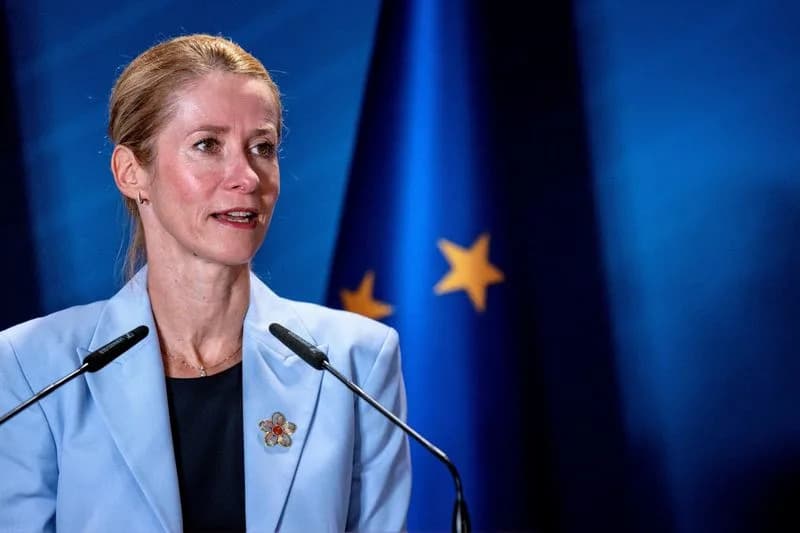
UNITED NATIONS — Latvian President Edgars Rinkēvičs warned Wednesday that expanding military cooperation between Russia and Iran poses a growing security threat, telling Fox News Digital that Iranian drone technology has materially aided Moscow’s campaign in Ukraine. His remarks came on the sidelines of the U.N. General Assembly as Latvia prepares to contribute specialists to a U.S.-led operation in the Strait of Hormuz.
Rinkēvičs, whose country of roughly 1.84 million people sits on NATO’s eastern flank, said Latvia has already made the political decision to send military specialists to support international operations in the Middle East in response to a U.S. request.
“Yes, I am concerned. Actually, we have already seen Iran helping Russia a lot, especially at the very beginning of Russia's aggression against Ukraine,” Rinkēvičs said when asked about growing Moscow–Tehran cooperation.
He said Iranian-designed drones were among the first systems Russian forces used in Ukraine and that Russian forces have since been modernizing and adapting those designs. Earlier this week, Fox News Digital published documents from the Russian Foreign Ministry outlining a 2024–2026 roadmap for broader Russia–Iran cooperation across nuclear, finance, aviation and infrastructure sectors.
On whether European countries should take a more active role in countering Iran’s military activities, Rinkēvičs said Latvia has already moved to help in the Strait of Hormuz.
“From our side, we have already made a parliamentary decision that our EOD (explosive ordnance disposal) diver specialists could be sent to the Strait of Hormuz or to the Middle East to help out the United States, the coalition that is being formed,” he said.
Rinkēvičs expressed hope that military support could help create space for political solutions and restore stable global energy supplies, while acknowledging skepticism about the prospects for successful diplomacy with Tehran or Moscow.
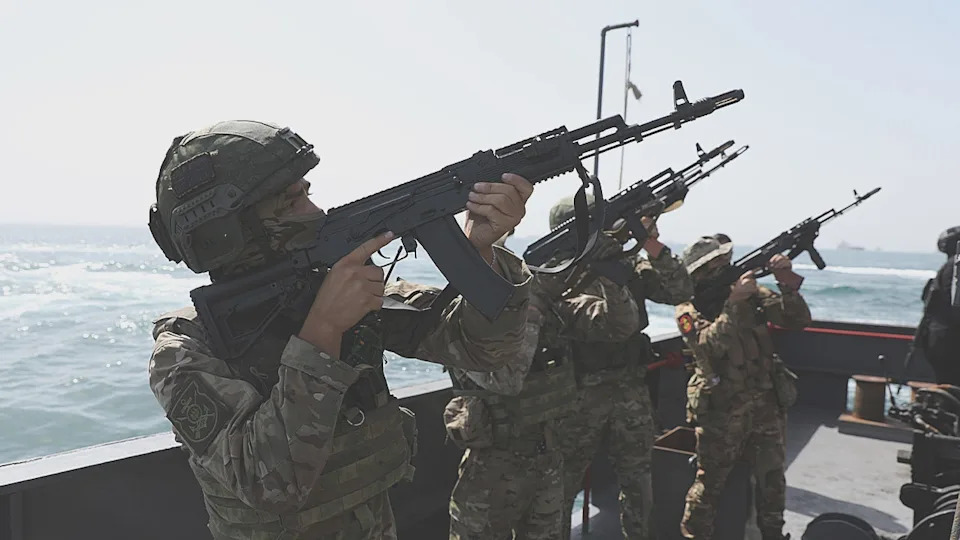
Iran conducts joint military exercises with Russia in the Strait of Hormuz after the U.S. deployed surveillance drones.
“It's very, very difficult to have diplomacy with Iran. It's very difficult with Russia,” he said.
Turning to European security, the president said Latvia does not see clear evidence of an imminent Russian invasion of its territory. He suggested that if Russia had the capability and intent to attack Latvia directly, it would have acted already, and he noted changes in Russian military performance since 2022.
Rinkēvičs warned that the more immediate threats to Latvia are likely to come from sabotage, cyberattacks and disinformation campaigns, which he said are intensifying. He urged European leaders to prepare their citizens for potential threats without causing undue alarm.
The Latvian president also called on NATO to accelerate adaptation to the changing character of warfare, emphasizing the rising role of drones and missile systems while noting that traditional platforms such as tanks and armored personnel carriers remain important.
Welcoming higher NATO defense spending, Rinkēvičs credited pressure for increased investment but cautioned that funding alone cannot instantly remedy readiness shortfalls.
“You have money, but you cannot always buy the stuff immediately, or at least you can order things. And they are not always delivered soon enough,” he said.
Rinkēvičs said he plans to meet with U.S. defense companies during his visit to the United States and praised existing American support, noting U.S. troops are stationed at Latvia’s Lielvārde airbase. He added that continued rotational deployments and further cooperation with U.S. partners are being discussed.
Photo caption: Soldiers walk near a training range in Pabradė, north of Vilnius, Lithuania (March 27, 2025).
Help us improve.