As Ohio’s governor race grows more contentious, an attack ad targeted Dr. Amy Acton for seeking therapy after childhood sexual abuse—a disclosure she made on a 1994 licensing form. The author argues that seeking help demonstrates self-awareness and courage, qualities essential to effective leadership, and cites research linking feedback-seeking leaders to greater team psychological safety. Voters should judge Acton on her record, policies and judgment rather than her history of therapy.
Seeking Therapy Is Not A Disqualifier: Why Amy Acton's Choice Reflects Leadership, Not Weakness
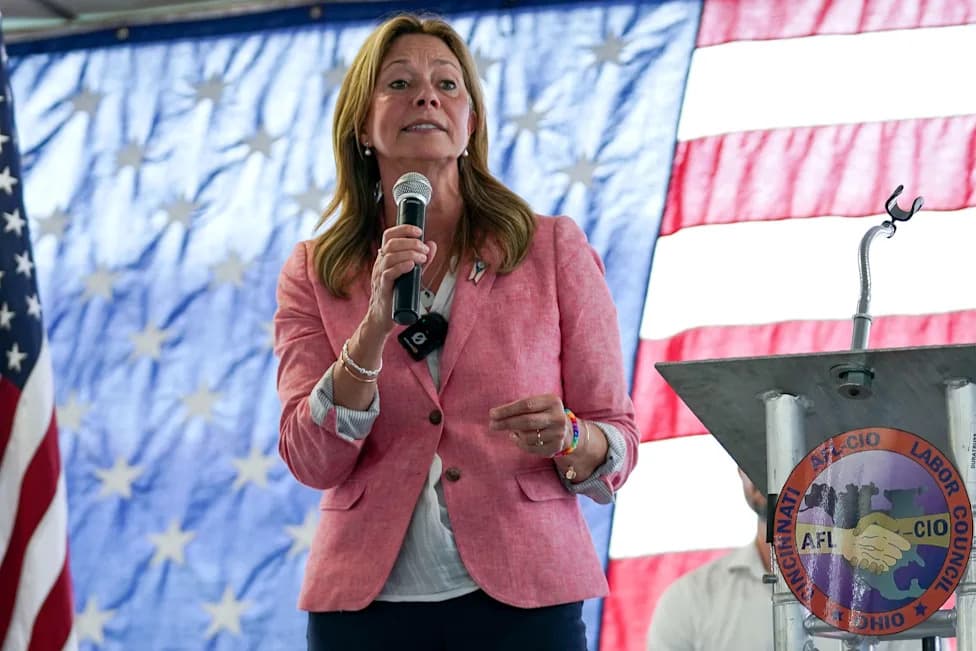
Democratic gubernatorial candidate Dr. Amy Acton speaks during the AFL-CIO Central Labor Council's Labor Day picnic at Stricker’s Grove, Saturday, Sept. 5, 2026, in Hamilton, Oh.
As Ohio’s gubernatorial campaign turns increasingly negative, one line of attack deserves closer scrutiny: a super PAC ad that criticizes Dr. Amy Acton for having sought therapy. That disclosure—a note on a 1994 medical-licensing form revealing she pursued therapy after childhood sexual abuse—has been framed as disqualifying. But that framing is wrong.
Acton’s decision to get help is not a sign of unfitness for office; it is evidence of self-awareness and the courage to act on it. The licensing question that prompted her disclosure was later removed from many forms precisely because such questions discouraged health professionals from seeking treatment.
Why this matters for leadership
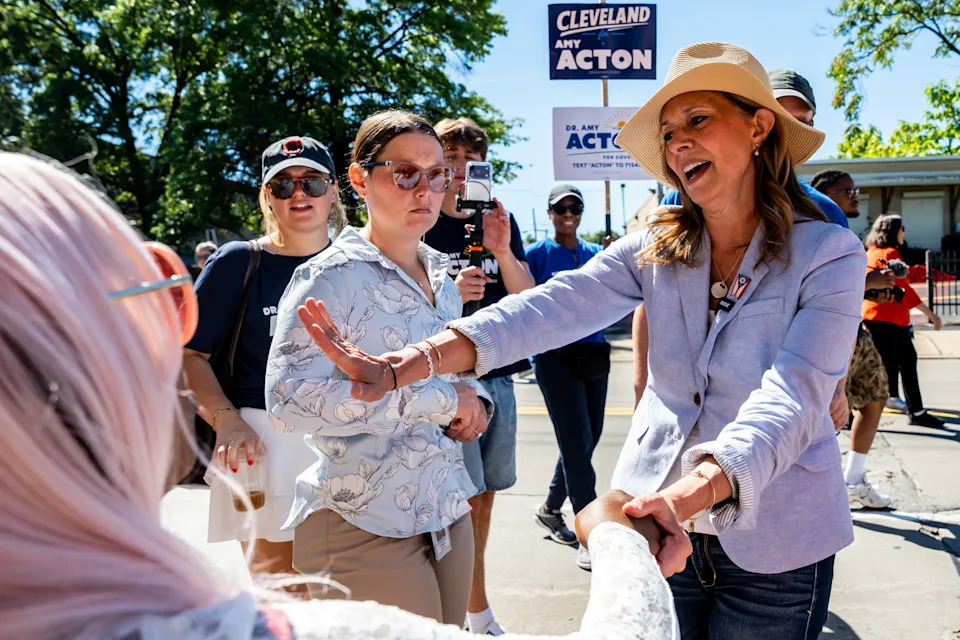
Dr. Amy Acton, in straw hat, greets attendees of of the 54th annual 11th Congressional District Community Caucus Labor Day Parade and Festival, Sept. 7, 2026, in Cleveland, Ohio. Dr. Acton is running for governor of Ohio.
In my decades of leading large organizational change and coaching executives, I’ve seen the same pattern: the most effective leaders are rarely those who pretend to have all the answers. They are the ones who recognize their limits, solicit other perspectives, and act on what they learn. In short, they lead themselves first.
Needing help is human. Recognizing it is self-awareness. Acting on it is self-leadership.
Self-leadership begins with questions such as: What am I trying to accomplish? What’s genuinely blocking progress? Whose perspective am I missing? What will I do next? These are not admissions of weakness; they are practices of accountability and discernment that make better leaders of others.
Evidence and broader consequences
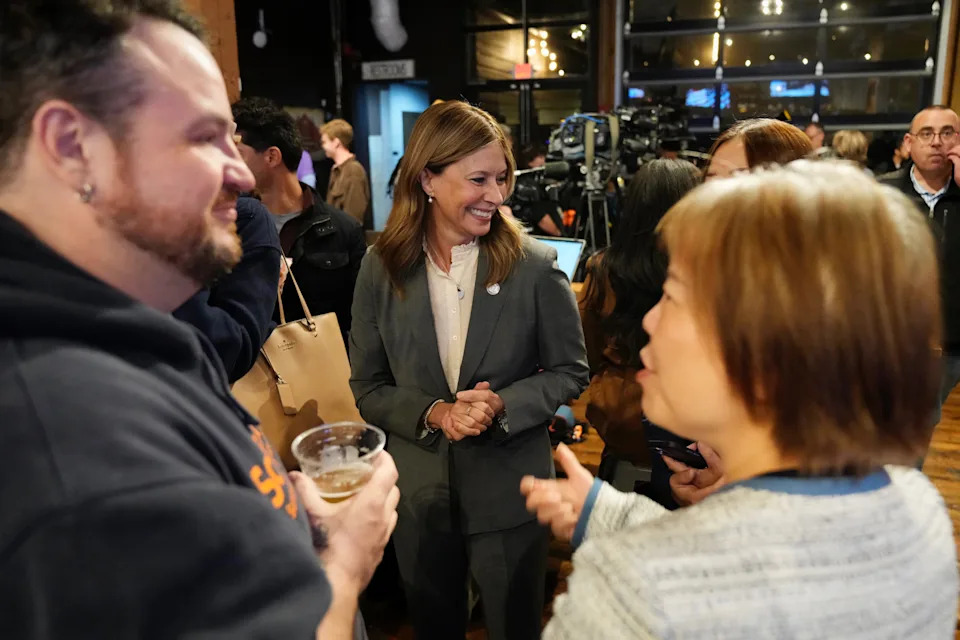
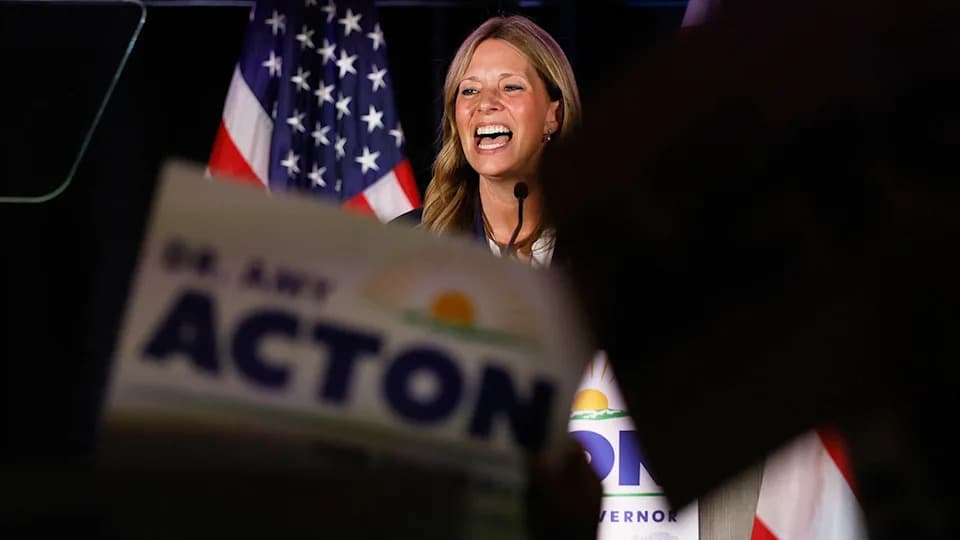
Democratic gubernatorial candidate Amy Acton, center, attends the Democratic candidates’ Election Night gathering at OTR Stillhouse in Cincinnati on Tuesday, November 4, 2025.
Research supports this approach. A study by Constantinos Coutifaris and Adam Grant found that CEOs who sought and shared feedback were associated with greater psychological safety on their executive teams. In an experiment that followed, leaders who publicly shared criticism they had received led teams that retained higher levels of psychological safety even a year later.
Yet political incentives often push the opposite message. When vulnerability can be weaponized into an attack ad, politicians learn to conceal it. When changing one’s mind is labeled a "flip-flop," they cling to positions. When admitting mistakes becomes campaign fodder, they stop admitting mistakes. Those dynamics reward ego-driven certainty over curiosity, image over honesty, and stubbornness over self-awareness.
The ripple effects go beyond politics. The same incentives influence CEOs reluctant to ask for advice, managers who hide mistakes, parents who avoid seeking help, and young people forming ideas about what strength looks like.

Dr. Amy Acton, in straw hat, greets attendees of of the 54th annual 11th Congressional District Community Caucus Labor Day Parade and Festival, Sept. 7, 2026, in Cleveland, Ohio. Dr. Acton is running for governor of Ohio.
Practical forms of help
Help can take many forms: therapy, coaching, mentorship, expert advice, or trusted counsel. Sometimes the first step is self-coaching: clarify the goal, identify obstacles, seek missing perspectives, and commit to a next step. Those steps build resilience and better decision-making.
A fair standard for voters
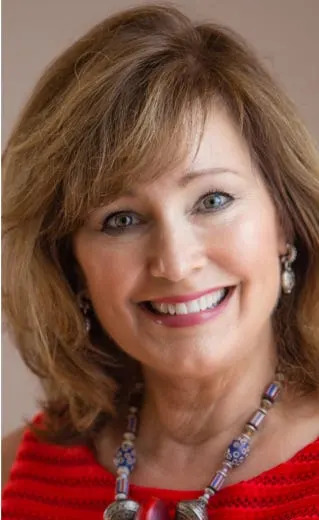
Sandra Hughes
Seeking therapy after childhood trauma neither qualifies nor disqualifies Amy Acton from serving as governor. Voters should assess her on her record, policy proposals and judgment—not on the fact that she sought treatment. More broadly, we should value leaders who demonstrate self-awareness, humility, curiosity and accountability.
Conclusion
Turning vulnerability into political ammunition sends the wrong message about leadership. Recognizing limits and acting to address them is a strength, not a liability. That is the standard we should expect from those who lead us.
About the author
Sandra Hughes is a former Procter & Gamble executive with more than 35 years of leadership experience and nearly 15 years as a business and executive coach. She is the author of "ZST4LVG (Zest for Living): A Self-Coach Framework to Bust Barriers." This piece originally appeared in the Cincinnati Enquirer.
Help us improve.