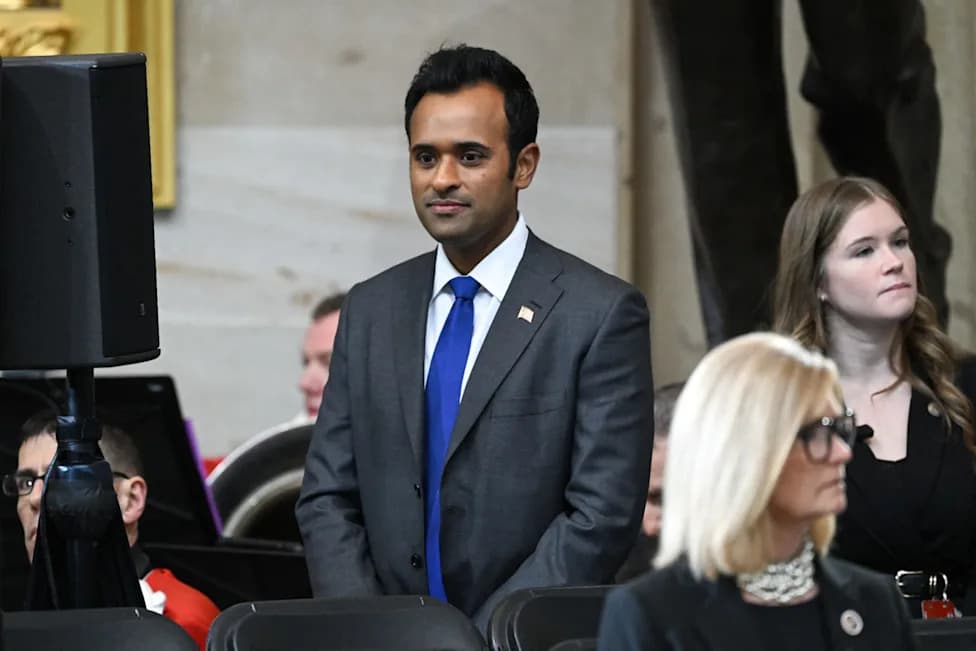
Vivek Ramaswamy is campaigning as the GOP's answer to mismanagement in Columbus, but his argument is weakened by decades of Republican control across Ohio government. School funding remains unresolved nearly 30 years after a court ruling, and the state now directs more than $1 billion annually to private schools, critics say. Ramaswamy's move of Strive Inc. to Texas and the 2028 presidential calendar raise questions about whether he would govern Ohio full-time or pivot quickly to a national bid.
Ramaswamy: Ohio Governor — Or A Launchpad For The White House?
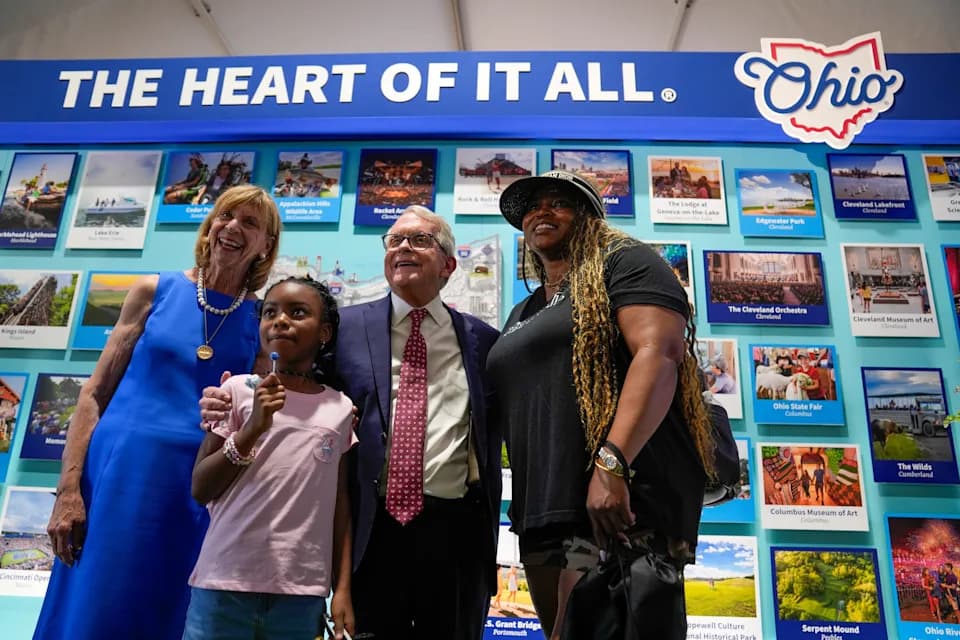
Ohio Gov. Mike DeWine and first lady Fran DeWine greet people visiting the Ohio exhibit at the Great American State Fair on the National Mall in Washington, DC, on June 25, 2026.
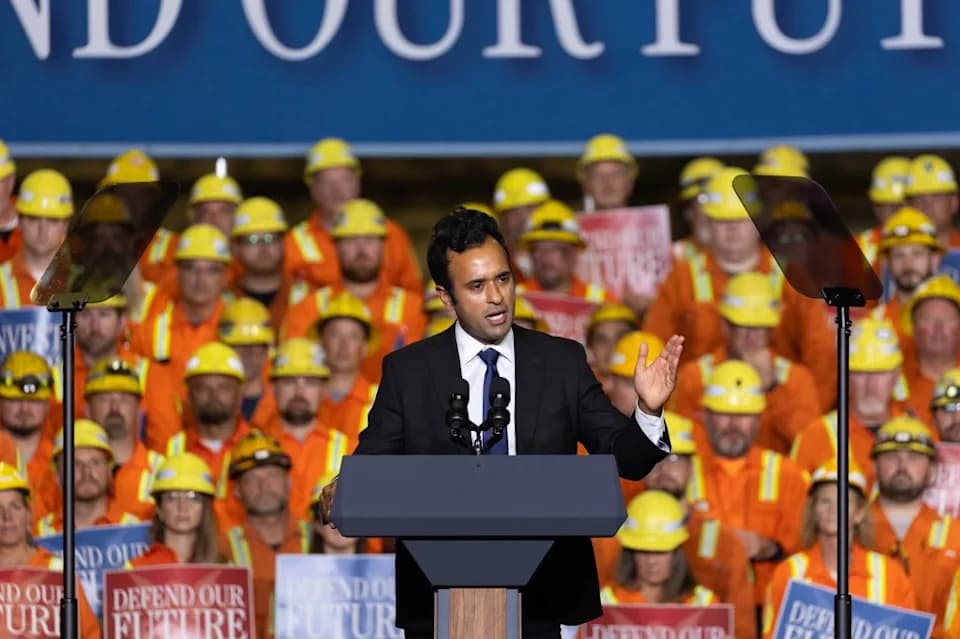
Vivek Ramaswamy presents himself as the candidate best suited to "clean up" Ohio government. But his campaign message — that Democrats are chiefly responsible for the state's problems — clashes with decades of Republican control across Ohio’s executive, legislative and judicial branches. That tension raises a central question for voters: would Ramaswamy govern Ohio full-time, or treat the governorship as a brief stop on the way to another presidential run?
Republican Dominance, Then And Now
Since 1990, Ohio has elected only one Democratic governor (Ted Strickland, 2007–2011). Republicans have controlled the state Senate continuously since 1985 and the Ohio House for most of the past three decades. The Ohio Supreme Court has maintained a Republican majority since the late 1980s, and the state has reliably cast presidential electoral votes for Donald Trump in recent cycles. This long GOP tenure undercuts claims that Democrats alone are to blame for systemic issues in state government.
School Funding: A Lingering Legal And Policy Problem
One concrete, unresolved issue is school finance. Nearly 30 years after a 4–3 Ohio Supreme Court ruling found the state's school funding system unconstitutional and ordered reform, the funding mechanism remains largely unchanged. At the same time, the state now directs hundreds of millions — estimates exceed $1 billion annually — to private and often religious schools, a practice critics argue raises constitutional and accountability concerns.
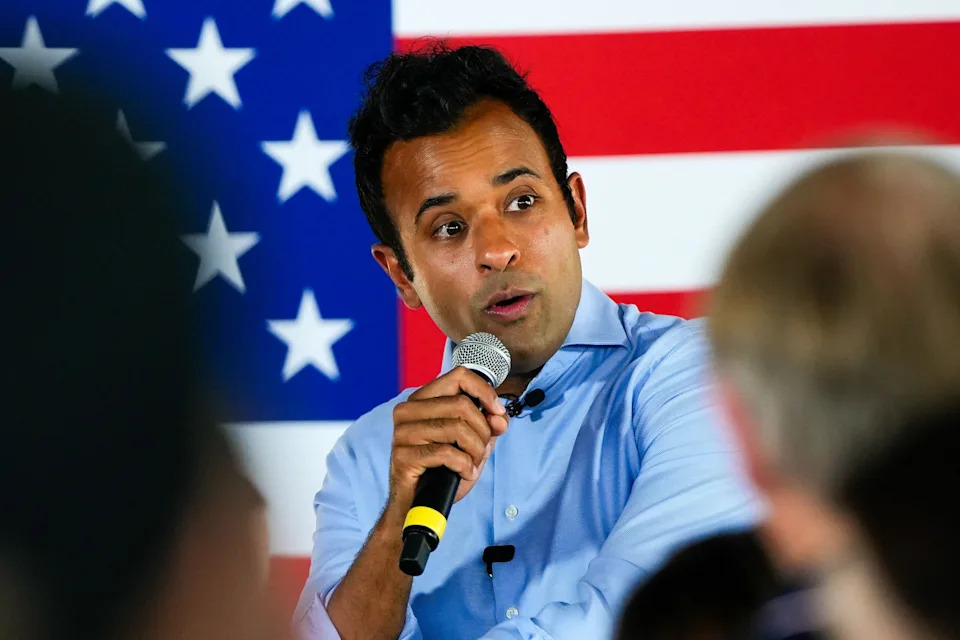
Republican gubernatorial candidate Vivek Ramaswamy campaigns on Aug. 29, 2026, in Hilliard, Ohio.
Ramaswamy’s Personal Choices And The Credibility Question
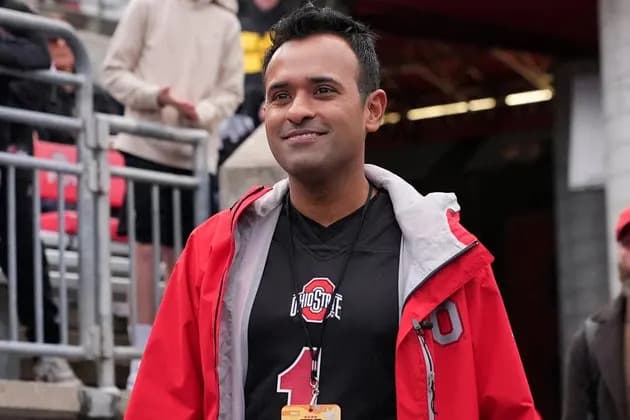
Ramaswamy, an Upper Arlington native and former St. Xavier valedictorian, has also moved his primary business, Strive Inc. — a notable participant in Bitcoin markets — from Ohio to Texas. That relocation complicates his message that he is deeply invested in Ohio’s future and prompts voters to question whether his commitment is long-term.
Timing And The Road To 2028
If elected, the governor's inauguration is scheduled for Jan. 11. The first two-year operating budget is due within six months (by July 1). Barely a year later the 2028 presidential nominating calendar begins: the Iowa caucuses are set for Jan. 3, 2028, and the New Hampshire primary for Jan. 11, 2028. Those dates create a narrow window for any governor who decides to launch a presidential bid.
Political Competition And Voter Stakes
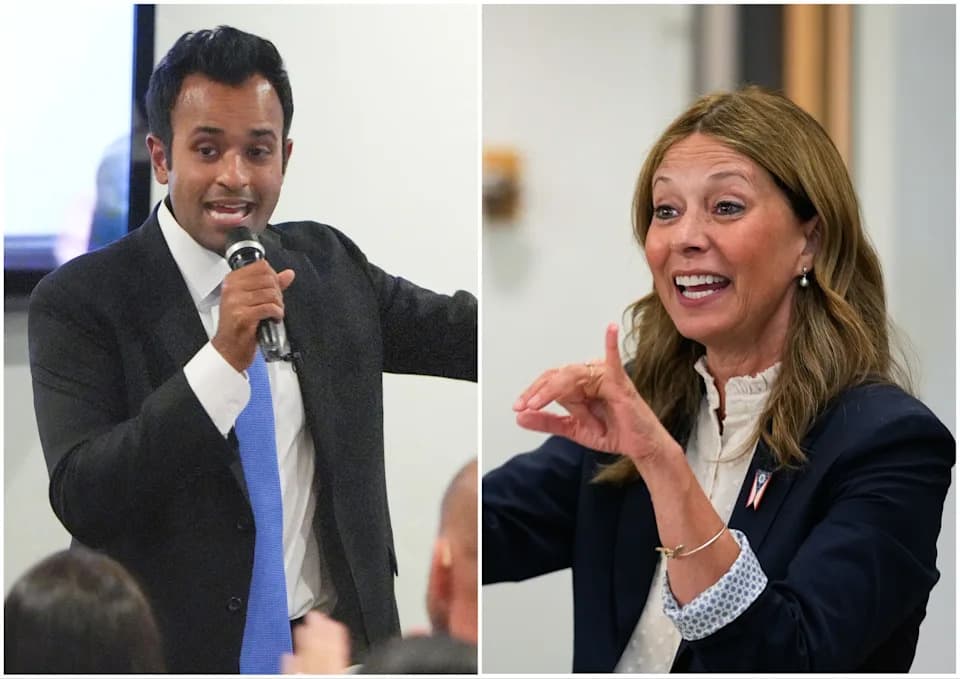
Other Ohio Republicans, including U.S. Senator J.D. Vance, are also viewed as potential presidential contenders. Those intra-party dynamics could fracture the GOP base and affect who attracts support in both statewide and national races. Polling at the time of writing showed a close race between Ramaswamy and Democratic nominee Amy Acton, a former state health director who served in Governor Mike DeWine's cabinet.
The core question for Ohio voters: Do they want a governor fully focused on the state's challenges, or an officeholder who may treat the governorship as a springboard to a national campaign?
Thomas Suddes, a former legislative reporter, writes from Ohio University. This column originally appeared in The Columbus Dispatch.
Help us improve.