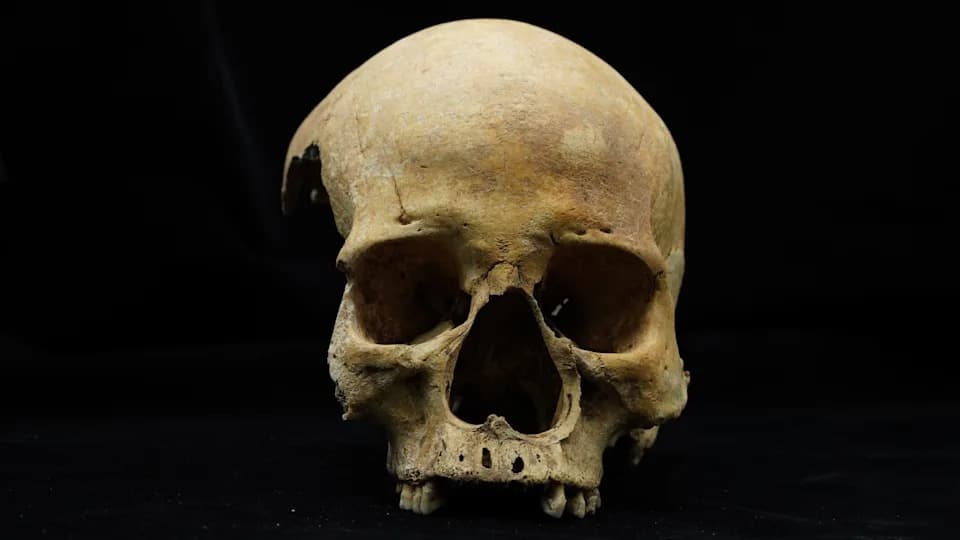
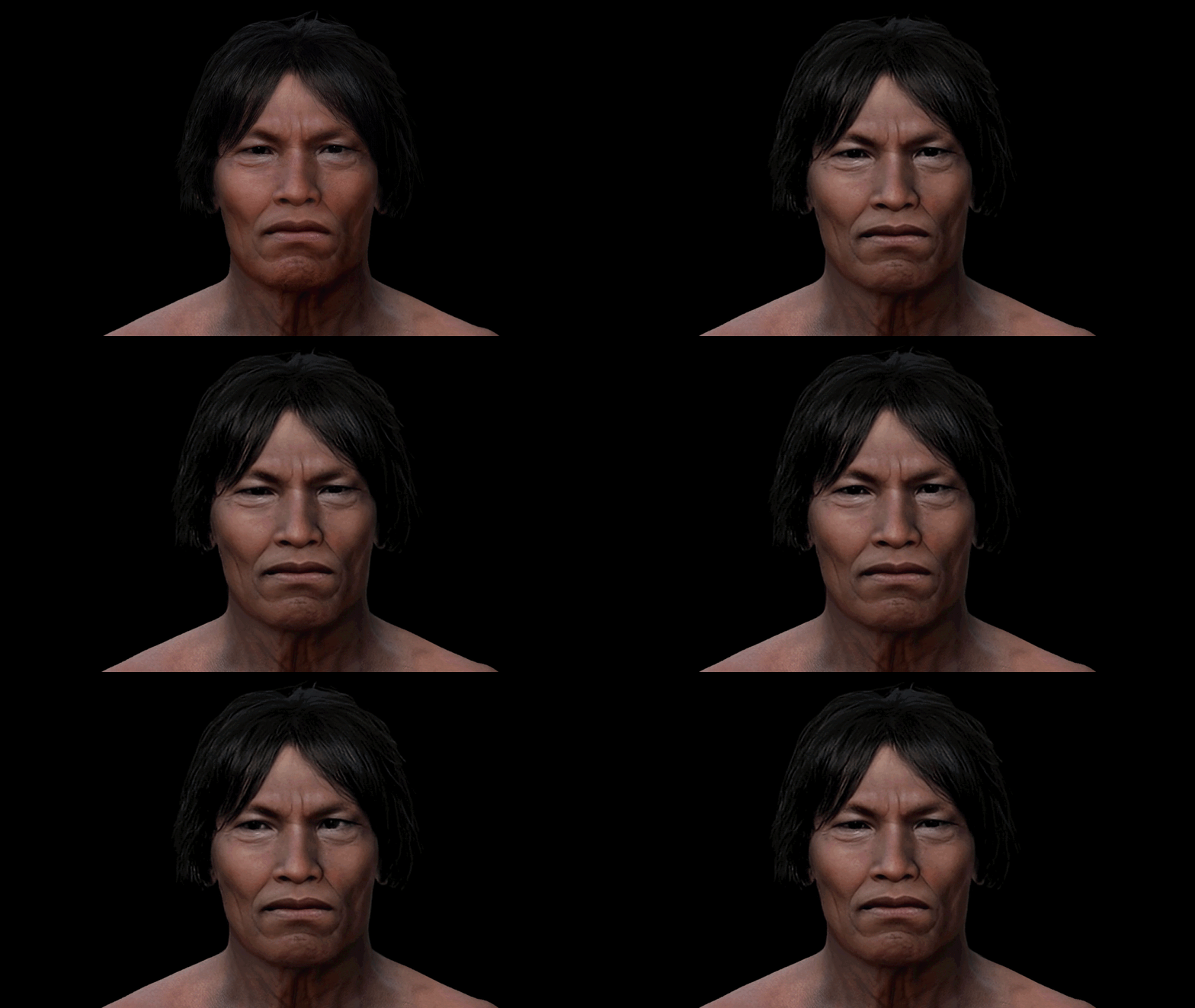
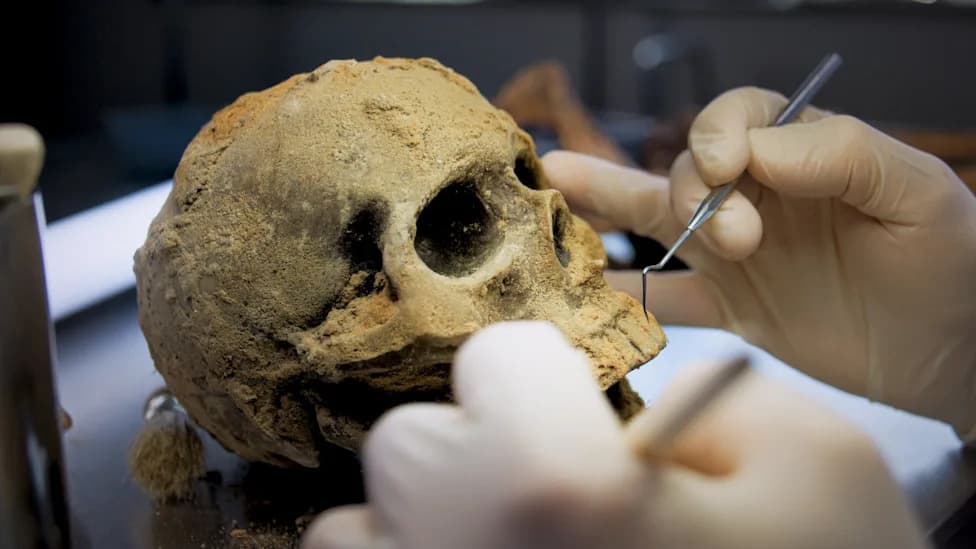
The skull of a woman dated to 1298–1404 CE, excavated at Sanzhiyuan cemetery in Henan Province, shows an enlarged nasal opening, partially removed nasal bones and healed internal fractures consistent with survival after traumatic removal. Combined with a marginalized burial—face-down in a wooden coffin with only a copper hairpin—researchers interpret the evidence as likely punitive nasal amputation, a penalty recorded in ancient Chinese texts. Identified in 2024 and analyzed under the Global History of Health Project, the find could be the first physical confirmation of this historical punishment and prompts further searches for similar cases.
700-Year-Old Skull May Be First Archaeological Proof Of Punitive Nose Amputation In China
Photo Credit: iStock
Researchers report that a skull dated to roughly 1298–1404 CE — recovered at the Sanzhiyuan cemetery in Henan Province — may represent the first direct archaeological evidence of nasal amputation used as a criminal punishment in China. The remains, found among about 300 burials unearthed in 2019, show bone changes consistent with deliberate removal of part of the nose and subsequent healing, indicating the individual survived the injury.
Key Findings
Examination of the skull revealed an enlarged nasal aperture, partly removed nasal bones and healed fractures inside the nasal cavity. These features indicate the wound was not immediately fatal and had time to remodel. The woman was radiocarbon-dated to 1298–1404 CE, placing her in the late Yuan or early Ming period.
Burial Context Suggests Stigma
The skeleton belonged to a middle-aged woman who was buried face-down at the southern edge of the cemetery in a wooden coffin and accompanied only by a single copper hairpin. According to study co-author Qian Wang (Texas A&M University), those details point to social exclusion: the placement, isolation and sparse grave goods together suggest she may have been stigmatized even in death.
“We believe this woman was a kind of cast-off after death. She was buried face-down, suggesting a discriminatory attitude,” Wang said. “Her burial, alone, in a place without her family or community, could be a decision of disapproval.”
Punishment Versus Other Explanations
The authors argue that deliberate facial mutilation as a punitive measure is the most plausible explanation given the trauma pattern and the burial context. Historical sources document nasal amputation in China from Shang dynasty oracle-bone inscriptions onward; later legal codes listed nasal removal among the so-called “Five Punishments.” In an agrarian society, offenses such as livestock theft could draw harsh corporal penalties.
Researchers acknowledge alternative causes — congenital anomaly, disease, or nonpunitive trauma — cannot be completely ruled out. However, the combination of healed surgical-like damage and signs of social marginalization in burial strengthens the interpretation of penal amputation.
Significance And Next Steps
The specimen’s significance was recognized in 2024 by Yawei Zhou (Zhengzhou University) while analyzing the cemetery collection; the material was examined as part of the Global History of Health Project’s Asia Module, led by Qian Wang. Elizabeth Berger, a bioarchaeologist at UC Riverside who was not involved with the study, called the case persuasive and said it opens the door to searching for other skeletal examples and evidence of post-injury medical care or prosthetics.
Future screenings of skeletons from the site and other collections may reveal additional instances or clarify how such punishments were carried out and managed medically. If confirmed, this find would provide rare physical confirmation of a severe legal sanction long attested in historical texts but not previously identified in human remains.
Contextual Note: Related recent archaeological discoveries — from possible brain removal in an Iron Age Scottish burial to traces of anesthetic on historical Chinese surgical tools — highlight how skeletal and material evidence can illuminate social status, medical practice and ritual treatment in the past.
Help us improve.