Congress extended IIJA surface transportation programs through Dec. 11, avoiding a Sept. 30 lapse but providing only a short, roughly 10-week reprieve. Industry groups warn the brief extension has already disrupted state bid schedules and may push agencies to phase projects, raising costs. The short-term deal also excluded certain advance appropriations — including funds tied to bridge programs — creating immediate funding risk for some projects. Lawmakers are now targeting a multiyear reauthorization (BUILD America 250), which would include new revenue measures such as a fee on electric and hybrid vehicles.
Infrastructure Contractors Dodge Immediate Funding Cliff, But a Dec. 11 Deadline Looms
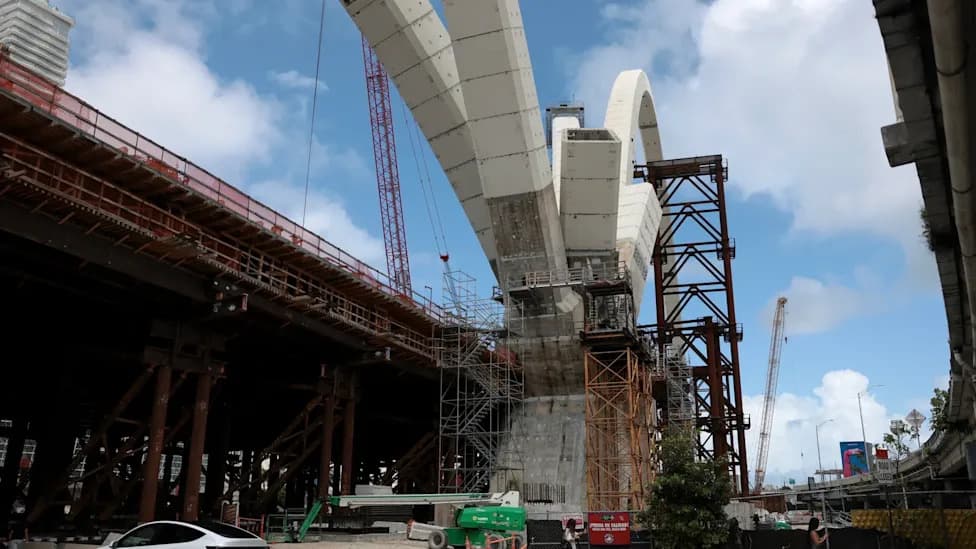
Concrete arches rise above the Signature Bridge construction project along I-395 on April 9, 2026, in Miami, Fla.
Congress has given infrastructure contractors a short reprieve — but not the long-term certainty the industry sought. Lawmakers extended federal surface transportation programs created under the Infrastructure Investment and Jobs Act (IIJA) through Dec. 11, averting a lapse that would have occurred on Sept. 30. The short-term extension was enacted by the Continuing Appropriations and Extensions Act, signed into law on Sept. 2 by President Joe Biden.
Why the Extension Falls Short
The roughly 10-week extension preserves the IIJA framework in the near term, but industry groups and contractors say it is insufficient for planning. Infrastructure work remains one of the most reliable sources of construction activity outside of data center projects, so uncertainty about long-term federal funding directly affects workforce, equipment and procurement decisions.
"One short-term extension, it's not a long period of time," said Alex Etchen, vice president of construction advocacy and risk management at the Associated General Contractors of America. He noted some state departments of transportation began scaling back planned bid openings earlier this summer amid fears the IIJA might expire.
Operational and Legal Impacts
Short-term extensions can prompt agencies to delay lettings or break larger projects into smaller phases — a practice that typically raises overall costs. "When that happens, costs increase," said Michael Clark, partner at Smith Currie Oles. He added that contractual provisions for contingencies, suspension, termination and delay are often triggered when projects are phased or funding is uncertain.
Josh Leonard, senior manager of legislative affairs at Associated Builders and Contractors, emphasized that contractors make major workforce, bonding and subcontractor commitments well before projects reach the advertisement stage. "A multiyear authorization gives state transportation departments more visibility into federal funding and helps them maintain more predictable schedules," he said. A 10-week extension, by contrast, preserves the framework but does not provide the same planning horizon.
Funding Gaps: Advance Appropriations Left Out
Crucially, the short-term extension did not include all IIJA funding streams. The IIJA used the Highway Trust Fund (HTF) revenue streams — fuel and excise taxes supplemented by general fund transfers — but it also relied on advance appropriations for certain programs. Those advance appropriations were not carried forward in the continuing resolution.
"It's not a clean extension. The deadline moved, but not all of the money moved with it," Clark told Construction Dive.
The omission raised immediate concern among suppliers and contractors who depend on bridge and related program dollars. Nick Rhoad, CEO and president of the National Precast Concrete Association, warned that bridge funding could effectively stop for new projects without additional congressional action. The IIJA included $5.5 billion for the Bridge Formula Program; without advance appropriations, states could lose the ability to plan, bid and start new bridge rehabilitation projects that often take years to launch.
Next Steps: BUILD America 250 and the Funding Challenge
Industry groups are now watching the proposed BUILD America 250 multiyear surface transportation reauthorization. The House Transportation and Infrastructure Committee approved the bill 62–2 in May, but the full House has not yet voted and the Senate has not released its highway reauthorization proposal. Etchen noted that the House Ways and Means Committee still needs to provide a tax title before the bill can move to the House floor.
Paying for a multiyear authorization remains a major obstacle. BUILD America 250 would introduce a fee on electric and hybrid vehicles to generate new Highway Trust Fund revenue — the first new HTF revenue source in roughly 30 years — but that proposal and other funding mechanisms will be politically sensitive.
While industry groups say they would have preferred a long-term reauthorization now, many expressed relief that funding was preserved through Dec. 11 and hope Congress will complete action in the lame-duck session.
What To Watch: Will Congress pass a multiyear reauthorization before Dec. 11? Will advance appropriations for bridge and other programs be restored? Answers to those questions will determine whether states can resume normal bid schedules and whether contractors can plan for longer-term workloads.
Help us improve.