The Rev. Flourish Klink, an assistant Episcopal priest in New York, said during a March 21 service that "God is nonbinary" and "God is actually also trans," remarks that were published on Klink's website and drew attention after a clip was shared on X on Sept. 23. Klink linked this view to Jesus' birth and resurrection, suggesting the resurrected Christ may have been revealed in a form beyond male or female. The comments were described as a personal theological interpretation and sparked sharp criticism and debate online about theology and gender identity.
Episcopal Priest Says "God Is Trans" in NYC Sermon, Igniting Online Theological Debate
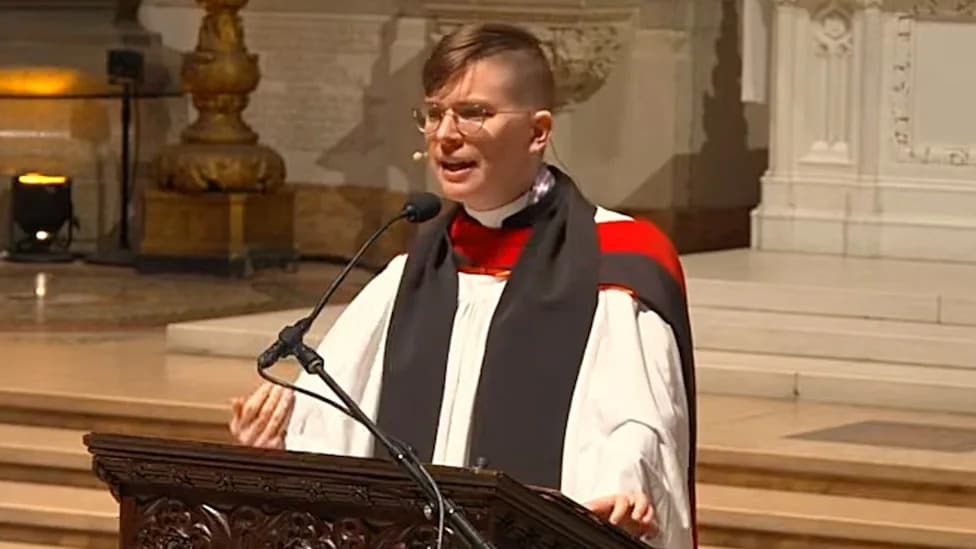
Cathedral of St. John the Divine/YouTube
An Episcopal priest's assertion that "God is trans" has sparked a heated online debate after a video of the sermon circulated this week. The remarks, which were part of a service honoring transgender joy and resilience, were posted online and drew sharp reactions across social media.
What Happened
The Rev. Flourish Klink, an assistant priest at Christ & St. Stephen's Episcopal Church, delivered the sermon on March 21 at the Cathedral of St. John the Divine in New York City. A clip of the sermon was shared by The Dissenter on X on Sept. 23, prompting renewed attention to comments Klink published on their website.
Key Remarks
In the sermon Klink proposed that God is "nonbinary" and added, "God is actually also trans." Klink explained how many transgender people come to recognize a gender different from the one assigned at birth and then applied that idea to Christian theology and the life of Jesus.

ZUMAPRESS.com / MEGA
"When God, who — as we have established is nonbinary — was born in human form as our Lord Jesus Christ, Mary said, 'Oh look, a baby boy,'" Klink said. "I think Jesus was resurrected as Jesus' true self, which is beyond male or female. I think Jesus was not only transfigured; I think Jesus transitioned."
Response And Context
Klink framed these remarks as a personal theological interpretation rather than a settled doctrinal claim. The interpretation prompted strong objections in the comments under The Dissenter's post, many from conservative Christian readers who questioned Klink's reading of Scripture and the nativity. Other commenters expressed their frustration with contemporary church culture.
Supporters say the sermon intended to celebrate transgender people and invite broader conversation about gender and the divine. Critics called the language theologically unsound or offensive. The exchange highlights ongoing tensions at the intersection of religion, gender identity, and public discourse.
Note: The sermon was delivered in March and later posted to Klink's website; the viral attention followed the clip shared on X. The Rev. Klink's comments are presented in the sermon as personal interpretation, not as an official statement from the Episcopal Church.
Help us improve.