The Reddit thread shows that a single trip on some Dallas-area TEXpress lanes can cost roughly 86% more than an hour at Texas' $7.25 minimum wage (about $13.50). Dynamic tolling causes wide price swings — drivers report rates from $0.83 to $20 or $30+ depending on congestion — forcing commuters to weigh time savings against cost. The debate raises equity concerns and has prompted calls for better transit, smarter land use, and fairer pricing policies.
Dallas Toll Outrage: One TEXpress Trip Can Cost About 86% More Than An Hour At Texas Minimum Wage
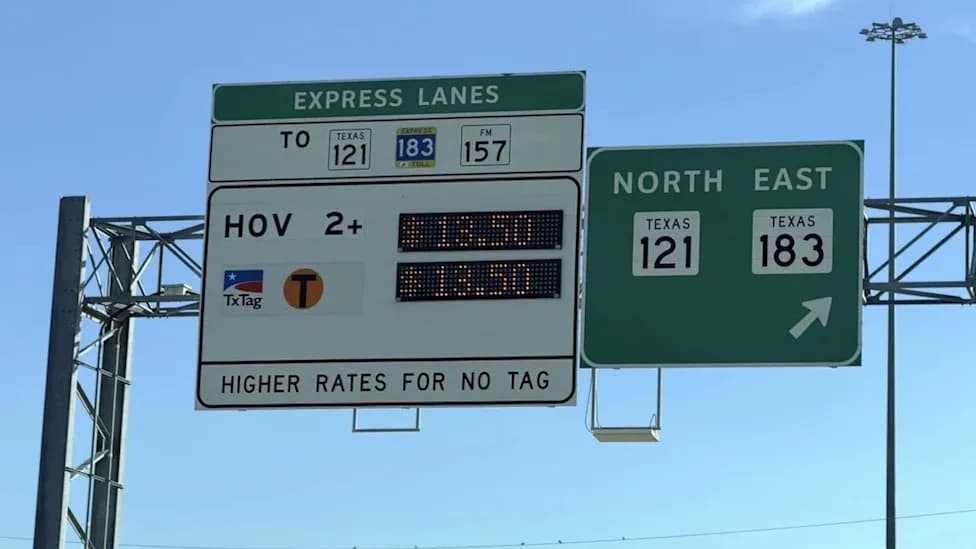
Photo Credit: Reddit
A recent Reddit thread about a North Texas toll road has struck a nerve: for some drivers, a single trip through Dallas-area TEXpress lanes can cost roughly 86% more than one hour's pay at Texas' $7.25 minimum wage — about $13.50 compared with $7.25.
What Reddit Users Reported
The post, shared on r/MildlyInfuriating, included a photo of a toll sign and a caption noting the gap between the toll price and an hour's minimum-wage earnings.
If you don't take this toll road, you added a guaranteed 30m to your trip.
Many commenters pointed out that avoiding the TEXpress Lanes can mean a significant delay rather than a minor detour — for some commuters, the choice is a stark tradeoff between time and money.
Dynamic Pricing Drives Wide Swings
Other replies focused on how the lanes are priced. The TEXpress system uses dynamic tolling: rates rise as congestion increases to keep the tolled lanes moving. Local drivers reported dramatic variation in prices — from as low as $0.83 during light traffic to common peaks around $20, with some saying the lanes can spike to $30 or more during heavy demand.
Friendly reminder that the dynamic price is based on how congested the express lanes are. So the more congested the express lane is, the higher they charge.
Equity And Policy Concerns
Critics say dynamic tolling raises equity issues: lower-income workers may be priced out of the fastest routes, effectively paying more to maintain a reasonable commute. Community-level solutions commenters suggested include better public transit, updated land-use planning to reduce commute distances, and transportation policies that avoid forcing residents to pay extra simply to reach jobs and services.
Broader Context
The Dallas debate echoes conversations in other cities about congestion pricing and the rising cost of driving. Related examples include disputes over automated toll charges in New York, early evidence that New York’s congestion pricing reduced traffic, and London’s policy changes around congestion-charge exemptions for electric vehicles. Some coverage also points to rail alternatives and other public investments as long-term options to ease both congestion and cost burdens.
Bottom line: The Reddit post highlights a concrete, relatable example of how dynamic tolling can create sharp cost-versus-time tradeoffs for commuters, and it has reignited broader discussions about transportation equity and policy choices in Dallas and beyond.
Help us improve.