Seven rideshare drivers in Los Angeles who opened Uber and Lyft apps side by side reported receiving different pay offers for identical trips, a test shared by More Perfect Union on Sept. 13. The group says Uber sent the same ride 46 times and in 63% of those instances at least one driver was shown a lower offer; Lyft showed post-bonus gaps of about $3–$4. Advocates call the pattern "algorithmic wage discrimination," and legal groups and regulators including the FTC are investigating opaque pricing systems.
Side-by-Side L.A. Test Finds Uber and Lyft Offered Different Pay For The Same Ride
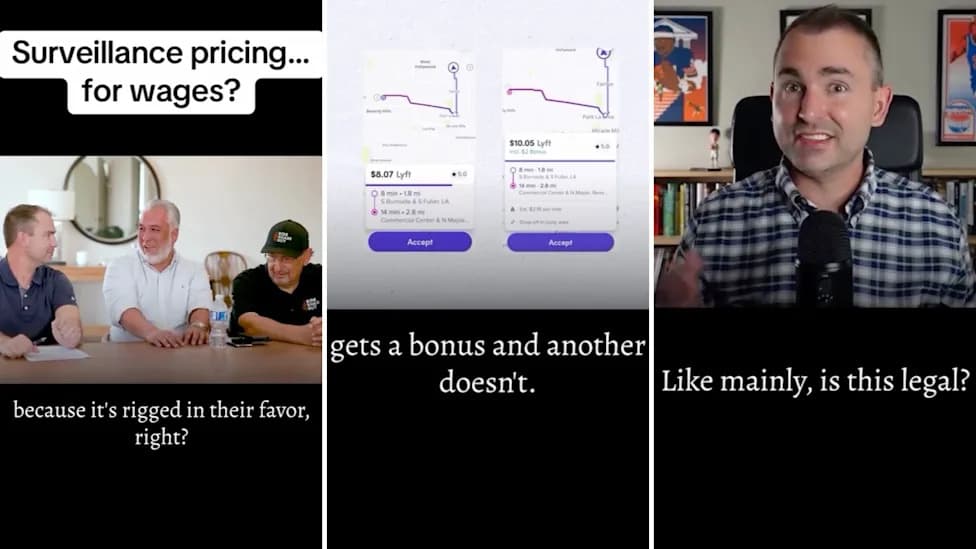
Photo Credit: Instagram
Seven experienced rideshare drivers in Los Angeles who opened Uber and Lyft apps side by side reported seeing different pay offers for identical trips, according to a Sept. 13 Instagram post from advocacy group More Perfect Union.
How The Test Was Run
More Perfect Union teamed up with Sergio Avedian, a veteran driver and senior contributor at The Rideshare Guy, and asked seven drivers to gather in a busy part of Los Angeles. To keep visible variables consistent, the drivers placed their phones inches apart, started screen recordings, refreshed the apps and compared the ride offers that appeared in real time.
Key Findings
The video reported that Uber sent the same ride to multiple drivers 46 times; in 63% of those instances at least one driver was shown a lower offer for that trip. For Lyft, the video said discrepancies were larger after bonuses, with gaps of roughly $3–$4 between what different drivers were offered for the same trip.
"Before upfront pricing replaced it, drivers were paid under a clearer 'rate card' tied to time and distance, but the transparency vanished," Avedian said in the video. "The algorithms are set up to charge the rider as much as possible and to pay the driver as little as possible."
Why This Matters
Many drivers rely on rideshare income as a major source of earnings. Small, unexplained differences in pay for identical trips can compound over a day, week or month, reducing take-home pay and making it difficult for drivers to plan or compare offers. More Perfect Union described the pattern as "algorithmic wage discrimination," meaning opaque automated systems determine pay in ways workers cannot readily inspect or contest.
Responses And Regulatory Scrutiny
When asked how offers are calculated, Uber directed More Perfect Union to a company blog post explaining reasons offers might differ. Lyft did not respond to requests for comment. Legal advocates say the issue merits closer review: David Seligman, executive director of nonprofit Towards Justice, pointed to the group's 2022 lawsuit on behalf of rideshare drivers and argued that independent contractors still need "true economic independence," including meaningful control or transparency over pricing.
Regulators are paying attention as well. The video referenced the Federal Trade Commission's July probe into surveillance pricing as evidence that authorities are examining hidden algorithmic pricing practices more broadly.
What Comes Next
Without clearer disclosures or independent oversight, drivers lack the information to determine whether they're being paid fairly, to compare offers reliably or to challenge practices that may erode earnings. Advocates and some regulators are calling for greater transparency and legal scrutiny of platform pricing algorithms.
Help us improve.