On September 16, Spirit Flight 1300—a Spirit Airlines A321 from Fort Lauderdale to Boston—was repeatedly warned by Boston Logan air traffic control after approaching within about eight miles of the presidential Boeing. LiveATC.net audio shows controllers ordering the crew to "turn 20 degrees right now," followed by a pointed rebuke: "Pay attention. Get off the iPad." The exchange highlights ATC's use of coded, urgent language to protect the airspace around Air Force One and the priority given to presidential flights.
Pilot Scolded Live On ATC Radio After Flying Too Close To Air Force One
Evan El-Amin/Shutterstock
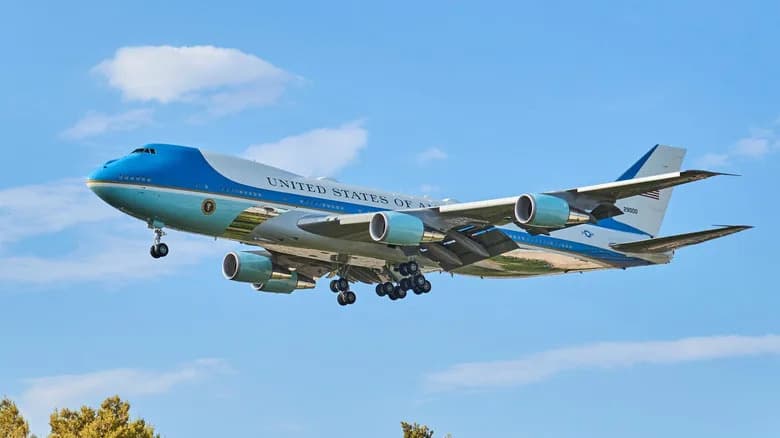
Air traffic control publicly rebuked a Spirit Airlines crew after the flight came too close to the presidential aircraft. On September 16, controllers at Boston Logan adjusted traffic to protect the airspace for the president's flight to London; during those adjustments, Spirit Flight 1300—a Spirit Airlines Airbus A321 from Fort Lauderdale to Boston—was instructed to alter course after closing to within about eight miles of the presidential Boeing.
What Happened
According to an audio recording posted on LiveATC.net and reported via ABC, the controller repeatedly ordered the Spirit pilot to change heading: "Turn 20 degrees right now." The pilot did not acknowledge the first few calls immediately, and the controller's tone moved from firm to plainly irritated before the crew replied, "20 degrees right, Spirit wings 1300."
Airman 1st Class Stassney Davis/ Wikimedia Commons
"I'm sure you can see who it is ... he's white and blue," the controller said. After the crew complied, the controller added the memorable admonition: "Pay attention. Get off the iPad."
Why Controllers Use Coded Language
Controllers avoid announcing the president's presence on an open frequency. Instead they use brief, descriptive phrases—such as identifying a "white and blue 747"—to alert nearby traffic without explicitly saying "Air Force One." That discretion, combined with the need to maintain separation for a high-priority flight, explains the urgency and the terse tone in ATC communications.
About Air Force One
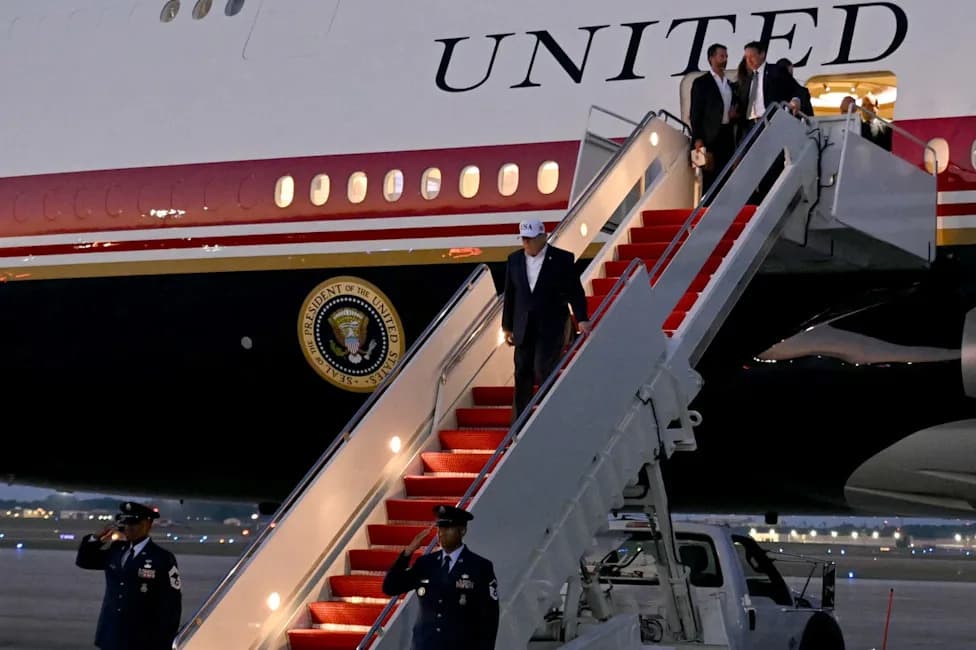
"Air Force One" is the radio call sign for any U.S. Air Force aircraft carrying the president. The current presidential transports are two heavily modified Boeing VC-25As (based on the 747-200 series) painted in a distinctive white-and-blue scheme. Replacement aircraft (VC-25Bs) are being prepared at Boeing's San Antonio facility and are expected to provide updated performance and systems over the older VC-25As.
The exchange captured on LiveATC.net is a reminder that pilots are expected to acknowledge and execute ATC instructions promptly—especially when those instructions protect the airspace occupied by high-priority government flights. While the reprimand was blunt, it underscored how quickly routine operations can become urgent when a presidential flight is nearby.
Help us improve.