TRM Labs uncovered a YouTube-based scam in which fake "AI" crypto-bot tutorials tricked users into compiling and deploying wallet-draining Ethereum contracts, stealing 274.6 ETH (about $517,000) from at least 224 wallets between Feb. and Aug. 2026. The attackers used fake compilers that displayed harmless source code while deploying different malicious bytecode, letting victims authorize transactions from their own wallets and evade common security tools. TRM advises using verified development environments and confirming that deployed bytecode matches inspected source code.
Fake 'AI' Crypto-Bot Tutorials Trick Users Into Deploying Wallet-Drainers, Steal $517K in ETH
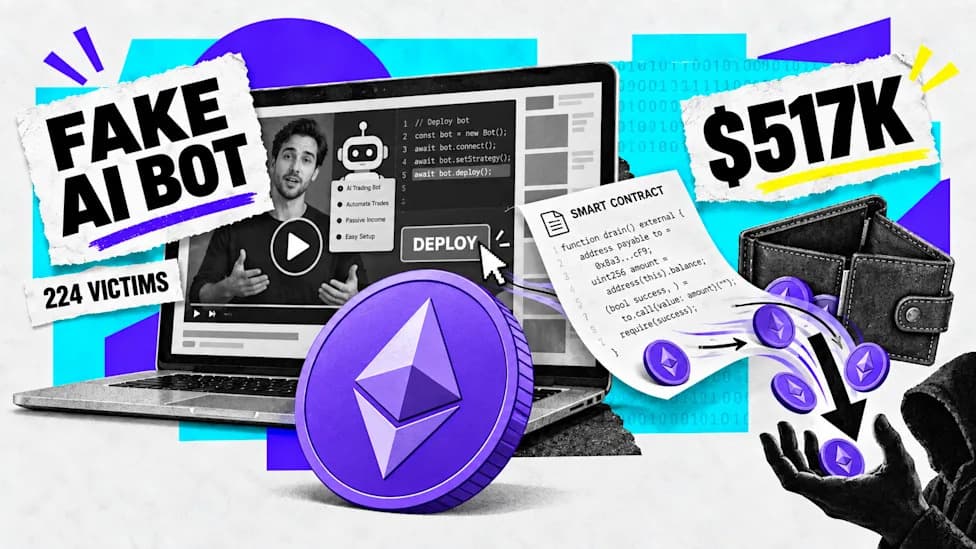
Fake YouTube tutorials tricked 224 users into deploying malicious AI crypto bot contracts, stealing 274.6 ETH worth $517,000. | Credit: CCN.com
Security researchers at TRM Labs uncovered a coordinated YouTube scam that convinced viewers to compile, deploy and fund malicious Ethereum smart contracts disguised as AI-powered trading bots. Between February and August 2026, the campaign siphoned a total of 274.6 ETH — roughly $517,000 — from at least 224 wallets.
What Happened
The attackers published nine nearly identical tutorial videos that promised to show how to build automated arbitrage bots using Anthropic’s Claude. Each tutorial included AI-generated hosts, voiceovers and detailed screen recordings that walked viewers through setting up a wallet, pasting source code, deploying a smart contract and funding it with trading capital. Fake comments and scripted testimonials reinforced the illusion of legitimacy.
How The Scam Worked
Crucially, the tutorials instructed viewers to use an online compiler chosen by the creators. Several of these sites mimicked Remix — a legitimate Ethereum development environment — and displayed harmless-looking source code. But a background script on the fake compiler discarded the visible code and fetched different bytecode from a server controlled by the scammers. The code shown on-screen never reached the blockchain.
The deployed contracts accepted deposits but contained no trading or arbitrage logic. When victims clicked controls like "Start" or "Withdraw," any balance above 0.05 ETH was routed to the operators. Because users deployed and signed transactions from their own wallets, the thefts appeared legitimate and often bypassed automated security tools.
Why It Evaded Detection
This scheme avoided many common security signals: victims did not click unsolicited phishing links, connect wallets to obvious malicious pages, or grant token approvals to third parties. Phishing blocklists, wallet alerts and approval-analysis tools flagged little, since the visible source code looked normal and the malicious substitution occurred at the compiler/bytecode level.
Funds Flow And Scope
TRM traced 234 victim-deployed contracts to 224 funding wallets, with the first theft on February 12 and the latest on August 11. The operators consolidated proceeds through six addresses and moved funds entirely via decentralized infrastructure: DEX swaps (including conversions to DAI), cross-chain bridges and at least one crypto mixer. TRM found no evidence that funds were cashed out through centralized exchanges.
Additional Social-Engineering Tactics
After victims lost funds, some were shown a fraudulent compiler error claiming the bot required a 50% additional deposit to fix a non-existent "gas nonce liquidity" problem — a technical-sounding ruse designed solely to extract more ETH. TRM noted that "gas nonce liquidity" is not an Ethereum concept.
Recommendations
- Treat your development environment as a security decision: avoid compilers bundled with tutorials, comments or unofficial guides.
- Use verified tools: rely on trusted development environments and downloads from official sources.
- Verify deployed bytecode: confirm that the bytecode published on-chain matches the source code you inspected (tools like Etherscan and reproducible compilation can help).
- Be skeptical of polish: a professional presenter, a recognizable AI brand or enthusiastic comments do not prove legitimacy.
- Report suspicious content: notify platform moderators and security firms if you encounter tutorials that encourage compiling code via third-party sites.
Rather than stealing credentials or prompting approvals, the operators persuaded victims to build, fund and activate the theft mechanism themselves.
This campaign highlights how attackers can weaponize instructional content and AI branding to target inexperienced developers and crypto users. Vigilance, verified tools and bytecode verification are essential defenses.
Help us improve.