The Democratic Republic of Congo has started vaccinating front-line health workers in Bunia and Mongbwalu with the Ervebo vaccine as the Bundibugyo-driven outbreak intensifies. The campaign aims to reach about 20,000 responders in Ituri and North Kivu over six to nine months. Officials report 7,541 confirmed cases and 3,639 deaths; WHO warns the epidemic may surpass the 2014–2016 West Africa outbreak. Some 70,000 Ervebo doses were approved for Congo, with 20,000 reserved for a trial against the Bundibugyo virus.
Congo Begins Ervebo Vaccinations for Front-Line Health Workers in Bunia Amid Deadly Bundibugyo Outbreak
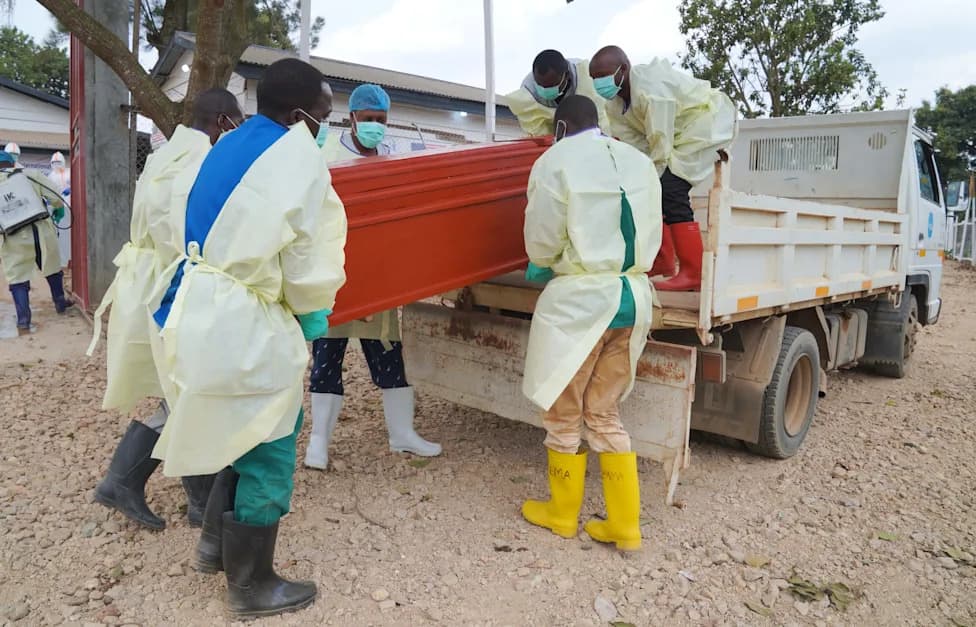
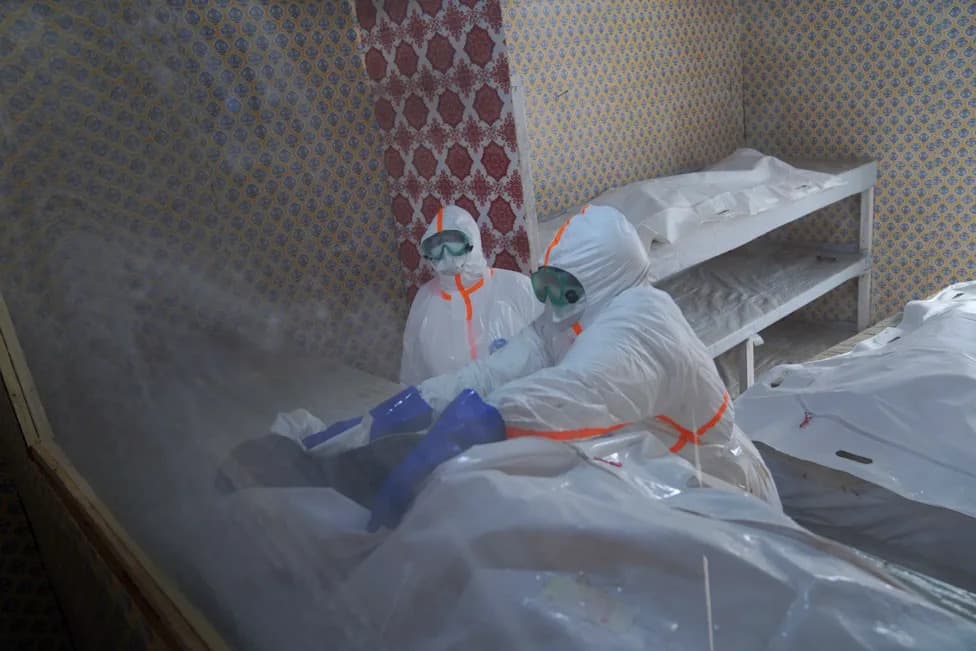
Health workers who are members of the safe and dignified burial team prepare to bury Abineno Justine, a 38 year old woman who died of the Ebola virus, in Bunia, Congo, Friday, Sept. 4, 2026. (AP Photo/Dieudonne Dirole)
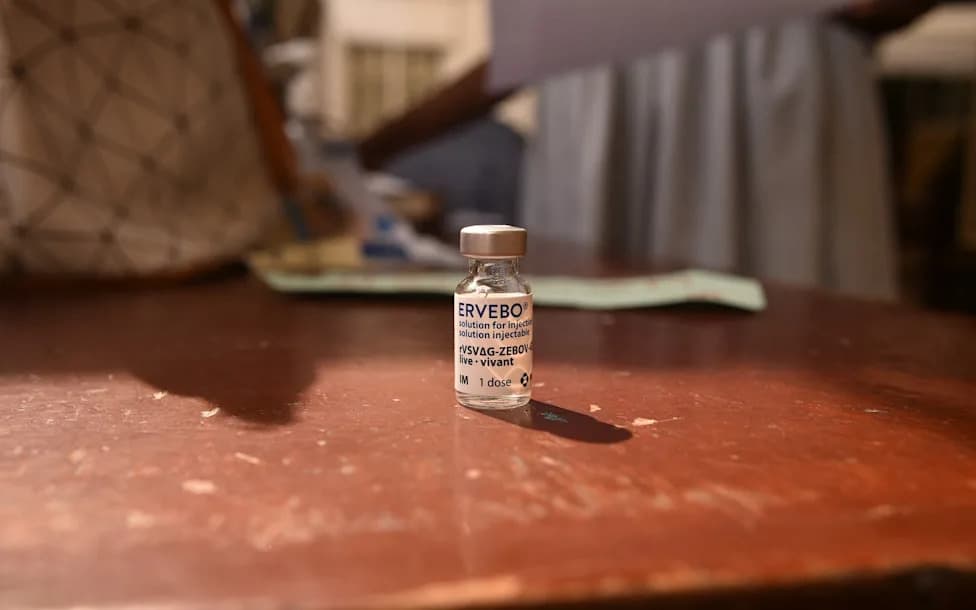
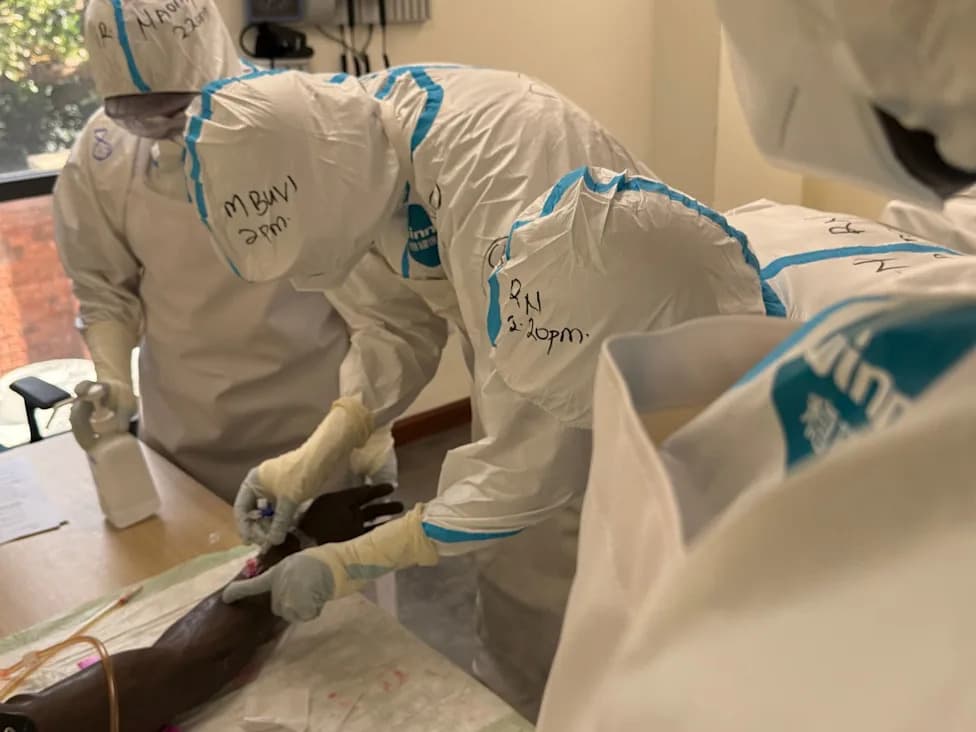
Authorities in Bunia, Democratic Republic of Congo, on Saturday began vaccinating front-line health personnel with the Ervebo vaccine as the city remains the epicenter of the country’s fastest-growing Ebola outbreak, provincial officials said.
Vaccination Drive Focuses on Front-Line Responders
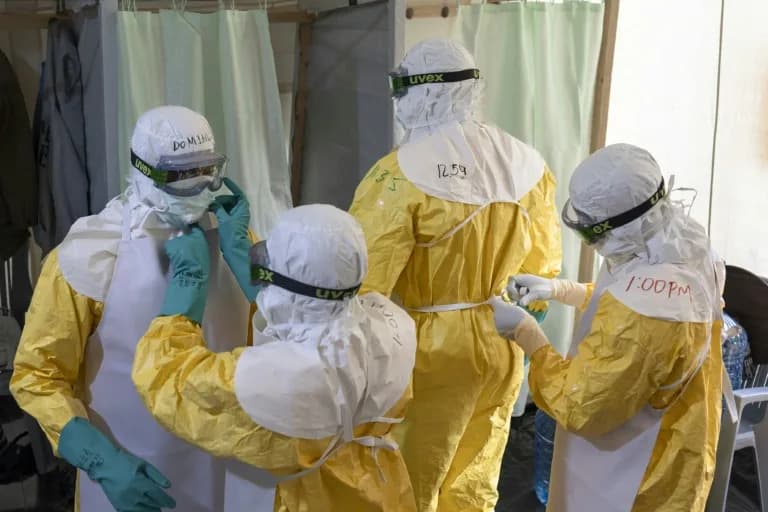
The campaign prioritises health workers and other responders in the Bunia and Mongbwalu health zones in Ituri province — two of the hardest-hit areas. Officials said the effort in Ituri and neighbouring North Kivu aims to reach about 20,000 front-line workers over six to nine months.
"Our collective duty is to protect life. Launching this vaccination drive for front-line staff in Ituri is not an arbitrary choice, as these workers are particularly exposed and deeply involved in the response," said Ituri’s military governor, Maj. Gen. Gaby Kasongo Mulumba.
As of Saturday, government figures show 7,541 confirmed cases, including 3,639 deaths, with 1,823 recoveries. The outbreak is concentrated in Ituri and is the deadliest of the 17 Ebola outbreaks the country has experienced.
Vaccine Context and Scientific Response
Ervebo is licensed to protect against Ebola virus disease caused by the Zaire strain. The current outbreak, however, is driven by the Bundibugyo virus, for which no licensed vaccine or treatment exists. The World Health Organization approved the emergency use of 70,000 doses of Ervebo in Congo: roughly 50,000 doses are earmarked for front-line and health workers, while about 20,000 doses will be used in a clinical trial to test whether Ervebo offers protection against Bundibugyo infection.
The vaccine is being deployed under a compassionate-use protocol that allows use in a serious outbreak even when a product is not specifically licensed for that precise strain. Health authorities say Ervebo may offer some cross-protection because the Zaire and Bundibugyo viruses are related, but whether it prevents Bundibugyo illness remains under study.
Operational Challenges
Health officials warn the outbreak is spreading under extremely difficult conditions, fuelled by insecurity, mass displacement, a health workers' strike and intense population movements. The World Health Organization has described the epidemic as out of control and warned it could surpass the 2014–2016 West Africa Ebola epidemic in scale.
"The vaccine is beneficial," said Dr. Jeannot Elua at a Bunia health facility. "We healthcare workers don't really have a choice: we are going to receive it. Some people here had already received the previous vaccine. I received it myself, because it was mandatory."
Some frontline workers who received Ervebo during earlier outbreaks said uncertainty remains about whether repeat vaccination will be necessary. Authorities previously rolled out Ervebo in Kisangani, Tshopo province, covering multiple health zones in Tshopo, Bas-Uele and Haut-Uele.
Health officials stress that vaccination of responders is one part of a broader outbreak response that also requires improved security, community engagement, surveillance, testing and patient care to bring transmission under control.
Help us improve.