Oakland University installed Michigan’s first recorded "Beaver Deceiver" (pond leveler) on August 12 to prevent trail flooding caused by a beaver-built dam on Galloway Creek. The device routes excess water through a pipe protected by metal cages, muffling flow noise so beavers won’t try to block it. Installed under a permit from the Michigan Department of Environment, Great Lakes, and Energy, the project protects infrastructure while preserving the ecological benefits beavers provide.
Oakland University Installs Michigan’s First 'Beaver Deceiver' to Stop Flooding — and Save the Beavers
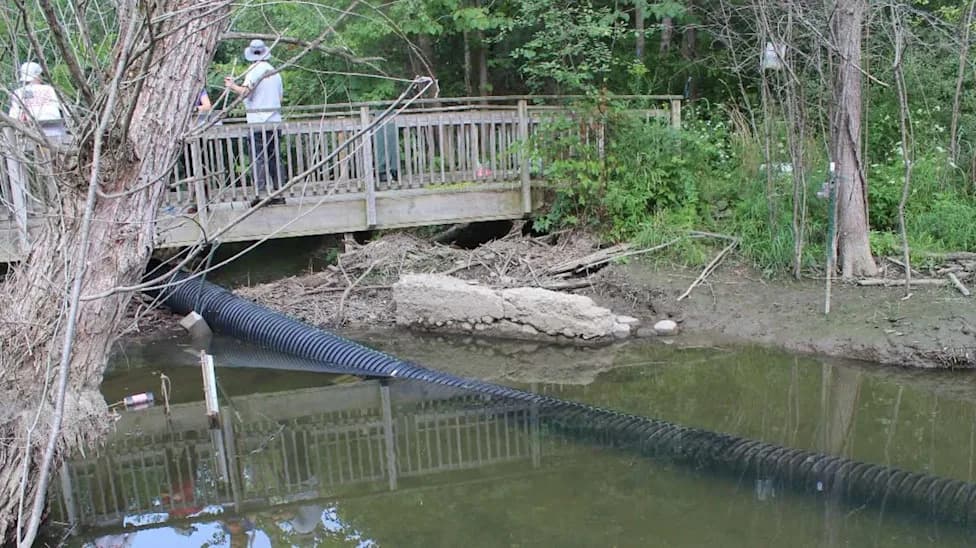
Photo Credit: Clinton River Watershed Council
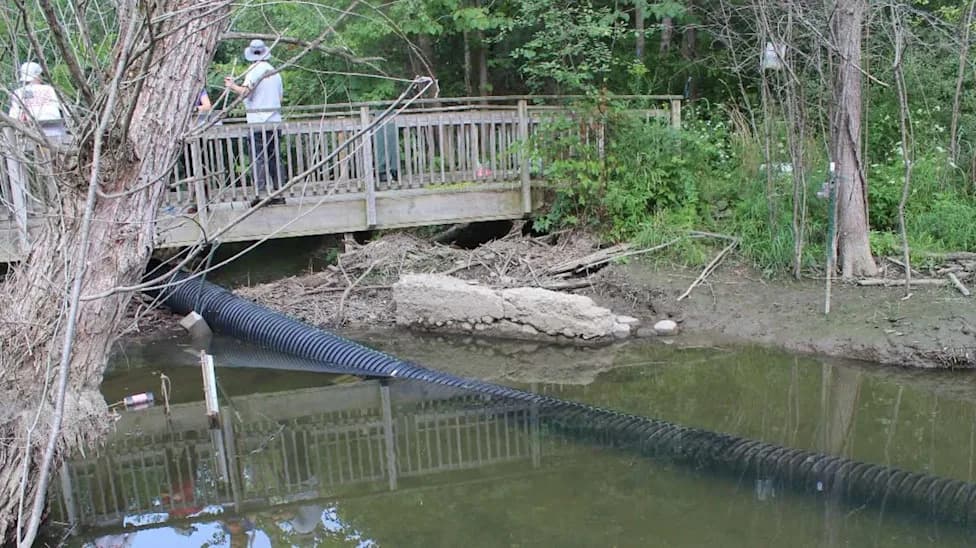
Oakland University has installed Michigan’s first documented "Beaver Deceiver" — a pond leveler designed to control water levels behind a beaver dam while allowing the animals to remain in place. The device was installed on August 12 after a pair of beavers moved into Galloway Creek and built a dam beneath a footbridge, causing repeated flooding along a nearby campus trail.
How the Pond Leveler Works
The pond leveler uses a submerged pipe that runs through the beaver dam, carrying excess water from the pond to the downstream channel instead of letting it overtop the banks. Metal cages protect both ends of the pipe to prevent beavers from chewing it and to muffle the sound of rushing water. Because beavers are instinctively driven to plug the sound of flowing water, placing the intake away from the dam and hiding the flow is key to the system’s success.
Collaboration and Permitting
Oakland University worked with multiple state agencies and installed the device under a permit from the Michigan Department of Environment, Great Lakes, and Energy (EGLE). The Clinton River Watershed Council said in a news release that the beavers "are not bothered by the device and are free to continue making dams without causing problems for their human neighbors."
Why This Approach Matters
Historically, centuries of trapping and later industrialization and habitat loss drastically reduced beaver populations across Michigan. Over time, policy often favored free-flowing streams, and some responses to nuisance dams included lethal removal. Pond levelers offer an alternative: they protect infrastructure while preserving the ecological benefits beavers provide.
“Similar to the overflow drain in your bathtub, a pond leveler hides the leak in the middle of the beaver pond where they don’t think to look for it, while capping the water level at an acceptable maximum height that does not damage human infrastructure,” said Project Beaver, an Oregon-based nonprofit.
Broader Benefits and Global Examples
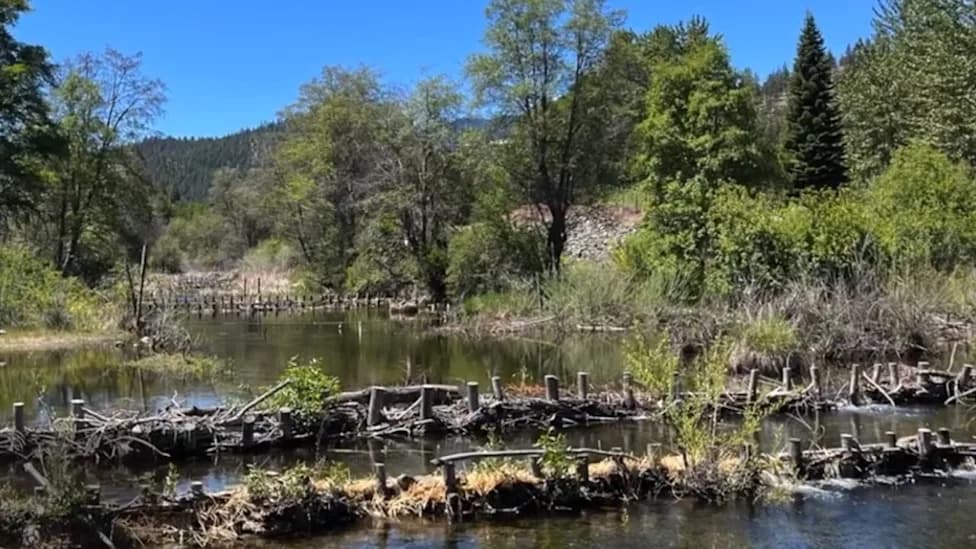
Beaver ponds can increase biodiversity, restore wetlands, and reduce flood risk when managed thoughtfully. Examples from elsewhere highlight these benefits:
- In Devon, reintroduced beavers transformed wetlands and helped buffer both floods and drought.
- In west London, beavers created a wetland that helped hold back floodwaters near developed areas.
- In Scotland, beaver dams helped trap pollutants and supported community efforts for sustainable water management.
- Rewilding projects across Europe have used beavers to revive degraded waterways and restore habitat.
- Researchers have also found that beaver activity can boost bat habitat, underscoring broader ecological benefits.
Oakland University’s installation reflects a growing trend of using nonlethal, collaborative solutions to protect infrastructure while maintaining or restoring wetland ecosystem services.
Help us improve.