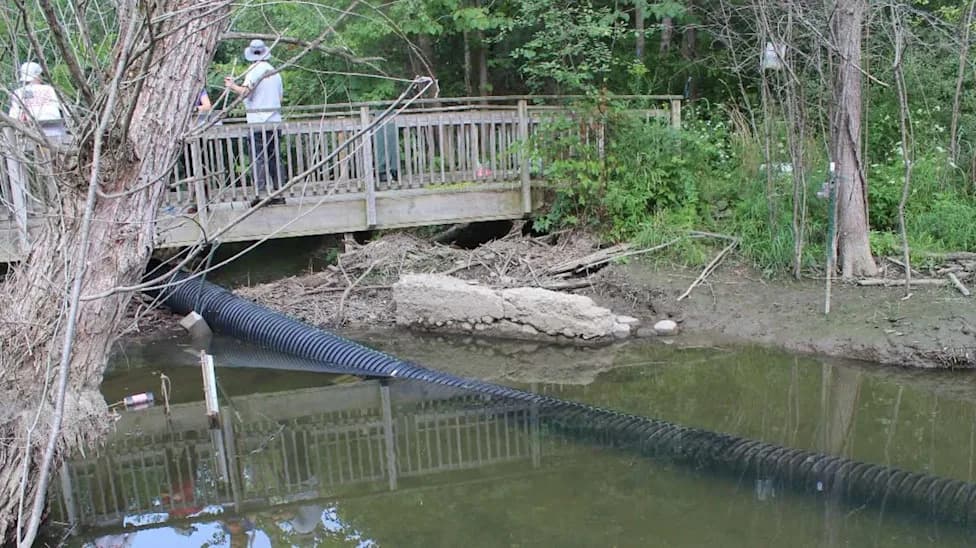
Oakland University installed what is believed to be Michigan's first "Beaver Deceiver" on August 12 to stop flooding along a campus trail caused by a beaver-built dam in Galloway Creek. The pond-leveler uses a pipe protected by metal cages to route water through the dam and keep pond levels stable without disturbing the animals. The design, developed in the 1990s by biologist Skip Lisle in Maine, is widely used elsewhere and was installed under a permit from Michigan's Department of Environment, Great Lakes, and Energy.
Oakland University Installs Michigan's First 'Beaver Deceiver' to Stop Campus Flooding — And Keep the Beavers
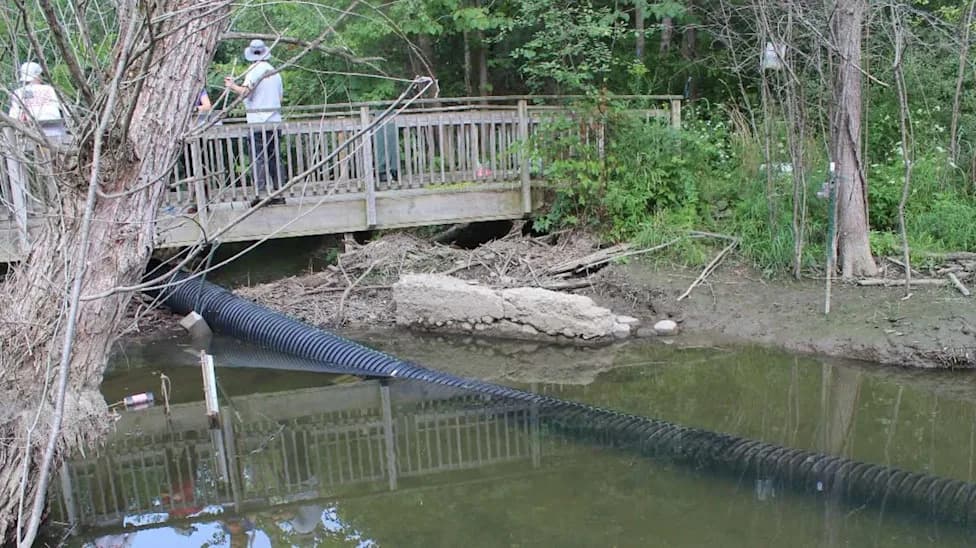
Photo Credit: Clinton River Watershed Council
Oakland University has taken a wildlife-friendly approach to a recurring flooding problem: on August 12 the university installed what is believed to be Michigan's first "Beaver Deceiver" — a pond-leveler designed to let water pass a beaver dam without removing the animals.
After a pair of beavers moved into Galloway Creek in 2023 and built a dam beneath a footbridge, water backed up and flooded a nearby campus trail, USA Today reported. Rather than trapping or relocating the animals, the university chose a flow-management solution that preserves the wetland benefits beavers provide while protecting infrastructure.
The device, often called a "pond leveler" or "Beaver Deceiver," routes water through a pipe that runs through the dam so the pond stays at a controlled height instead of overflowing. Metal cages cover the pipe's intake and outlet to prevent beavers from clogging or chewing the pipe and to muffle the sound of rushing water near the dam — important because beavers instinctively try to stop the noise of flowing water.
The technique traces back to the 1990s and is credited to biologist Skip Lisle of Maine; it has since been installed at many sites across the United States. Oakland University's installation was completed with a permit from the Michigan Department of Environment, Great Lakes, and Energy (EGLE) and in coordination with local conservation groups.
"The beavers are not bothered by the device and are free to continue making dams without causing problems for their human neighbors," the Clinton River Watershed Council said in a news release.
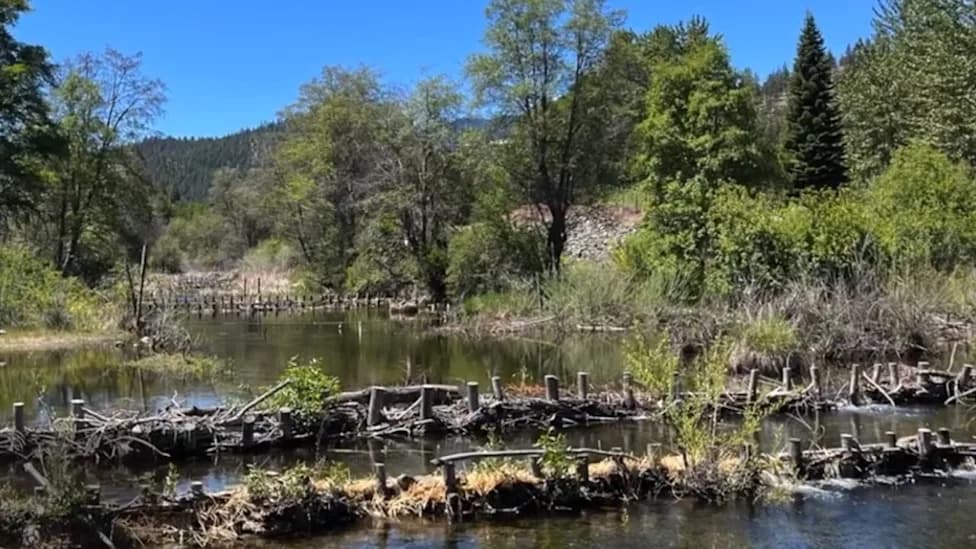
Beaver ponds create rich wetland habitat and attract diverse wildlife, but elevated water levels can threaten trails, roads and other infrastructure. Organizations such as Project Beaver describe pond levelers as a practical compromise: "Similar to the overflow drain in your bathtub, a pond leveler hides the leak in the middle of the beaver pond where they don't think to look for it, while capping the water level at an acceptable maximum height that does not damage human infrastructure."
Other Examples of Beavers Helping Ecosystems
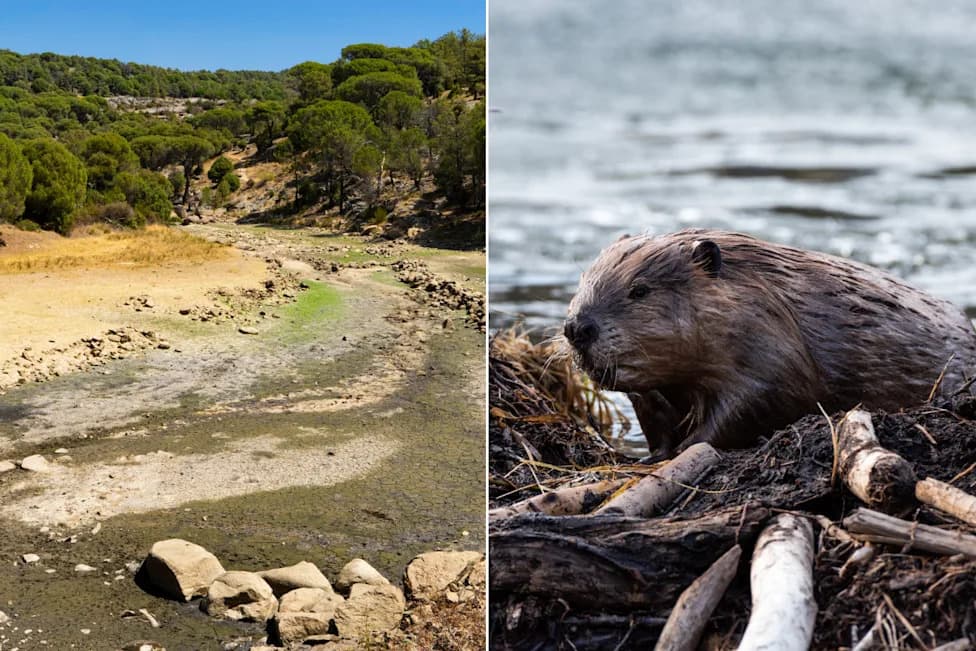
- In Devon, reintroduced beavers have restored wetlands and helped buffer both floods and droughts.
- In west London, beaver activity helped create wetlands that mitigated local flooding.
- In Scotland, beaver dams trapped pollutants and contributed to community-led water-quality solutions.
- Across rewilding projects, beavers have revived degraded waterways and expanded habitat for many species, including bats.
Oakland University's pond-leveler project reflects a growing trend toward nonlethal coexistence with beavers: protecting trails, roads and other infrastructure while maintaining the ecological benefits that beaver-created wetlands provide.
Help us improve.