During a 27-day voyage from Svalbard to East Greenland, photographer Hörður Kristleifsson flew a drone through a massive tunnel inside an iceberg and recorded what he called “perhaps one of the longest ice caves ever documented.” The clip highlights Greenland's immense ice sheet, which covers about 80 percent of the island and is over two miles thick in places. Scientists warn that glacier calving can generate waves tens of meters high, sometimes felt hundreds of kilometers away, and a niche of surfers has begun chasing these dangerous swells. Kristleifsson's drone approach offers a safer way to explore and document these dramatic ice features.
Drone Flies Through 'One of the Longest' Ice Caves Ever Inside a Greenland Iceberg (Video)

Drone Threads 'One of the Longest Ice Caves Ever' in Greenland (Video)
Icelandic photographer Hörður Kristleifsson captured rare footage after flying a drone through an enormous tunnel carved inside an iceberg during a 27-day expedition from Svalbard to East Greenland. The resulting video shows a small aircraft threading a blue-hued cavern and emerging into Arctic daylight, offering an intimate look at the hidden architecture of Greenland's ice.
Drone Flight Through a Subterranean Ice Tunnel
On his voyage, Kristleifsson encountered what he described as “perhaps one of the longest ice caves ever documented in an iceberg.” To his knowledge, no one had previously piloted a drone completely through this passage. The footage conveys a vertiginous sense of scale as the drone disappears into darkness before reappearing in bright Arctic light.
Greenland's Immense Ice
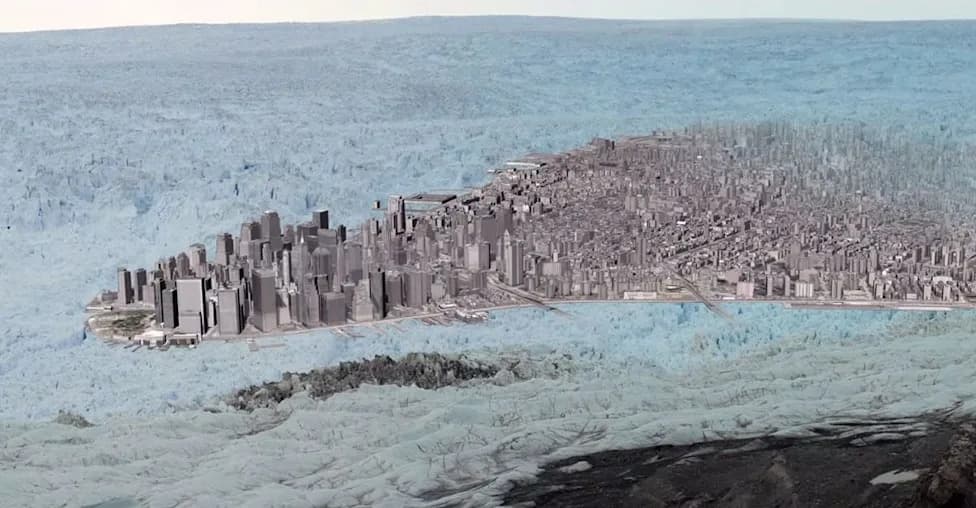
Greenland's ice sheet covers roughly 80 percent of the island and, in places, exceeds two miles in thickness. Around the ice sheet's margins, glaciers flow toward the ocean and periodically break apart in a process called calving.
“The ice is so alive,” NASA scientist Josh Willis has said of Greenland's margins, noting that large calving events can displace enough water to create what he called “a little tidal wave,” and in some cases a mini tsunami.
Calving Waves and the Risks They Pose
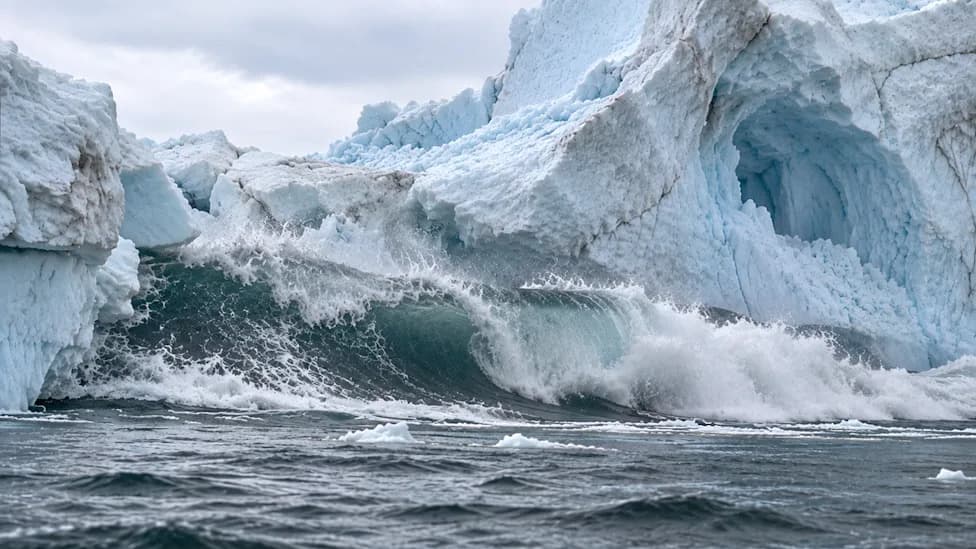
Research in Greenland has recorded calving-generated waves that can reach tens of meters in height. Waves produced by Jakobshavn Isbræ have been detected more than 150 kilometers from their origin, underscoring the far-reaching effects of major iceberg collapses.
A small community of extreme surfers has even begun chasing these glacier-born swells. As surfer Blair Conklin explained, ocean waves can travel great distances before releasing their energy; with glacial waves, that energy can originate from ice that took centuries to reach the sea. Surfing such waves is exceptionally dangerous: calving is unpredictable, and waves can arrive amid freezing water, unstable nearby ice, and floating debris.
Why the Drone Approach Matters
Given those hazards, using a drone to explore and document an iceberg's interior is both safer and highly effective for storytelling. Kristleifsson's footage offers scientists and the public a rare vantage point on the iceberg's internal structure while minimizing human exposure to unpredictable calving events.
Note: The original story and video were first published by Surfer on Sep 15, 2026.
Help us improve.