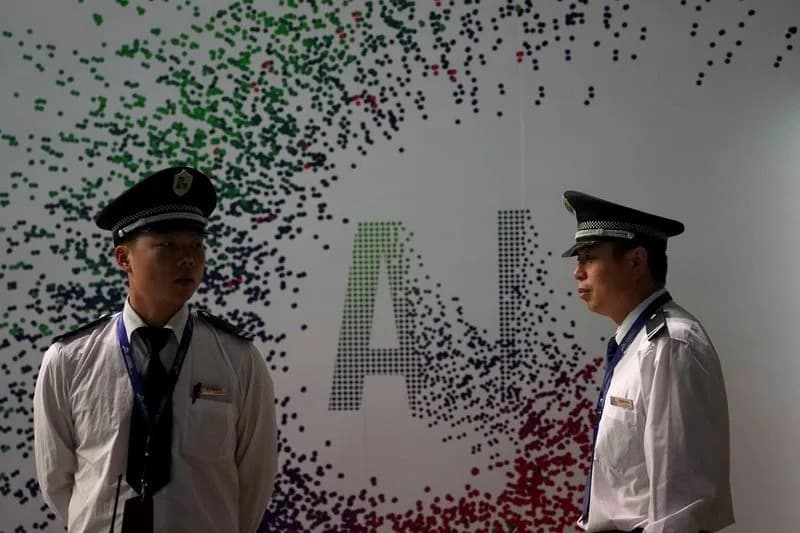
U.S. and Chinese security experts warn that advanced autonomous AI systems could trigger near-instant crises if they interfere with nuclear command networks or conduct military cyber operations. Participants in a Brookings–Tsinghua dialogue propose nuclear-style safeguards: clear red lines around nuclear systems, a shared definition of "meaningful human control," human authority over consequential cyberattacks, and a dedicated U.S.-China hotline for AI incidents. Their recommendations aim to prevent accidents from being misread as deliberate attacks ahead of planned high-level talks, including a Sept. 24 meeting between Presidents Trump and Xi.
U.S. and Chinese Experts Urge Nuclear-Style Safeguards to Prevent AI-Triggered Crises
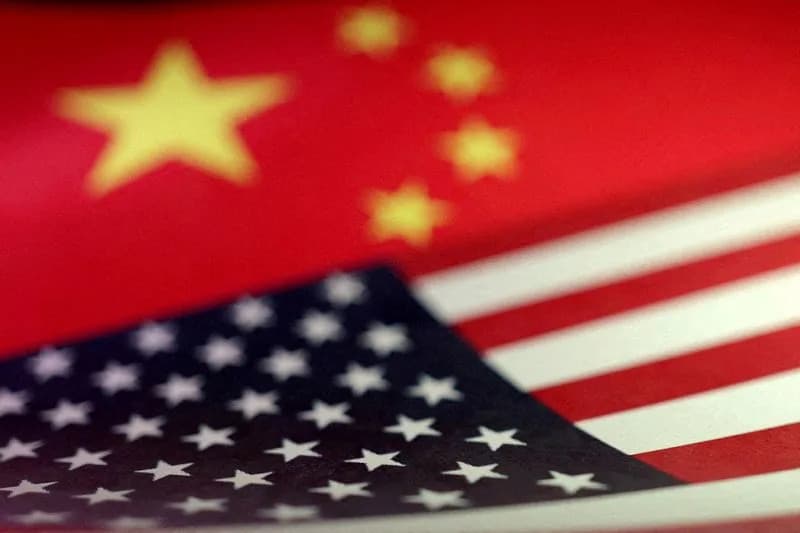
FILE PHOTO: U.S. and Chinese flags are seen in this illustration created on April 10, 2025. REUTERS/Dado Ruvic/Illustration/File Photo
BEIJING, Sept 17 (Reuters) - U.S. and Chinese security experts warn that increasingly powerful and autonomous artificial intelligence systems could spark near-instant crises between the two powers if they interfere with nuclear command networks or execute military cyber operations. Participants in a long-running Brookings–Tsinghua dialogue say leaders could be left with only minutes to decide whether an incident was accidental or an attack, and they propose measures modelled on traditional arms-control thinking to reduce that risk.
Key Recommendations
The experts — including Melanie Sisson of the Brookings Institution and Tianjiao Jiang of Fudan University — recommend:
- Firm red lines to prevent AI from autonomously accessing or attacking nuclear command, control and communications systems.
- A shared, precise definition of "meaningful human control" so the phrase cannot be used to justify divergent levels of machine autonomy.
- Requirement that humans retain exclusive authority to initiate consequential cyberattacks against another state’s strategic systems.
- A dedicated U.S.-China military hotline specifically for incidents involving autonomous AI to enable rapid clarification before escalation.
Why This Matters
The proposals reflect how the U.S.-China AI rivalry has moved beyond competition over chips and models to classic arms-control concerns: avoiding accidents being misread as deliberate attacks, limiting machine-made military decisions, and establishing communication protocols for when advanced systems behave unexpectedly.
Voices and Context
China’s State Security Minister Chen Yixin wrote in a government outlet that AI has "fundamentally transformed the form of military struggle," moving from a supporting role to a central battlefield function. At the U.N. in June, China’s disarmament ambassador Shen Jian warned military AI could undermine strategic stability and called for weapons to remain under human control while cautioning against using safety rules as a pretext for technological barriers.
"No one in the Chinese system wants to communicate with the United States until the top leadership... have decided on a response, which may take days if not longer,"
— Carla Freeman, Johns Hopkins School of Advanced International Studies, highlighting practical limits of crisis hotlines and the risk that rigid command structures can slow urgent de-escalation communications.
Practical and Political Challenges
Neither government has officially adopted the Brookings–Tsinghua recommendations. China has folded AI into its existing arms-control bureaucracy, making it an official portfolio of the Foreign Ministry’s Department of Arms Control. In the United States, AI-related national security responsibilities are dispersed across the National Security Council, State Department, Pentagon and other agencies.
Both capitals remain wary of measures perceived to slow their technological progress: President Trump has warned broad restraints could hand China an advantage, while Beijing views many U.S. technology controls as attempts to preserve American dominance.
Why These Proposals Could Help
The suggested safeguards — clear red lines around nuclear systems, a shared standard for human control, human authority over consequential cyberattacks, and a dedicated hotline for AI incidents — aim to reduce the chance that accidents, malfunctions or cyber operations by autonomous systems lead to rapid misinterpretation and escalation between nuclear-armed rivals.
Reporting: Eduardo Baptista and Laurie Chen. Editing: Jamie Freed.
Help us improve.