A multidisciplinary study in Royal Society Open Science (2026) challenges the long-held belief that the Parthenon’s curves were deliberate optical corrections. Researchers using mathematics, engineering and vision science found no convincing evidence of the specific visual illusions commonly attributed to the temple. Instead, they conclude that the shapes reflect traditional building practices and craftsmen’s empirical methods, and that there is no sign of special viewing points on the Acropolis designed to reveal hidden corrections.
Study Debunks Longstanding Myth: Parthenon’s Curves Stem From Craft, Not Optical Tricks
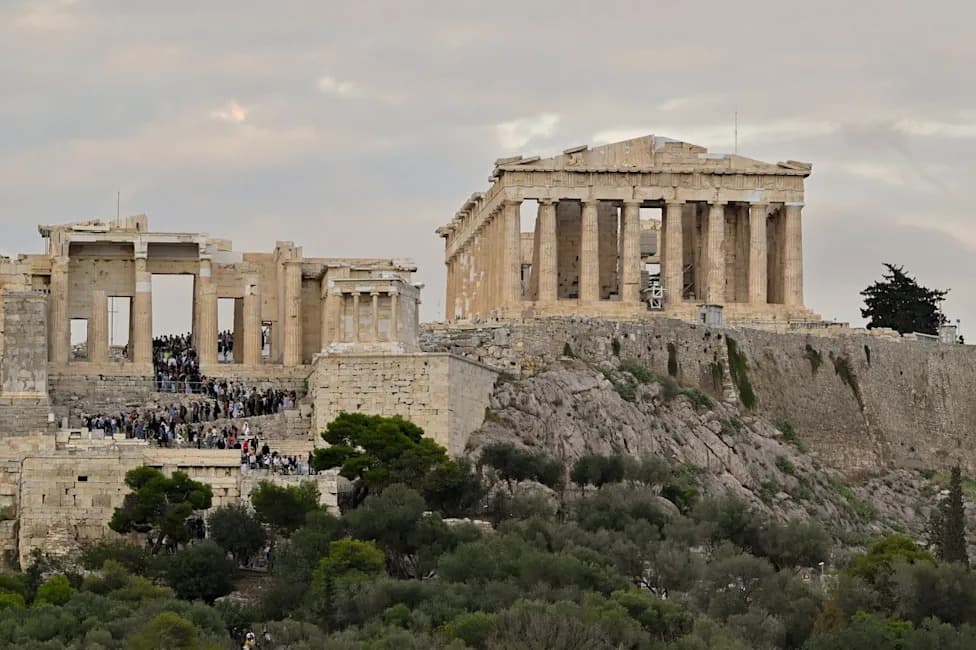
Longstanding myth about ancient Greek Parthenon debunked
The Parthenon’s much-discussed curving lines — long held up as proof of ancient Greek mastery of optical correction — likely reflect generations of building practice and the decisions of craftsmen, not a deliberate attempt to counter visual illusions, a new multidisciplinary study finds.
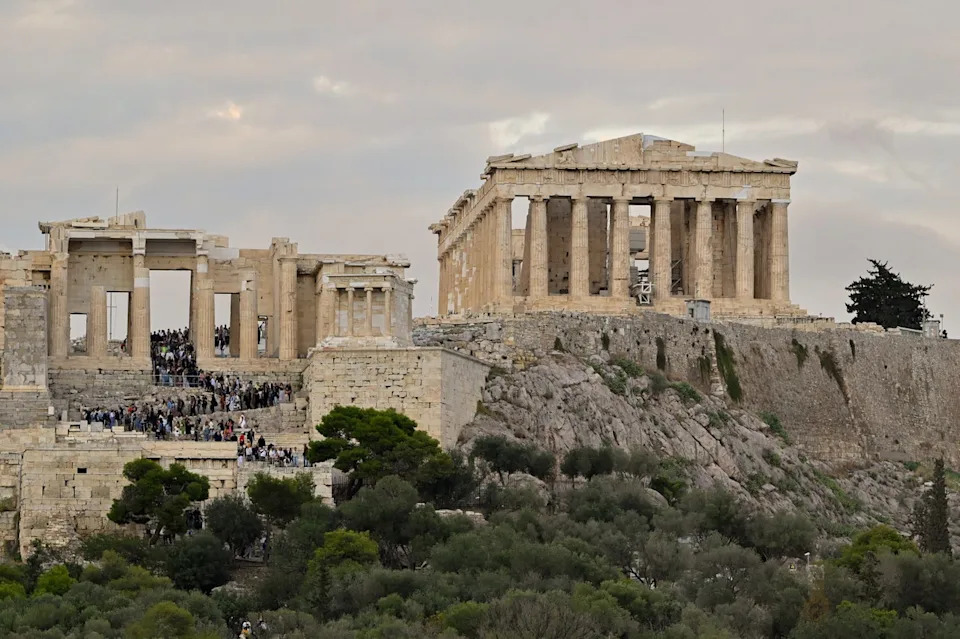
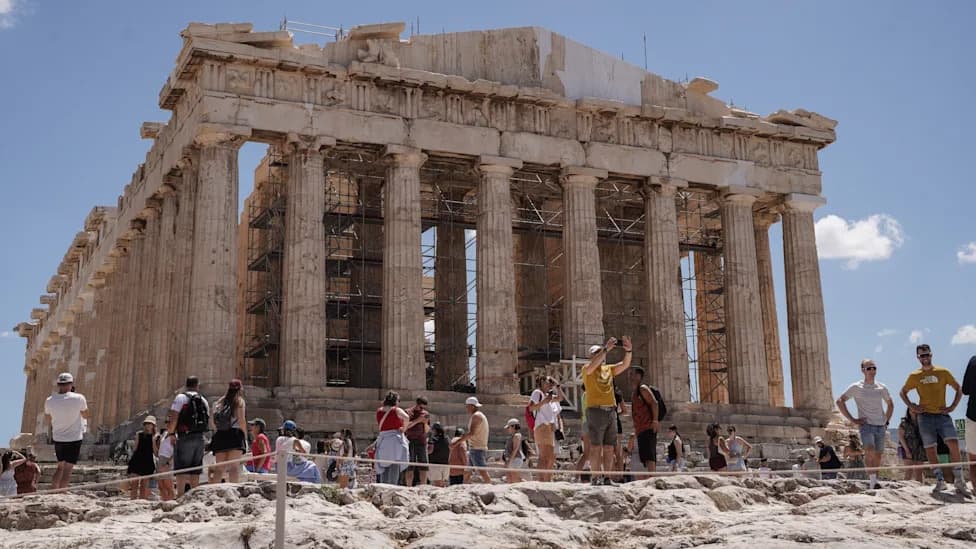
A view of the Parthenon on the Athenian Acropolis (Getty Images)
Background
Built between 447 and 432 BC during the Golden Age of Athens under Pericles, the Parthenon stands on the Acropolis as one of classical architecture’s best-known monuments. The temple, dedicated chiefly to Athena Parthenos, features subtle irregularities: columns that look regular at a distance but are not perfectly straight and horizontal profiles that appear slightly curved.
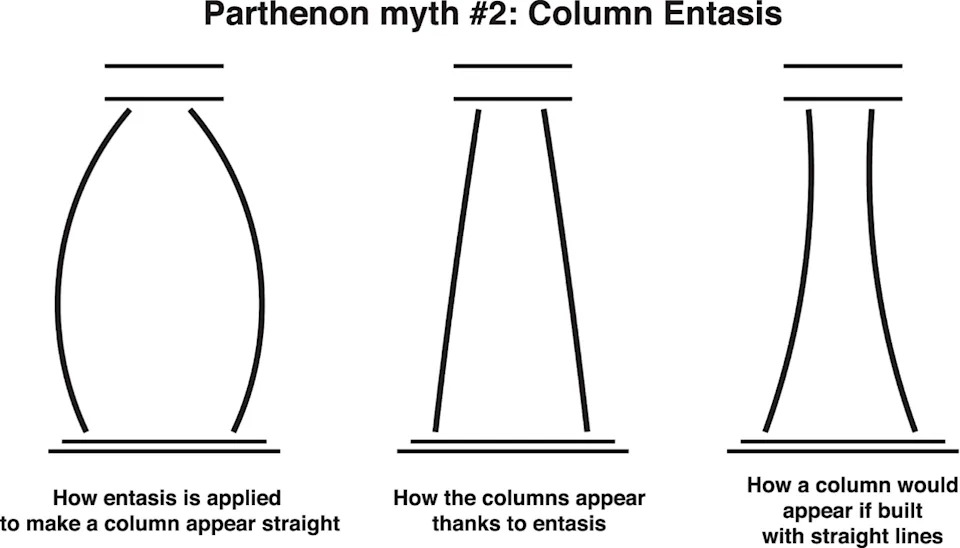
Researchers say it's a myth that there is small swelling of columns as a correction to a visual illusion (Royal Society Open Science 2026)
What the New Study Shows
Published in Royal Society Open Science (2026), the paper traces the origin of the “optical correction” story to Vitruvius and to careful nineteenth-century measurements that highlighted curved profiles. Combining methods from mathematics, geometry, engineering and vision science, the researchers assessed whether the specific perceptual effects commonly described actually occur at the monument.
“We found no convincing evidence of the particular optical illusions later writers attribute to the Parthenon,” the authors write, arguing that its forms are best explained by long-standing architectural tradition rather than sophisticated visual engineering.
Key Findings
- Many of the supposed optical corrections only produce the claimed effect from very narrow, precisely defined viewing positions — yet there is no archaeological or topographic evidence that such special vantage points existed on the Acropolis.
- From numerous common viewpoints the top step supporting the columns clearly appears curved at the corner, contradicting the idea that refinements were intended to make the structure look perfectly straight from everywhere.
- Practical considerations and empirical practices developed by builders and craftsmen provide a simpler and more plausible explanation for the observed refinements than an intent to deploy complex visual tricks.
Implications
The authors caution against romanticizing ancient intentions: modern observers are prone to read elegant, deliberate solutions into traditional craft. The study does not diminish the Parthenon’s technical or aesthetic achievement — it reframes those achievements as the product of skilled, empirical workmanship rather than calculated optical engineering.
Concluding thought: The Parthenon remains an architectural masterpiece, but its celebrated curves are better seen as evidence of millennia of building tradition and artisan judgment, not as proof that its designers deliberately engineered perceptual illusions.
Help us improve.