High‑resolution 3D scans of the Bodleian Library’s fifteenth‑century Divinity School vault have revealed that a figure long recorded as a "tangled calf" is actually a monoceros, a single‑horned mythical beast. The survey covered all 465 carved bosses (c. 1480–1483), exposing previously hidden details such as a spiralled horn and fur tufting. The find — part of a project by ARCHiOx, the Bodleian Libraries and the Factum Foundation — sheds new light on the vault’s symbolism, craftsmanship and medieval iconography.
Oxford Vault Carving Long Mistaken For A Calf Revealed As Mythical Monoceros
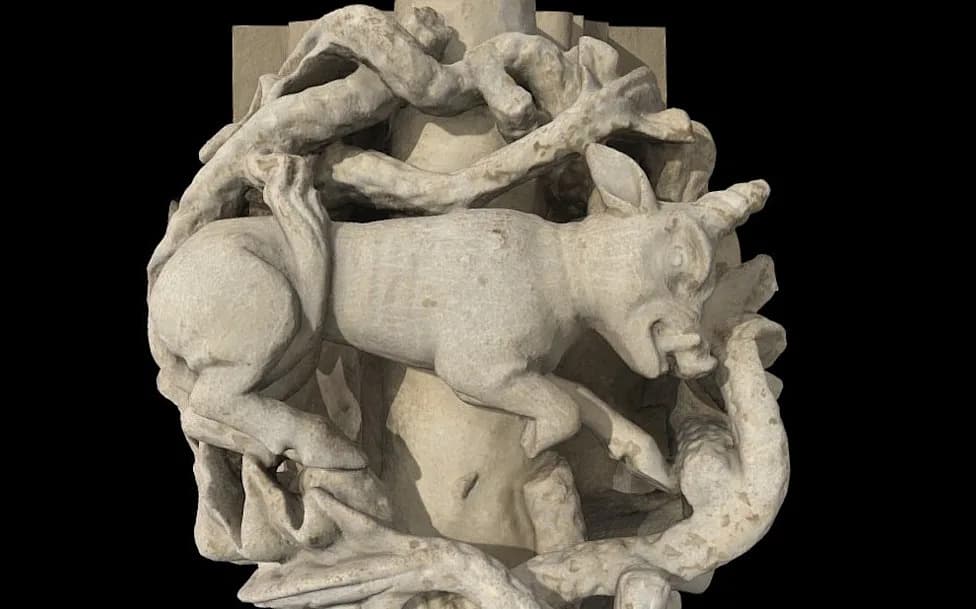
The carving of a monoceros that had been mistaken as a cow
Researchers re-examining the fifteenth-century stone vault of Oxford University's Bodleian Library Divinity School have discovered that a figure long recorded as a "tangled calf" is in fact a monoceros — a fierce, single‑horned mythical beast. The identification emerged after conservators produced high‑resolution digital 3D models of all 465 decorative bosses or keystones carved between 1480 and 1483.
3D Imaging Reveals Hidden Details
The comprehensive survey allowed historians to examine details previously invisible from the floor. What archival records described as an ear is now clearly a spiralled horn. Digital close‑ups also reveal fine work such as tufts of fur, deeply modelled foliage and heraldic shields that had been difficult to read with the naked eye.
The Monoceros And Its Meaning
The monoceros — often conflated with the unicorn in medieval imagery — appears frequently in illuminated manuscripts but is rare in surviving stone carving. Unlike the gentle unicorn, the monoceros was depicted as fierce and terrifying in classical and medieval descriptions. Its presence on the vault may carry allegorical meaning: medieval carvers sometimes used single‑horned beasts as Christological symbols, or as moral emblems warning viewers about vice and virtue.
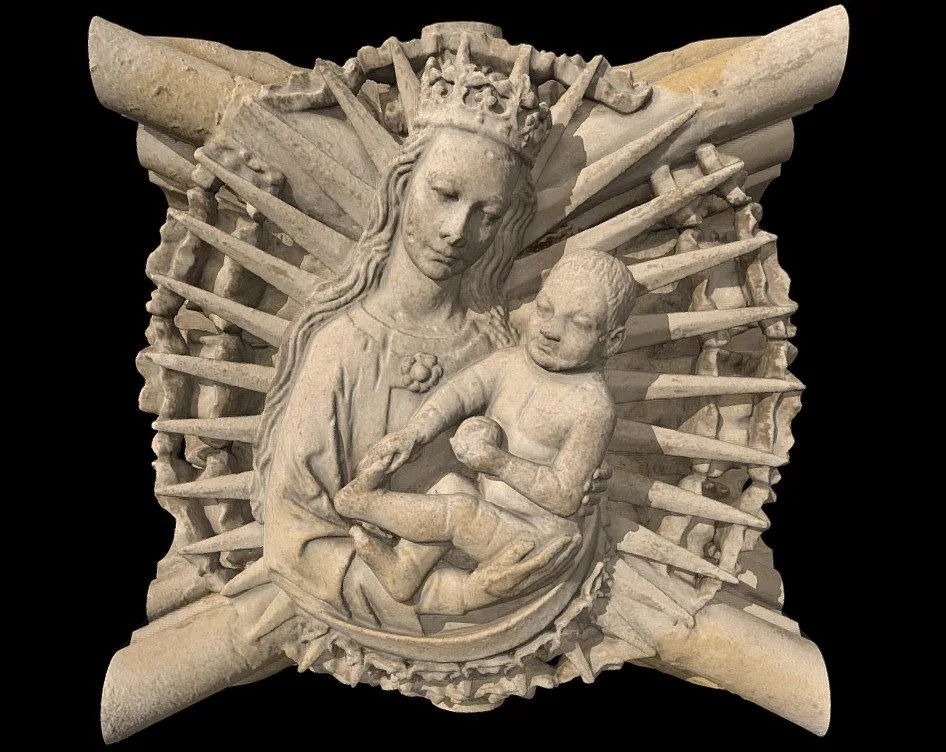
Other carvings depict heraldry and religious iconography
From Field Notes to Fine Detail: Dr Duncan Taylor, a medieval historian involved with the project, said the 3D models were revelatory. From 30 feet away he had once thought the figure might be a boar; the scans made the horn — and therefore the creature’s true identity — unmistakable.
Other Notable Carvings
The scans also clarified many other intriguing scenes: a squirrel tucked into a nut tree, a man wrestling a bear, a fox with a goose, and an ape perched on a man’s shoulders picking fleas. These images are likely more than whimsical folk art — they may encode moral lessons, heraldic references and warnings against heresy or deception.
Craftsmanship And Partnerships
The vault’s lierne ribbing and richly modelled bosses are attributed to master mason William Orchard. The skill evident in some bosses suggests contributions by exceptionally talented Netherlandish carvers — craftsmen connected stylistically to those who worked on fifteenth‑century projects such as St George’s Chapel, Windsor Castle.
The recording project is a collaboration between ARCHiOx (Analysis and Recording of Cultural Heritage in Oxford), the Bodleian Libraries and the Factum Foundation. Conservators say the new imagery will deepen understanding of the vault’s symbolism, heraldry and devotional program, and will help preserve the details for future study.
Vault Dimensions: The Divinity School vault spans approximately 87 by 31 ft and contains 465 bosses carved c. 1480–1483.
Help us improve.