Oxford mathematician Alain Goriely disputes the long-held belief that the Parthenon’s faint curves were intended to correct optical illusions. Using measurements and computational modelling published in Royal Society Open Science, he finds the irregularities—sometimes about 0.7 inches—are too small to be noticed at normal distances. Goriely offers practical or aesthetic explanations, such as drainage or stylistic choice, and attributes the myth’s longevity to later idealization of classical Greece.
Oxford Study Debunks Myth That Parthenon’s Curves Were Optical Corrections
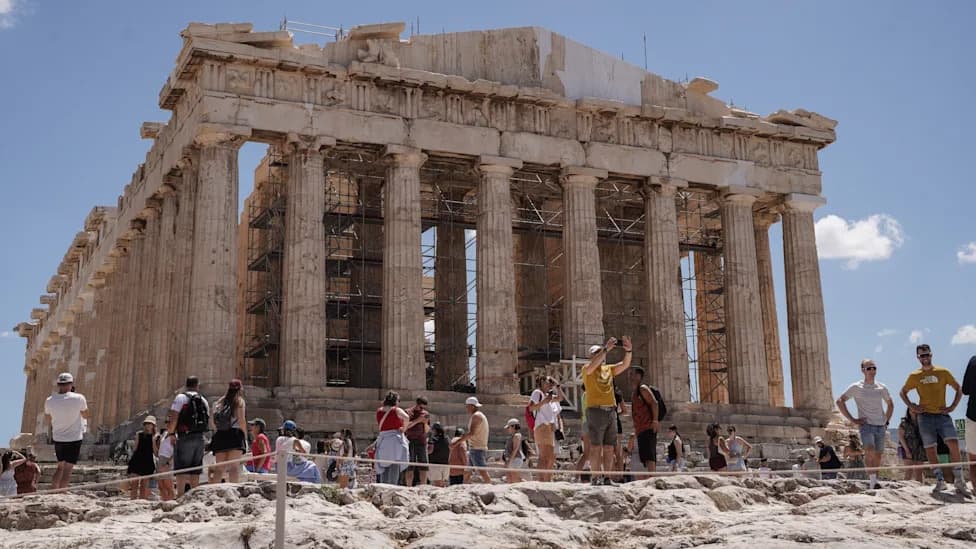
The Parthenon's elevated architectural status reignited during the Enlightenment.
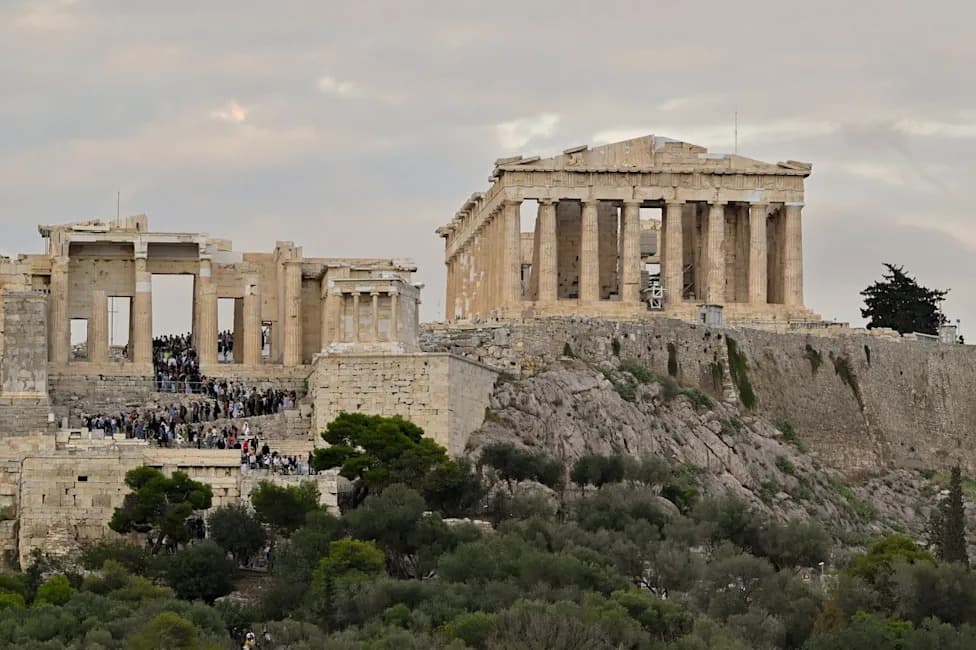
The Parthenon is widely celebrated as a high point of ancient architecture, but a long-standing claim about its perfection is likely a myth. University of Oxford mathematician Alain Goriely has used historical review and advanced computational modelling to challenge the idea that the temple’s subtle curves were deliberately designed to correct visual distortions.
Built during Athens’ Golden Age as a temple to the goddess Athena, the Parthenon took about 15 years to complete and is a defining example of Doric architecture. Over the centuries it has served as a treasury, church, mosque and—briefly—a gunpowder depot, the latter use contributing to severe damage during a Venetian bombardment in 1687.
Claims that the Parthenon’s architects introduced minute adjustments to counteract optical illusions trace back to ancient commentators such as the Roman architect Vitruvius. These accounts describe gentle column swelling and a slight upward curve of the stylobate (the temple’s base) as intentional visual corrections.
Goriely followed those claims into what he called a “rabbit hole,” testing four principal myths with detailed measurements and computer simulations. His results show that measurable irregularities do exist, but their magnitudes are extremely small — in some cases around 0.7 inches — and effectively imperceptible at ordinary viewing distances.
“The Parthenon is more than a building standing on the Athenian Acropolis; it has become over the ages the very paradigm of antiquity, a vessel into which successive generations have poured their ideals of perfection,”
Goriely writes in the paper published in Royal Society Open Science. “As such, it is the mother of all myths.”
Instead of deliberate optical correction, Goriely proposes more prosaic explanations: the slight arching of the stylobate could have aided drainage to prevent puddling, or the shapes might reflect the aesthetic preferences and construction practices of ancient builders rather than an attempt to fool the eye.
Goriely also argues that later idealization of classical Greece, particularly during the Enlightenment, helped entrench the optical-correction story. He invites readers to inspect the evidence themselves: trust your eyes, question what you see, and decide whether the theory holds up.
Help us improve.