Researchers used ENCI, a portable high-definition CT scanner, to read a 4,000-year-old cuneiform letter without breaking its clay envelope. Trials at the Louvre (2024) and a three-week campaign in Ankara produced 64 tomograms of 48 objects. Scans reproduced a merchant's letter from Anna-anna to Ennum-Aššur, revealed a preserved barley seed, and documented an ancient loan-cancellation practice. The study highlights how non-destructive imaging preserves seals and unlocks sealed archaeological records.
Sealed for 4,000 Years: Scientists Read an Ancient Cuneiform Letter Without Cracking Its Clay Envelope
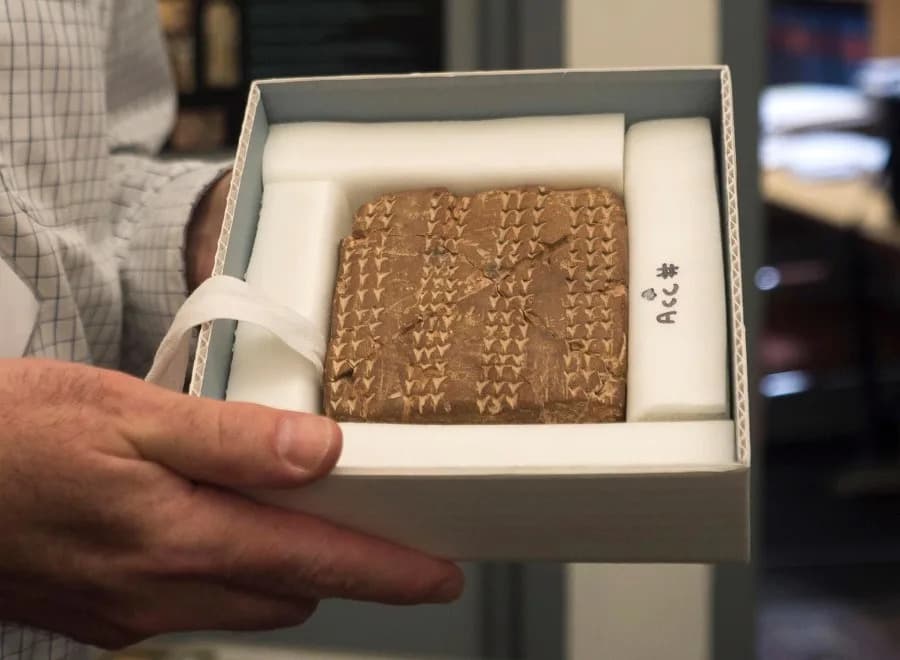
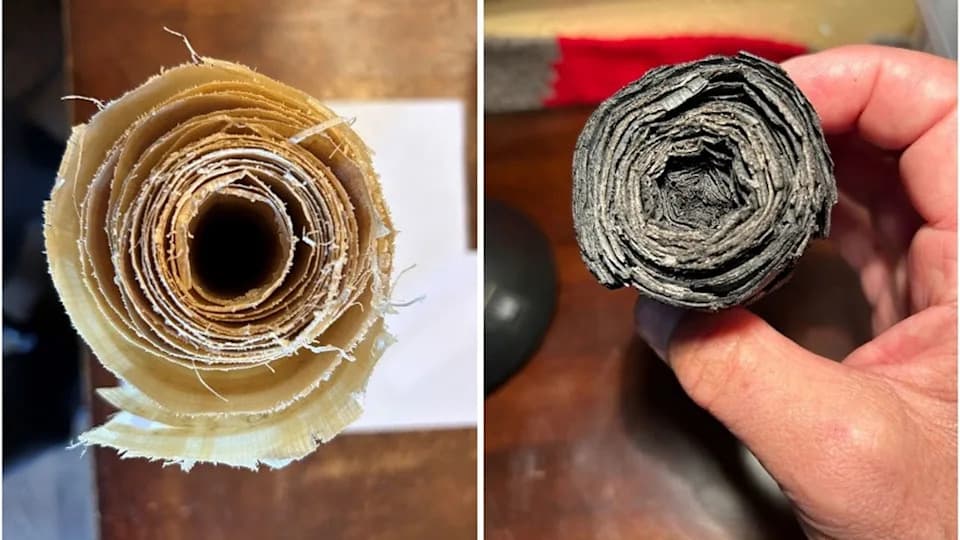
Researchers have successfully read a 4,000-year-old cuneiform letter while preserving its sealed clay envelope, using a purpose-built, portable CT scanner rather than physically breaking the package open.
Non-Destructive Imaging Preserves Seals And Context
When handling cuneiform documents from ancient Assyrian and Babylonian contexts, conservators must protect every component of an object — from the external seal and the labeled clay envelope to the tablet contained inside. In earlier decades, envelopes were sometimes opened to access the inscription, risking loss of crucial archaeological information. A new study published in NPJ Heritage Science demonstrates that modern imaging can reveal enclosed inscriptions without destructive intervention.
ENCI: A Portable CT Scanner Designed For Cuneiform
ENCI (Extracting Non-destructively Cuneiform Inscriptions) is a high-definition computed tomography (CT) scanner designed to be disassembled and transported to museum collections. The device was first trialed in 2024 at the Louvre Museum in Paris, then deployed for a three-week campaign at the Museum of Anatolian Civilizations in Ankara, where the team recorded 64 tomograms of 48 tablets and other objects.
What The Scans Revealed
The scans produced several noteworthy finds without disturbing fragile seals:
Merchant Letter: One scanned item reproduces a full merchant letter from a woman named Anna-anna to her husband Ennum-Aššur, offering a vivid glimpse into household management and commercial disputes in the ancient Near East.
Say to Ennum-Aššur: thus (says) Anna-anna. According to the instructions you sent me, regarding Laqēpum, I have been repeatedly going to him, and he (always answered) as follows: 'I paid the silver to Kudātum.' I checked and went to him (saying) as follows: 'I will certainly get witnesses (to testify) against you in case you did not pay (it) to Kudātum.' He (answered) as follows: 'I will not give the silver to you. When Ennum-Aššur arrives, it will be to him that I will pay (it)!' You are my master. Why do you keep turning your head towards the lapis lazuli? Here, your instructions concerning silver, 10 or 20 minas that are either in Burušhattum, or in Wahšušana, or here, you left your instructions and you keep turning your head towards it. If within 10 days you have not arrived, as for your departure, stand up and come. I hear bad words all the time!
Organic and Administrative Evidence: X-ray tomography also revealed a 4,000-year-old barley seed sealed inside an envelope and, in another object, an administrative note describing a loan practice: when a debt was repaid the creditor returned the document to the debtor, who cancelled it by breaking the envelope.
Why This Matters
By reading texts without breaking their envelopes, ENCI preserves archaeological context — seals, labels and the relationship between documents and their containers — information that can be lost when objects are opened. The authors of the study emphasize that this non-destructive approach offers "an opportunity to more easily access information sealed away in various artifacts around the world," helping conservators and scholars recover fragile textual records while preserving material culture.
Publication and Provenance: The results come from work described in NPJ Heritage Science and summarize trials at the Louvre and a field campaign in Ankara. The technology moves the field toward safer, in-situ analysis of delicate ancient documents.
Help us improve.