Kelvin waves are planetary-scale ocean or atmospheric pulses that travel along the equator and can move subsurface heat eastward, potentially contributing to El Niño development. They form when trade winds weaken or reverse into westerly bursts and typically take two to three months to cross the tropical Pacific. A downwelling Kelvin wave deepens the warm upper layer, depresses the thermocline, and can raise sea-surface temperatures. The current wave is forecast to reach California in late September and could temporarily raise coastal water levels by roughly 1 foot.
Kelvin Waves Explained: How Ocean Pulses Can Influence El Niño — And Your Coastline
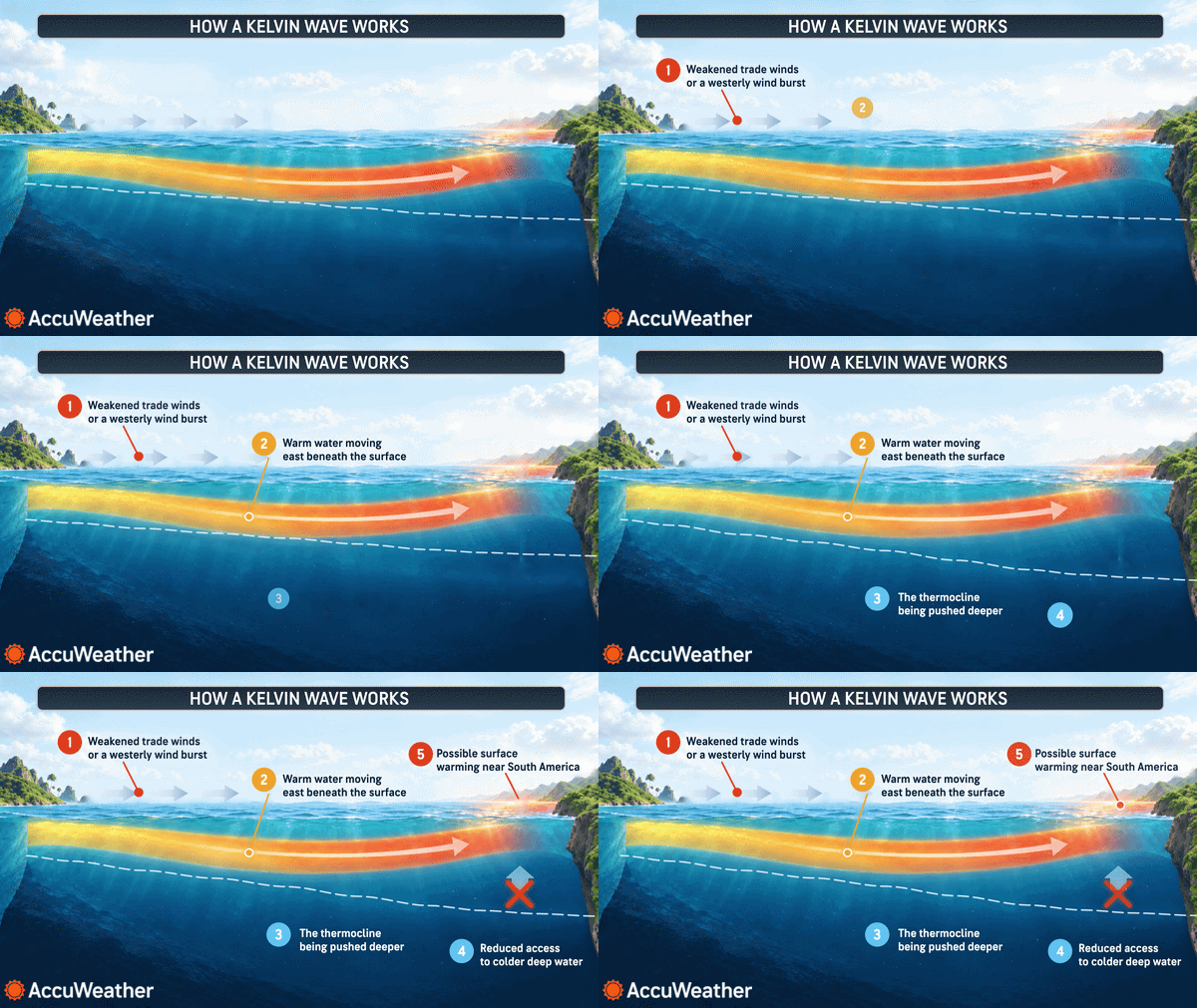
How Kelvin waves form
During El Niño years, another technical term often appears in climate coverage: the Kelvin wave. These are not ordinary breaking waves but planetary-scale pulses that travel along the equator and can span thousands of miles across the Pacific.
What Are Kelvin Waves?
Kelvin waves are large, coherent disturbances that move through the ocean or atmosphere. Forecasters track them because a warm, or downwelling, Kelvin wave can carry subsurface heat eastward and help trigger or strengthen an El Niño event. However, the passage of a single Kelvin wave does not by itself guarantee an El Niño will form.
What Generates Kelvin Waves?
Under typical conditions, easterly trade winds push warm surface water toward the western Pacific. If those trades weaken or flip into short bursts of westerly wind, warm surface water can slosh back east and launch a downwelling Kelvin wave that propagates along the equator.
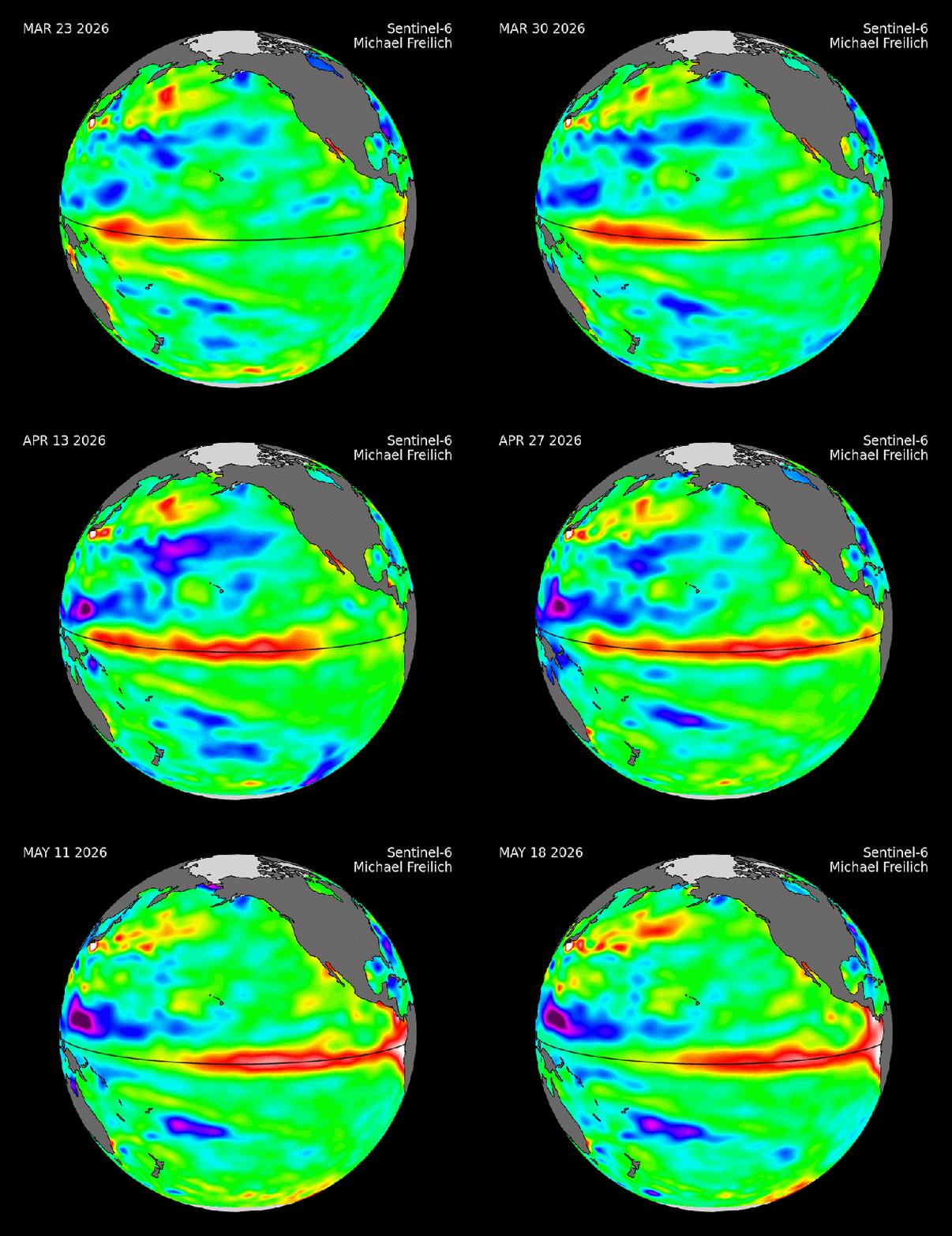
Sea level height data from the international Sentinel-6 Michael Freilich satellite collected from March to May 2026. (Image: NASA/JPL-Caltech)
How Long Do They Last?
A Kelvin wave usually takes about two to three months to cross the tropical Pacific. Its effects can persist longer if the subsurface warmth upwells to the surface or if the wave interacts with the South American coast.
How Do Kelvin Waves Warm the Ocean?
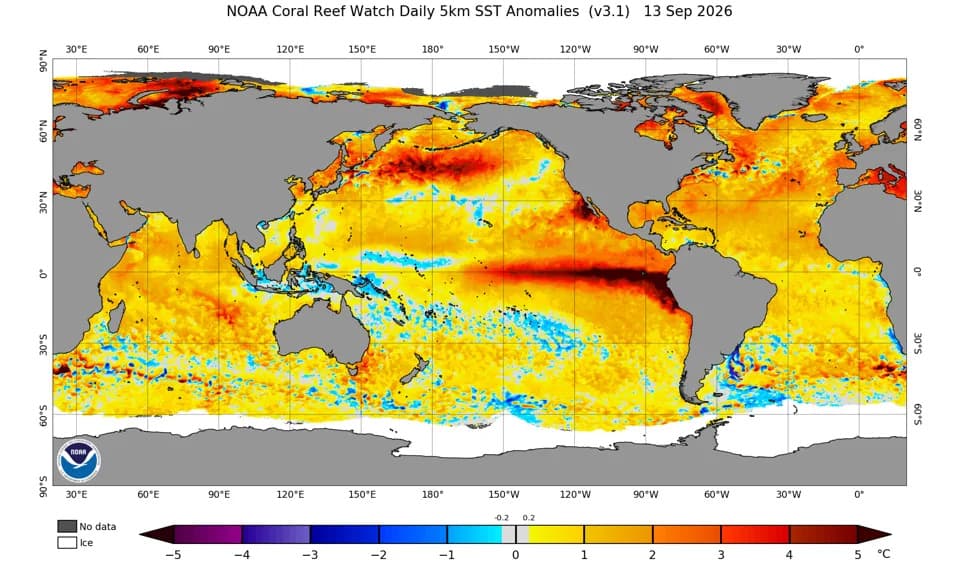
Satellites — including observations from the international Sentinel-6 Michael Freilich mission processed by NASA and JPL-Caltech — are used to detect Kelvin waves by measuring sea-level anomalies. A downwelling Kelvin wave deepens the ocean's warm upper layer and depresses the thermocline, the boundary that separates warm surface water from colder deep water. By pushing the thermocline downward, the wave reduces the upwelling of cold water and can raise upper-ocean temperatures.
Could Kelvin Waves Raise Sea Levels Along the U.S. Pacific Coast?
When an equatorial Kelvin wave reaches the eastern Pacific, some of its warm water can turn northward and travel along the coast as a coastally trapped Kelvin wave. Because warmer water expands, that process can temporarily elevate coastal sea levels.
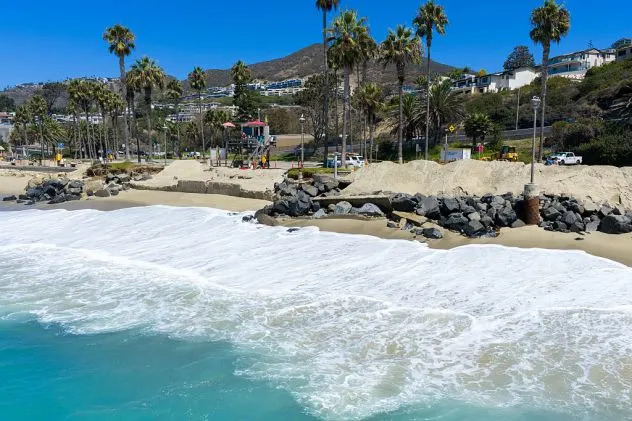
The incoming tide and swell approaches a recently built sand berm and closed parking lot at Aliso Beach in Laguna Beach, where recent storm surges caused damage to the parking lot and erosion, Tuesday, Sept. 1, 2026. (Allen J. Schaben / Los Angeles Times via Getty Images)
Forecasters currently expect the ongoing wave to arrive off California in late September and approach the San Francisco area by early October, with a possible temporary water-level increase on the order of about 1 foot. If that rise coincides with high tides, large surf, or a coastal storm, it could exacerbate flooding and erosion. That temporary boost would add to the long-term sea level rise driven by climate change; historically, NASA notes past El Niño events have raised West Coast water levels by more than 7.9 inches.
Kelvin Waves vs. Rossby Waves
Equatorial Kelvin waves propagate eastward and are relatively fast. Rossby waves typically travel westward and move more slowly. When a Kelvin wave reaches the eastern Pacific, part of its energy can reflect back as a westward-propagating Rossby wave. Both are planetary-scale phenomena, not the local surf seen at beaches.
Can Kelvin Waves Influence Hurricanes?
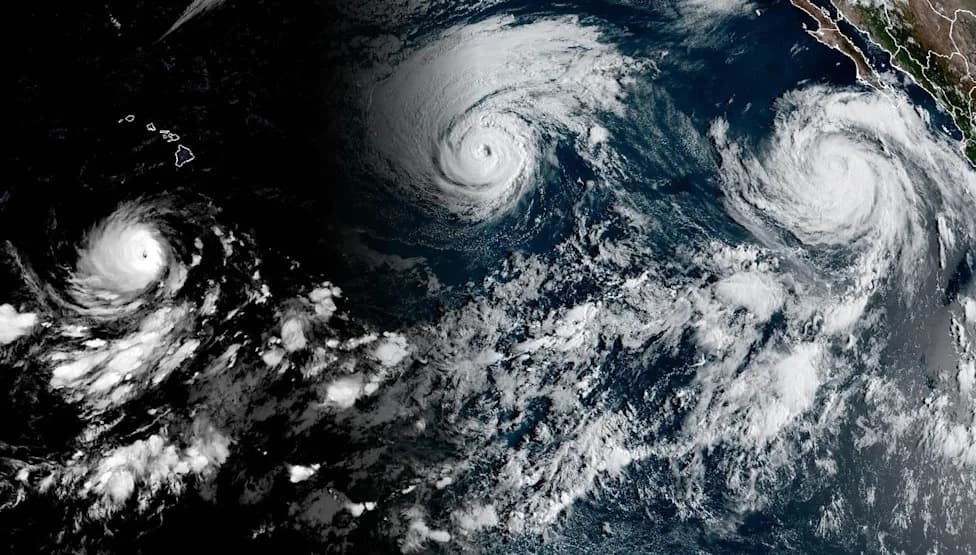
Oceanic Kelvin waves do not directly create hurricanes. However, by influencing El Niño they can alter large-scale tropical rainfall patterns and vertical wind shear: El Niño conditions often suppress Atlantic hurricane activity while favoring storms in parts of the Pacific. Atmospheric Kelvin waves can also help organize clusters of thunderstorms and sometimes create conditions more favorable for tropical cyclone formation.
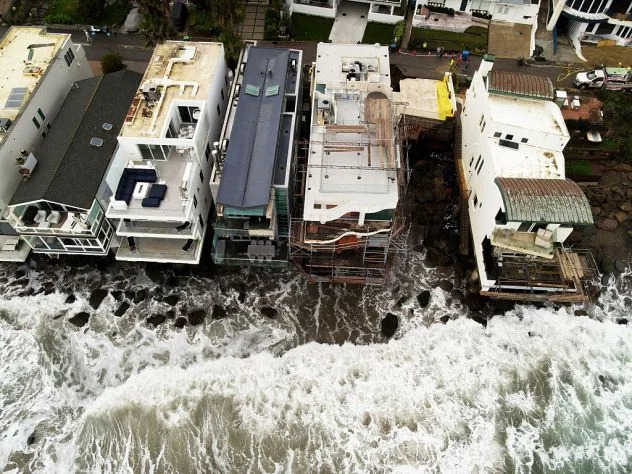
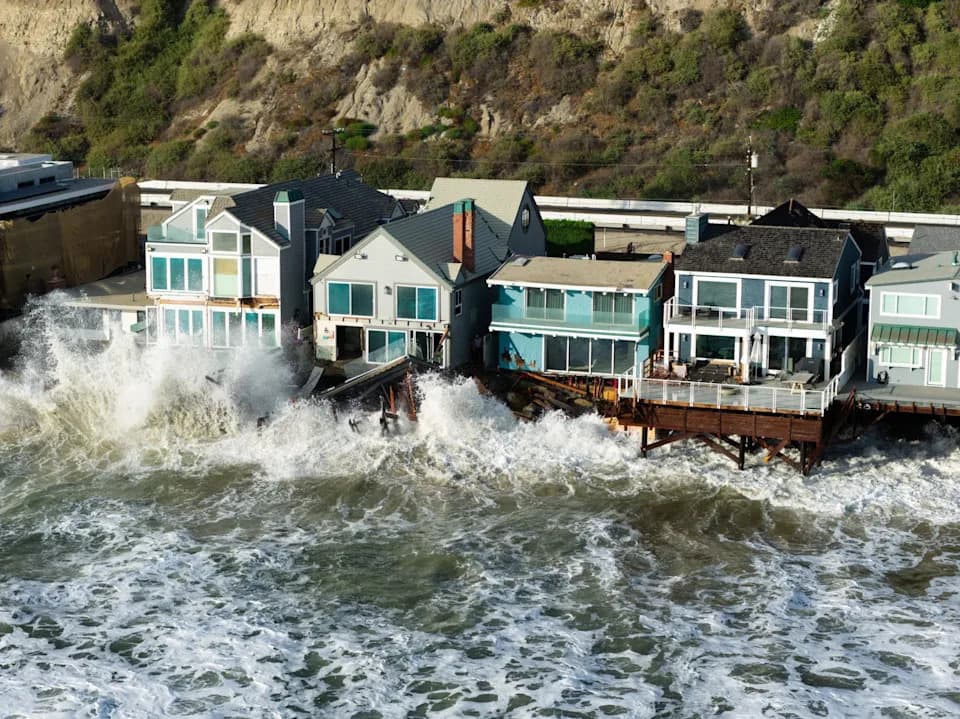
This aerial view shows a sinkhole on a street and driveway of a seaside home affected by large swells produced by Hurricane Marie in Malibu, California, on Sept. 8, 2026. Hurricane Marie stayed well offshore of Southern California during Labor Day weekend, but its large swells produced dangerous surf and rip currents, with waves reaching around 10 feet in some areas. (Photo by David Swanson / AFP via Getty Images)
Photo captions (dates and locations retained):
An incoming tide and swell strike a newly built sand berm and a closed parking lot at Aliso Beach in Laguna Beach, where recent storm surges caused damage and erosion, on Tuesday, Sept. 1, 2026.
An aerial view shows a sinkhole at a seaside home and driveway in Malibu after large swells produced by Hurricane Marie, which stayed offshore but generated dangerous surf and rip currents with waves around 10 feet in some areas, on Sept. 8, 2026.
Help us improve.