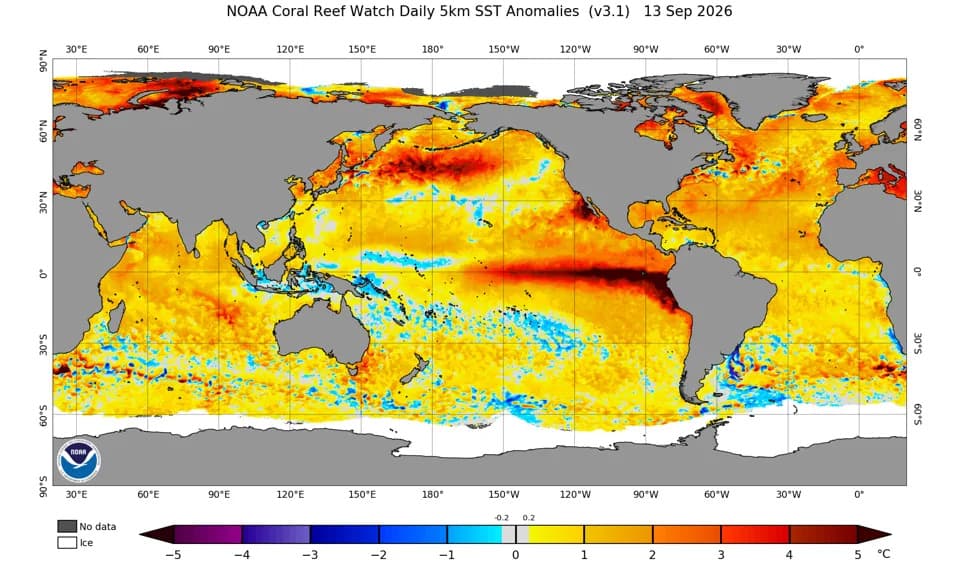
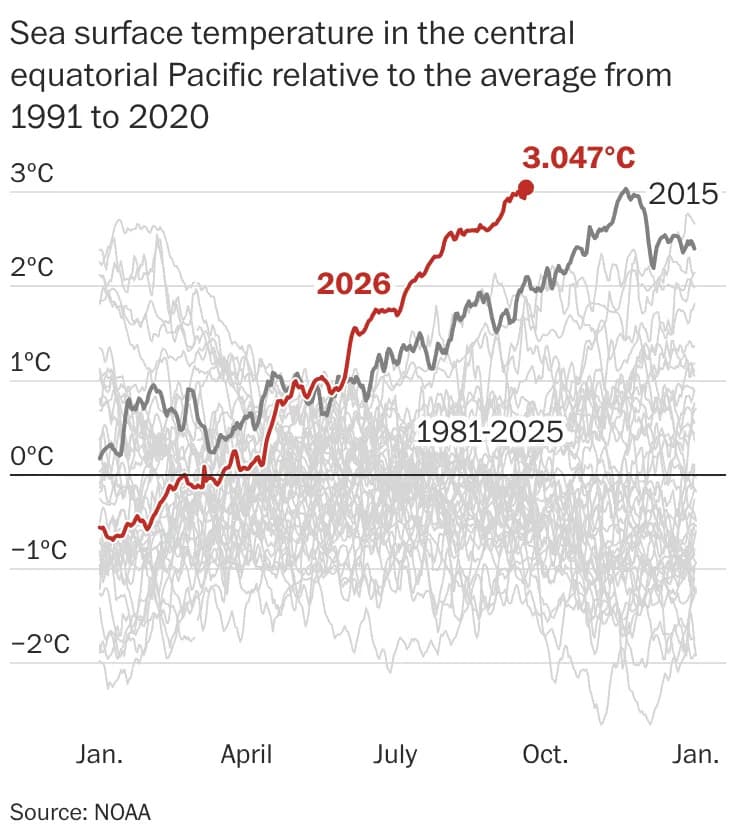
Researchers analyzed chemical growth bands from 13 coral cores collected across five Galápagos Islands to reconstruct eastern Pacific temperatures from 1000–2015. The coral proxies (strontium-to-calcium and oxygen isotopes) show that since 1984 El Niño-driven temperature swings are 36.5% larger than preindustrial averages and 16.2% larger than 20th-century swings. Warm extremes now dominate, and the large El Niños of the past 40 years appear unprecedented over the last millennium. These changes help explain this winter's unusual weather patterns.
Millennium-Long Coral "Diary" Shows El Niño Has Become More Extreme — A Warning for This Winter
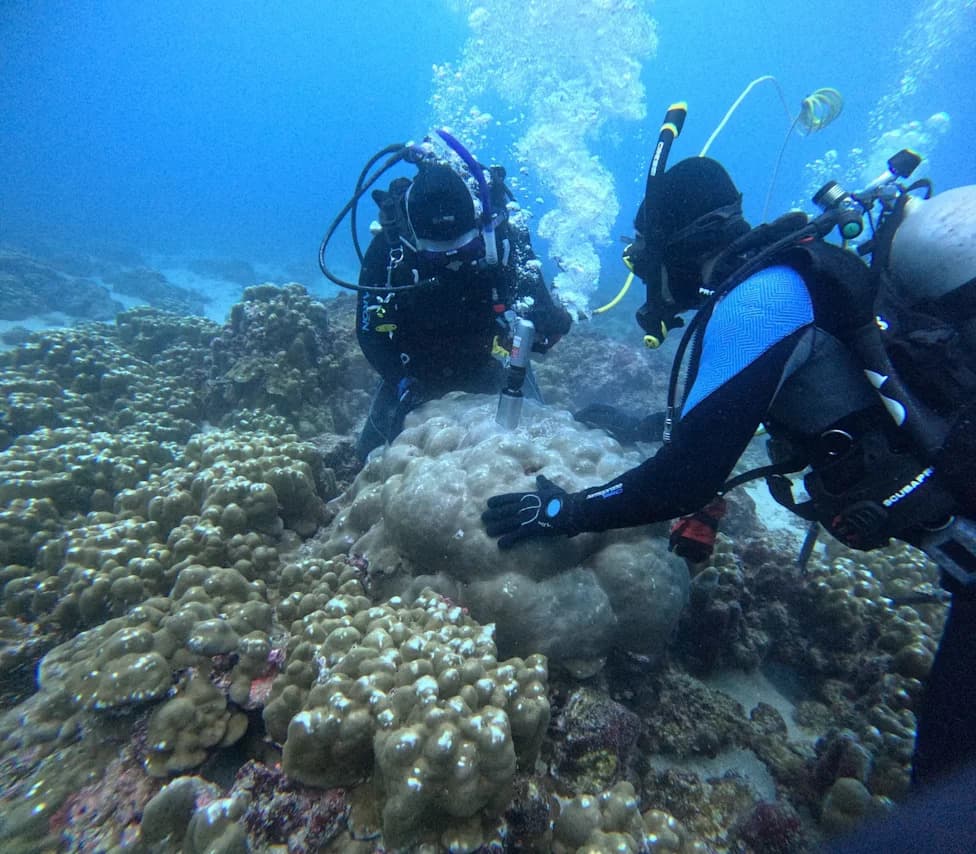
Julia Cole, chair of the University of Michigan Department of Earth and Environmental Sciences, (left) takes a sample from a coral reef, alongside U-M researcher Cameron Tripp. Cole uses coral to study climate trends.
Off the Galápagos Islands, a coral colony has been recording annual ocean conditions every year since 1000 CE. By reading roughly a thousand growth bands from multiple corals, scientists reconstructed a continuous eastern Pacific temperature record spanning 1000–2015 — a unique, millennium-scale window on El Niño variability.
How the record was made
A research team extracted cores from 13 coral colonies — a mix of living reef heads and long-dead coral boulders — collected across five Galápagos Islands. From each core they measured two chemical indicators, the strontium-to-calcium ratio and oxygen isotopes, which function as natural thermometers because they change predictably with seawater temperature. By aligning and merging measurements from the cores, the researchers produced a continuous chronology of eastern Pacific temperature swings.
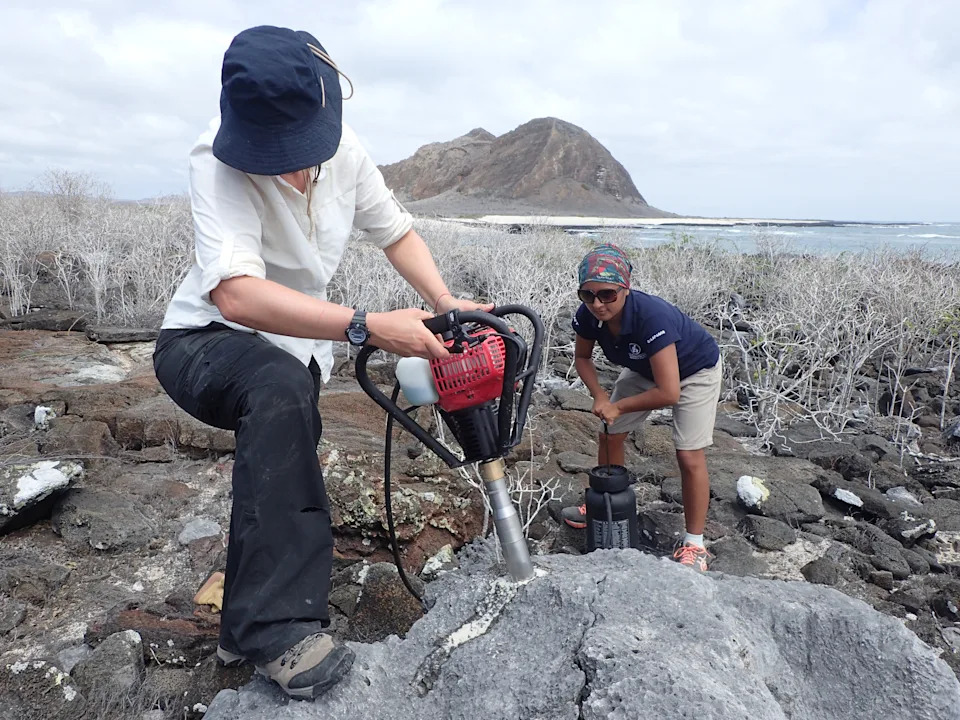
University of Arizona researcher Diane Thompson takes a sample from an ancient coral, along with Andrea Lema formerly of Charles Darwin Research Station.
Key findings
The composite coral record shows that since 1984, El Niño-driven temperature swings in this region have been 36.5% larger than the average swings observed during the preindustrial interval (1000–1850). They are also 16.2% larger than typical swings recorded during the 20th century. The data further indicate that warm extremes now outpace cool extremes.
"We don't see a time in the past where El Niños have been as strong as today," said Julia Cole, Professor of Earth and Environmental Sciences at the University of Michigan and co-author of the study. "Our findings tell us that the big El Niño events of the last 40 years are not normal in the context of the last thousand years."
Implications for this winter
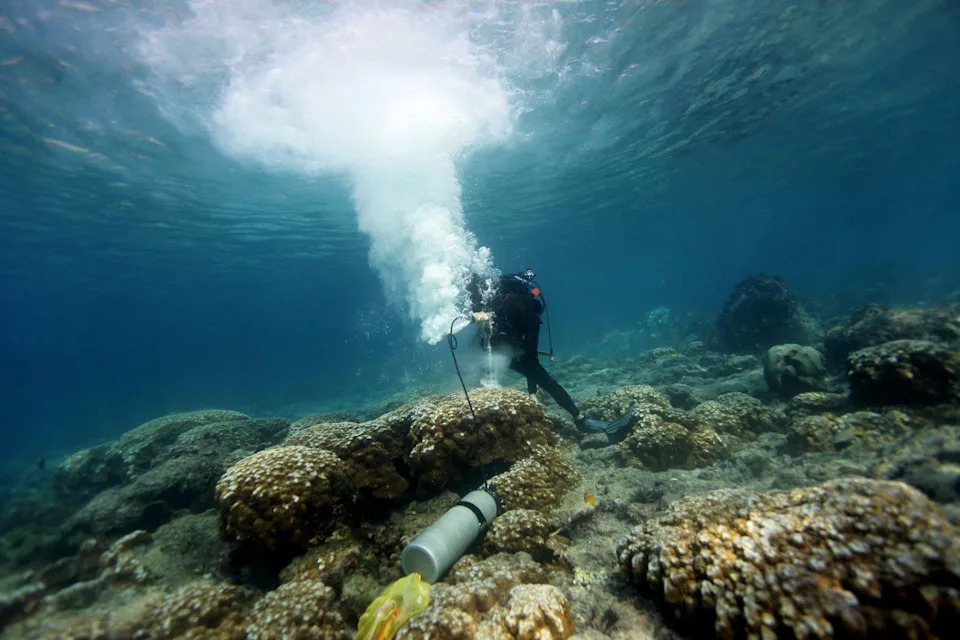
A NOAA scientist uses a pneumatic drill to take a coral core. This process does not injure the colony, which will grow back over the hole in a few years.
El Niño is a major driver of seasonal weather patterns. The study helps explain why this winter's El Niño is likely shaping regional conditions: increased flood risk in the U.S. Southeast, drier conditions in the Pacific Northwest, milder conditions across the southern U.S., and colder spells in the Northern Plains. The research emphasizes that it is not necessarily more frequent El Niños that are expected, but that El Niño events that do occur are now more extreme.
Notes on methods and impacts
University of Arizona researcher Diane Thompson collected samples alongside Andrea Lema, formerly of the Charles Darwin Research Station. Field teams used pneumatic drills to take coral cores; researchers note the procedure does not permanently injure the colonies, which typically regrow over drill sites within a few years.
Bottom line
A thousand years of coral-based data show that recent El Niño extremes exceed anything in the historical record, providing crucial context for understanding and preparing for current and near-future climate impacts.
Help us improve.