A Greek couple grieving the death of their 21-year-old son used an embryo frozen for more than 22 years to welcome a baby girl, racing to meet Greece’s 54-year IVF age limit. Cristina Rapti-Tzelepi, 54, had roughly a 2½-month window to secure approval; the baby was born in Athens weighing 7 lb 11 oz and was named Georgia in memory of their son. Doctors called for a review of the strict age rule, while international cases and U.S. data show embryo cryopreservation can result in successful births even after decades.
Greek Couple Welcomes Daughter From 22‑Year‑Old Frozen Embryo After Racing IVF Age Cutoff
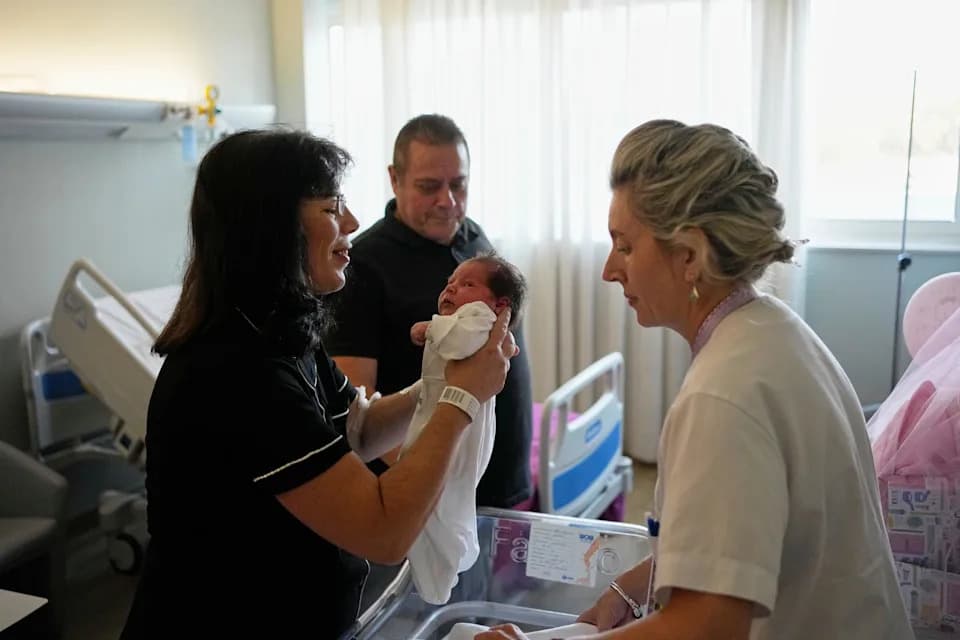
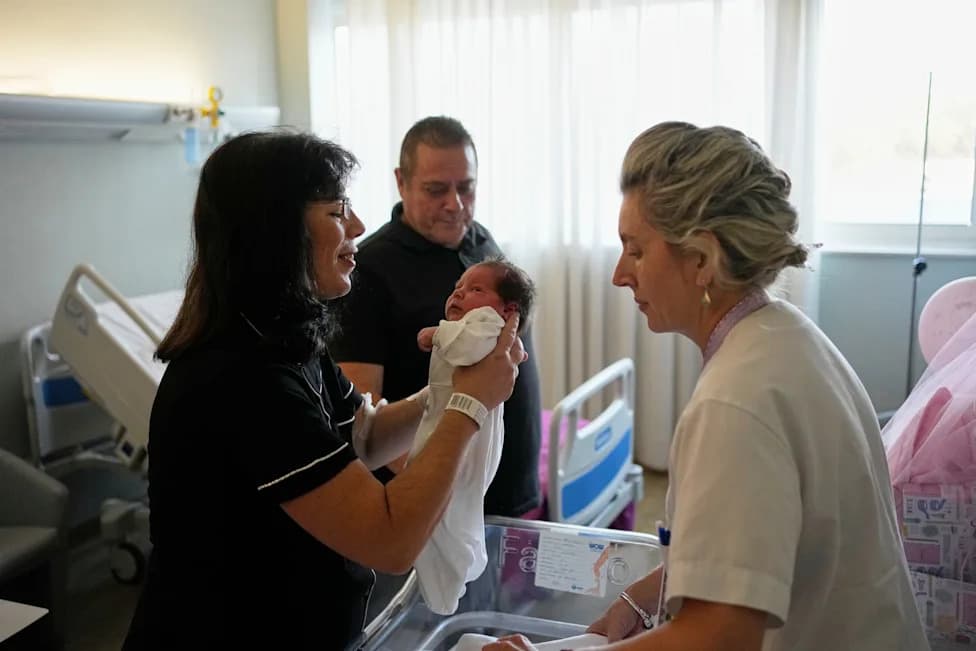
Cristina Rapti-Tzelepi, 54, holds her 3-day-old daughter, Georgia, as her husband, Constantinos Raptis, 60, stands in the background at a private maternity clinic in Athens, Greece, Friday, Sept. 11, 2026. / Credit: AP Photo/Thanassis Stavrakis
A Greek couple who had suffered the recent loss of their adult son have welcomed a newborn daughter conceived from an embryo that had been frozen for more than 22 years. The birth came after a tense, time-sensitive effort to meet Greece’s strict age limit for in vitro fertilization (IVF) approvals.
A Race Against Time
Just months after their 21-year-old son died in an October road crash, Cristina Rapti-Tzelepi, 54, and her husband decided to try again using an embryo cryopreserved more than two decades earlier. Rapti-Tzelepi faced a national rule requiring women to complete IVF procedures before turning 55 and obtain authorization from a state authority; she said she had only a "2½-month window" to secure approval and begin treatment.
"It was stressful, but with inner strength and our doctor and his whole team by our side, we got through every obstacle," Rapti-Tzelepi told The Associated Press.
The Birth
The baby girl was born in Athens, weighing 7 pounds, 11 ounces. In the hospital the parents were visibly emotional; the couple named their daughter Georgia in memory of their late son Giorgos, who was also born through IVF. The father, 60-year-old Constantinos Raptis, cradled the sleeping infant and thanked the medical team for restoring hope to his family.
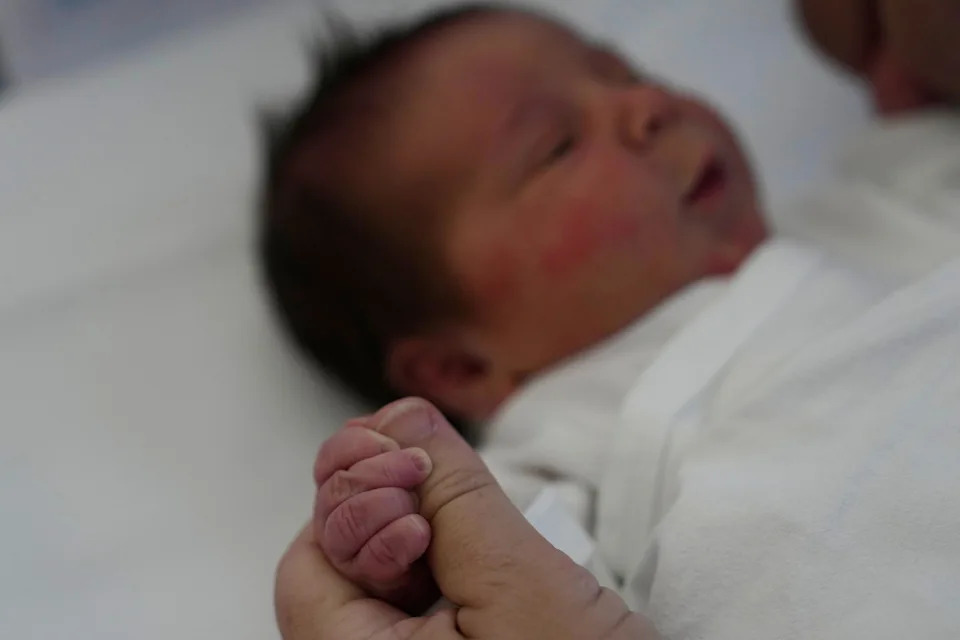
Cristina Rapti-Tzelepi, 54, holds the hand of her 3-day-old daughter, Georgia, at a private maternity clinic in Athens, Greece, Friday, Sept. 11, 2026. / Credit: AP Photo/Thanassis Stavrakis
Medical And Policy Context
The child was created from an embryo fertilized and frozen more than 22 years earlier—an unusually long interval between cryopreservation and a successful pregnancy, though not unprecedented. Last year, an Ohio couple announced a baby born from an embryo frozen for more than 30 years; that case was later recognized by Guinness World Records as the longest interval to a successful live birth.
Dr. Kostas Pantos, the gynecologist who treated Rapti-Tzelepi and head of the Hellenic Society of Reproductive Medicine, argued that Greece’s strict age restrictions deserve reconsideration amid the country’s steep birth-rate decline. "The law is very strict: 54 plus one day is not allowed. Maybe it’s time for it to change," Pantos said.
Broader Trends
Embryo donation and frozen embryo transfers are becoming more common in other countries. In the United States, frozen donated embryo transfers nearly quadrupled from 2004 to 2019, according to a study in the American Journal of Obstetrics and Gynecology, and researchers estimate there are more than one million frozen embryos in storage nationwide.
Looking Ahead
The couple said they have not ruled out pursuing another child in the future, possibly by seeking treatment abroad if necessary. For now, they are focused on welcoming Georgia and honoring the memory of their son.
Help us improve.