A Greek couple has welcomed a daughter conceived from an embryo frozen for more than 22 years, completing IVF just inside Greece’s 54-year legal cutoff for finishing treatment. The birth — coming months after the couple’s 21-year-old son died in a road crash — has renewed debate over age limits for assisted reproduction amid falling birth rates. The newborn, named Georgia, weighed 3.49 kg (7 lb, 11 oz) at birth.
Greek Couple Welcomes Daughter Conceived From Embryo Frozen 22 Years — A Race Against A Legal Deadline
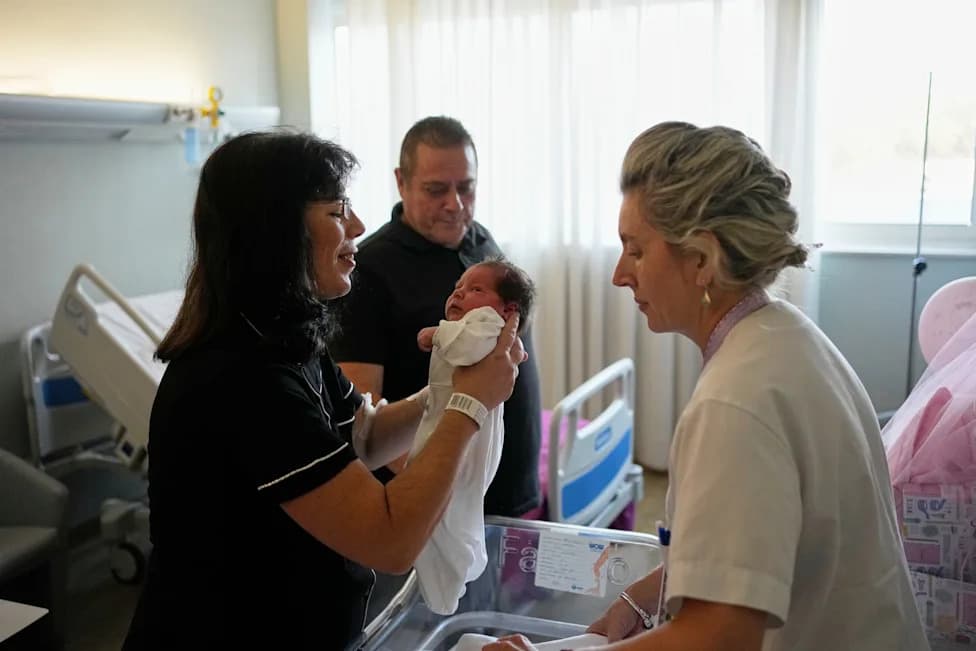
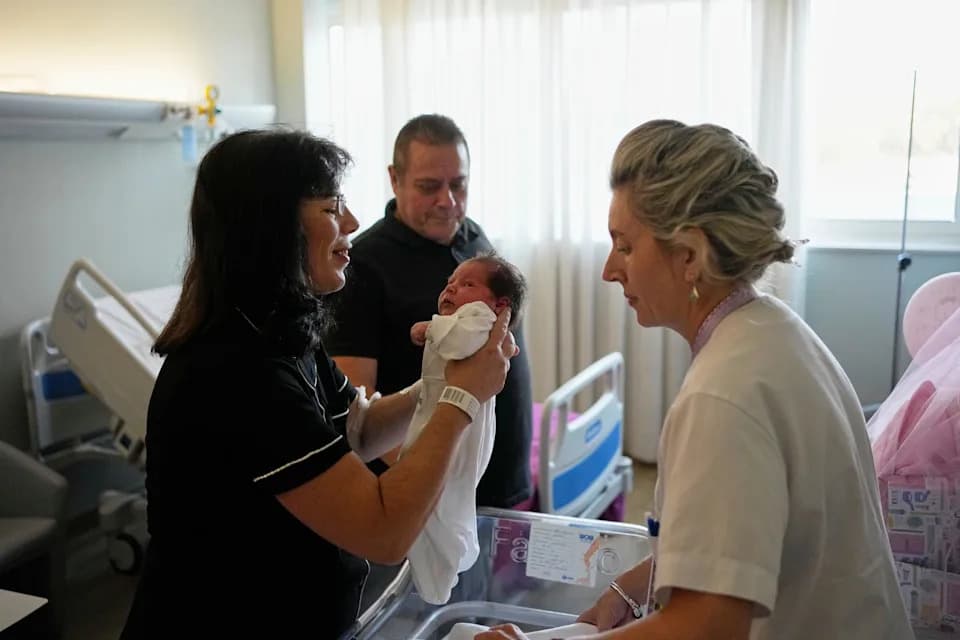
Cristina Rapti-Tzelepi, 54, holds her three-day-old daughter, Georgia, as her husband, Constantinos Raptis, 60, stands in the background at a private maternity clinic in Athens, Greece, Friday, Sept. 11, 2026. (AP Photo/Thanassis Stavrakis)(AP Photo/Thanassis Stavrakis)
Out of profound grief, a Greek couple has begun a new chapter: Cristina Rapti‑Tzelepi, 54, and her husband, Constantinos Raptis, 60, welcomed a baby girl conceived from an embryo that had been frozen for more than 22 years.
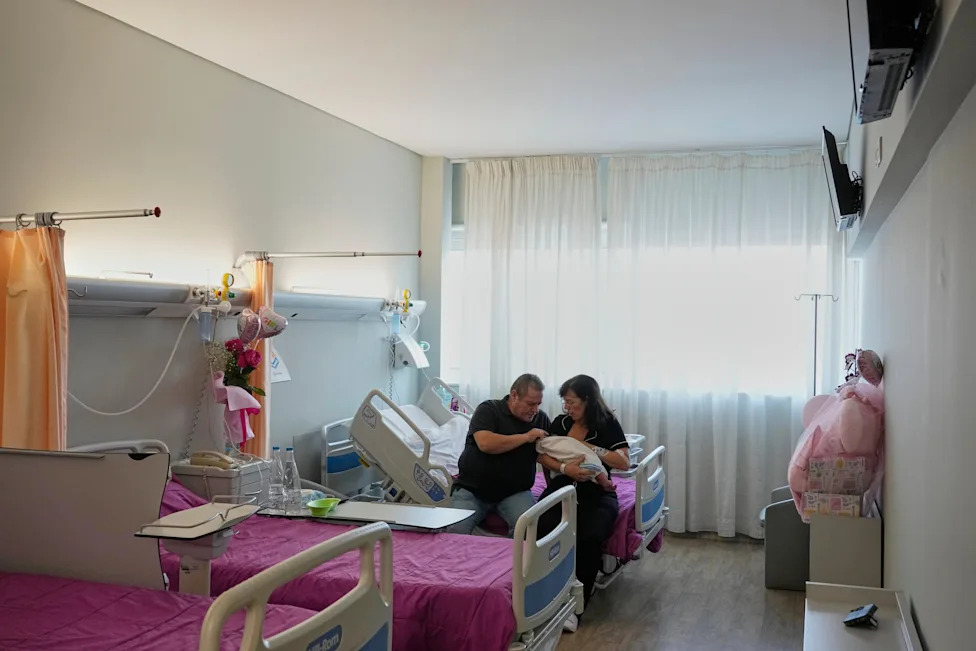
Cristina Rapti-Tzelepi, 54, breastfeeds her three-day-old daughter, Georgia, as her husband, Constantinos Raptis, 60, caresses the infant's head at a private maternity clinic in Athens, Greece, Friday, Sept. 11, 2026. (AP Photo/Thanassis Stavrakis)(AP Photo/Thanassis Stavrakis)
Racing Against A Legal Cutoff
The couple pursued the pregnancy just months after their 21-year-old son, Giorgos, was killed in a road crash in October. Rapti‑Tzelepi moved quickly to complete the in vitro fertilization (IVF) process before Greece’s strict rule — which bars women older than 54 from finishing IVF treatments and obtaining approval from the national authority — would block the attempt.
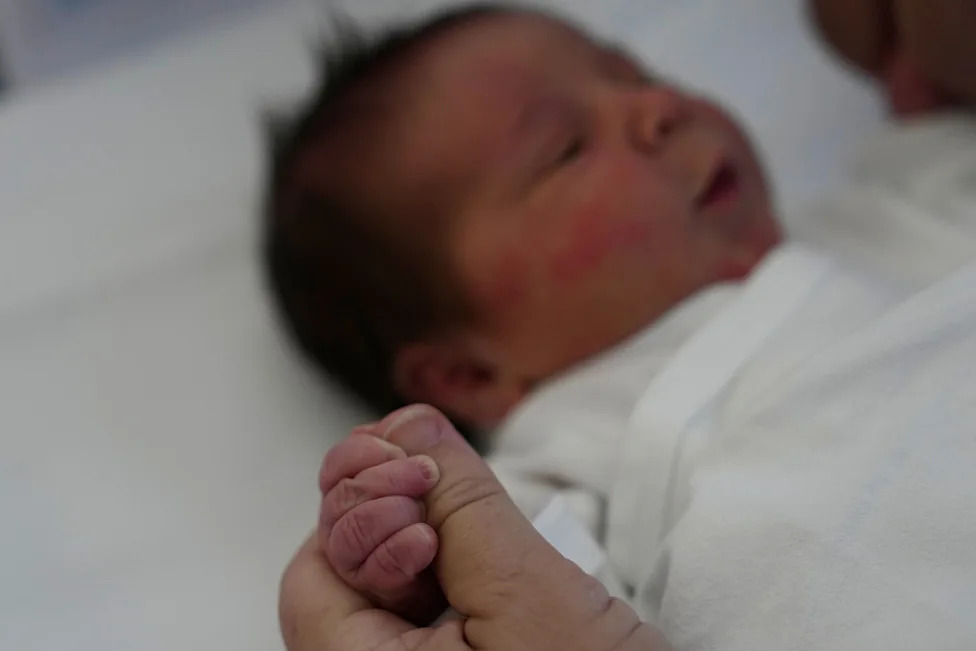
Cristina Rapti-Tzelepi, 54, holds the hand of her three-day-old daughter, Georgia, at a private maternity clinic in Athens, Greece, Friday, Sept. 11, 2026. (AP Photo/Thanassis Stavrakis)(AP Photo/Thanassis Stavrakis)
"I only had a 2½-month window," Rapti‑Tzelepi said. "It was stressful, but with inner strength and our doctor and his whole team by our side, we got through every obstacle."
The baby was delivered on Wednesday in Athens, weighing 3.49 kilograms (7 pounds, 11 ounces). The new parents named their daughter Georgia in memory of their late son Giorgos. In a hospital room brightened with pink balloons and flowers, the couple described the birth as a second chance and a way to continue their family’s story.
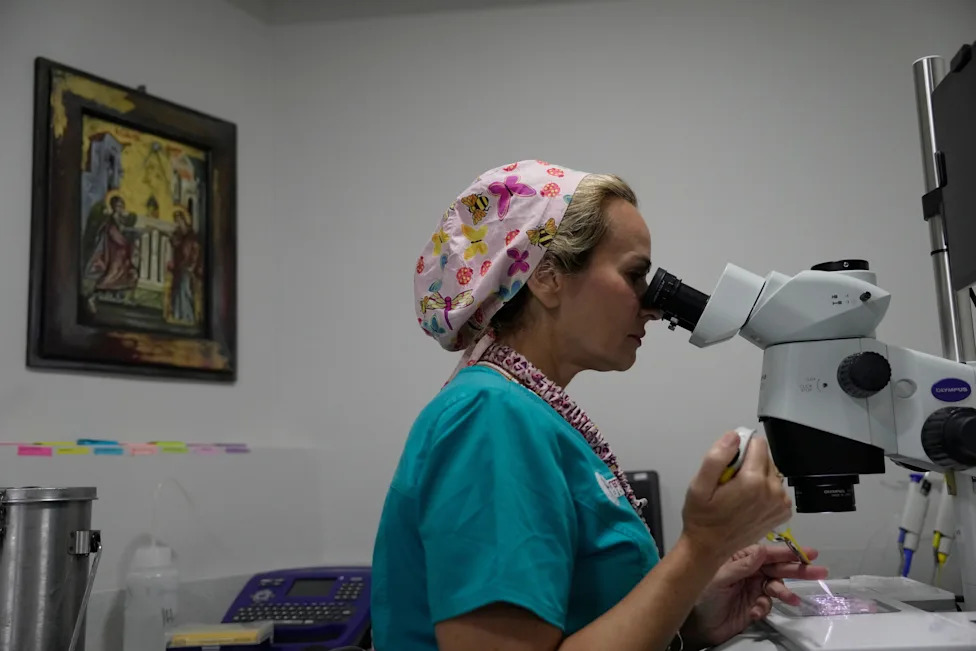
Rena Aggeli, a clinical embryologist, carries out an egg freezing procedure at a private IVF clinic in Athens, Greece, Friday, Sept. 11, 2026. (AP Photo/Thanassis Stavrakis)(AP Photo/Thanassis Stavrakis)
Dr. Kostas Pantos, Rapti‑Tzelepi’s gynecologist and president of the Hellenic Society of Reproductive Medicine, noted that the birth highlights questions about Greece’s age limit for assisted reproduction amid a steep decline in birth rates. "The law is very strict: 54 plus one day is not allowed. Maybe it's time for it to change," he said.
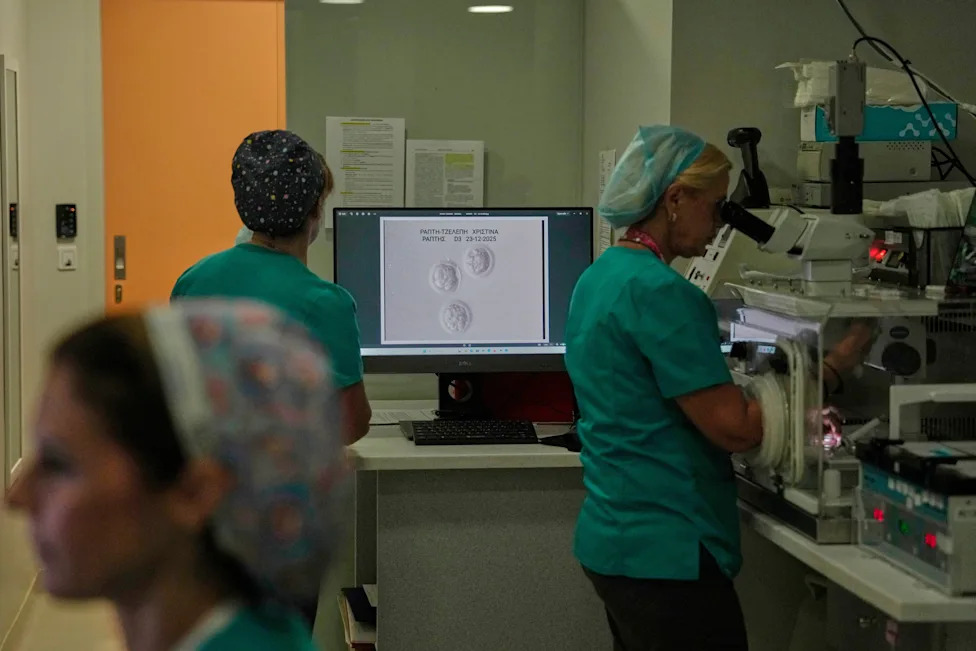
An image of the Raptis couple's embryo is displayed on a laboratory monitor as clinical embryologists work at a private IVF clinic in Athens, Greece, Friday, Sept. 11, 2026. (AP Photo/Thanassis Stavrakis)(AP Photo/Thanassis Stavrakis)
The child was created from an embryo frozen more than 22 years ago — an unusually long interval for a frozen fertilized egg to be used successfully to establish a pregnancy. Similar long-term embryo uses have drawn international attention: an Ohio couple last year had a child from an embryo frozen for more than 30 years, a birth later recognized by Guinness World Records.
While the couple say they have not ruled out trying for another child — possibly by seeking treatment abroad — they are focused for now on welcoming Georgia and healing as a family.
Reporting contributions: Theodora Tongas, Lefteris Pitarakis and Thanassis Stavrakis.
Help us improve.