UN Watch says UNRWA has inflated its reform claims: the agency reports 41 of 50 recommendations completed, but independent analysis finds at most 13 fully implemented. The watchdog criticizes a 2025 "Minimum Viable Product" approach that counts plans and pilots as finished reforms and highlights persistent gaps in vetting, education content, union compliance, and facility security. UN Watch urges donors to require independent verification before restoring full funding.
Watchdog: UNRWA Overstated Reform Progress, Left Terror-Related Risks Unresolved
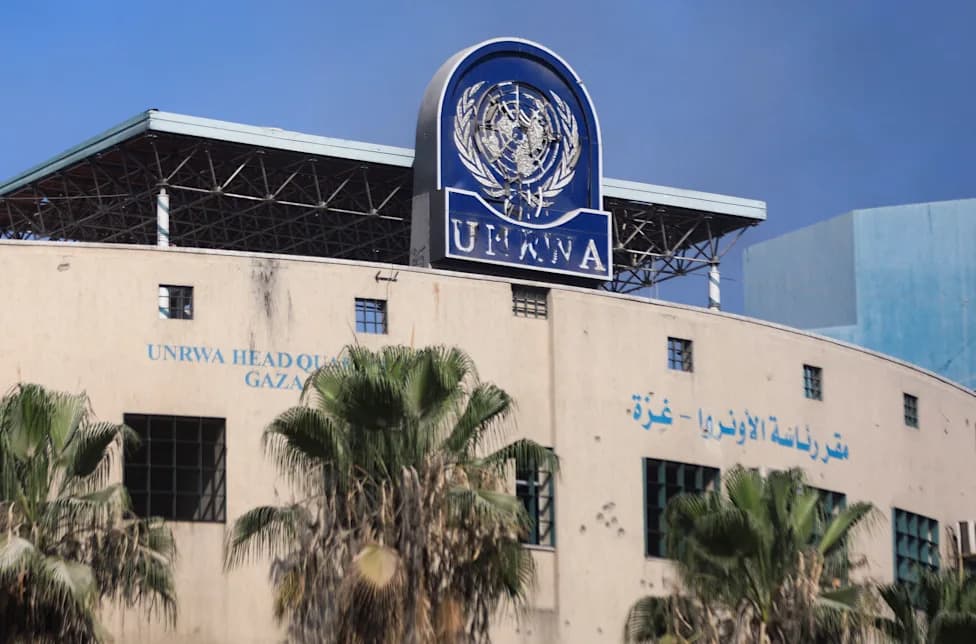
A damaged sign is pictured at the headquarters of UNRWA, following an Israeli raid, amid the Israel-Hamas conflict, in Gaza City, July 12, 2024. (photo credit: REUTERS/DAWOUD ABU ALKAS)
The Geneva-based monitoring group UN Watch has released a sharply critical assessment charging that the United Nations Relief and Works Agency (UNRWA) has overstated its institutional reform achievements, prioritizing paperwork over meaningful change while leaving significant terrorism-related risks unaddressed.
Report Overview
UN Watch's investigation, titled "Report Card on UNRWA Reform," reviewed UNRWA’s implementation of 50 recommendations made by an independent review team led by former French foreign minister Catherine Colonna. The Colonna review was commissioned by UN Secretary-General António Guterres in early 2024 after revelations that some UNRWA staff were involved in the October 7 attacks — disclosures that prompted 17 donor countries to temporarily suspend roughly $450 million in funding.
Key Findings
While UNRWA has publicly declared 41 of the 50 recommendations completed, UN Watch concludes that number is misleading: at most 13 recommendations were implemented as the Colonna review prescribed. The watchdog says UNRWA adopted a "Minimum Viable Product" (MVP) approach in mid-2025 that allowed initiatives to be marked complete once a core objective was declared met, even when full implementation, institutionalization, or secure funding remained lacking.
Under the MVP approach, administrative steps such as pilot programs, drafted guidelines, or costed implementation plans were frequently recorded as completed reforms — despite execution depending on future financing or further action.
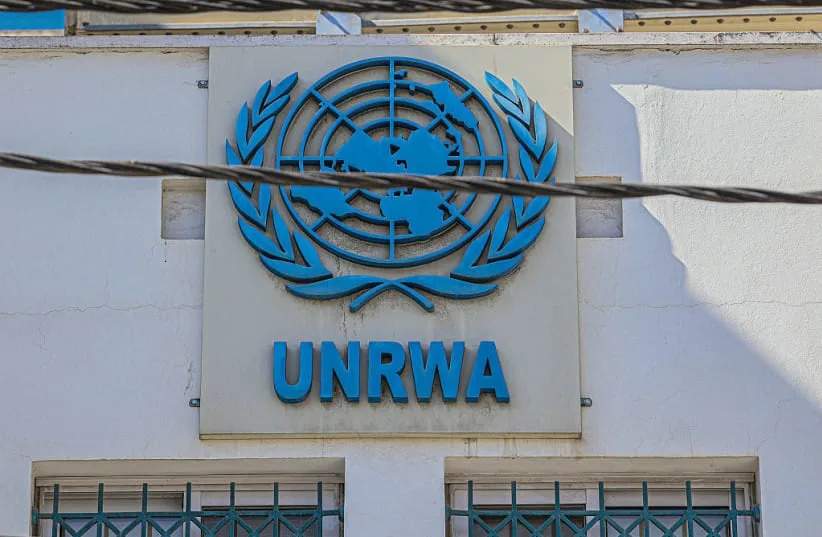
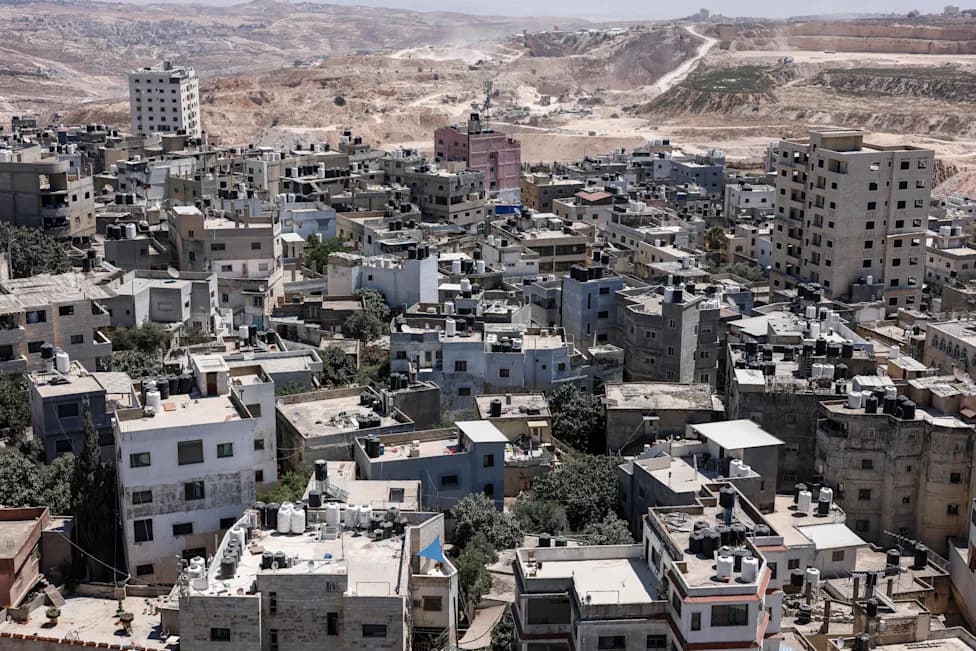
The UNRWA emblem is displayed on a building at the Kalandia Training Center in Qalandia refugee camp, West Bank, on August 25, 2026. (credit: Mohammad Nazal / Middle East Images / AFP via Getty Images)
"UNRWA has graded its own homework and awarded itself high marks," said UN Watch Executive Director Hillel Neuer. "Issuing a policy is not the same as enforcing it. Drafting a plan is not the same as implementing it, and closing a recommendation does not mean the underlying problem has been solved."
Persistent Security and Institutional Gaps
UN Watch emphasizes several continuing vulnerabilities:
- Vetting: UNRWA still lacks a dependable, systematic mechanism to screen much of its locally recruited workforce for membership in Hamas or Palestinian Islamic Jihad (PIJ). The agency primarily relies on the UN Security Council sanctions list, which does not designate Hamas as a terrorist organization, creating a major blind spot.
- Oversight Failures: The report cites a June 2026 review by the USAID Office of Inspector General that independently referred 108 current or former UNRWA personnel for federal debarment over suspected ties to the October 7 attacks or Hamas military wings.
- Unions and Institutional Resistance: UNRWA marked union-related reforms as completed after drafting a modernized staff-union statute, but union leadership — historically tied to political factions and accused of defending colleagues linked to terror groups — refused to adopt the new rules. The Gaza Staff Union’s mobilization to demand reinstatement of dozens of dismissed employees is cited as an example.
- Education Content: Although UNRWA points to new teacher training and textbook review processes, independent monitoring by IMPACT-se of the 2025–2026 Palestinian Authority curriculum used in UNRWA schools found antisemitic content, the glorification of suicide attacks, and promotion of violent jihad still present in daily lessons.
- Facility Security: The report warns that paperwork, policies, or ethics posters cannot prevent deliberate military misuse of UNRWA facilities. Lacking independent police, military, or intelligence capabilities, the agency remains vulnerable to covert threats — including the discovery of Hamas attack tunnels beneath and around some properties.
Structural Versus Managerial Problems
UN Watch concludes these shortcomings are structural rather than merely managerial. The agency's mandate — which preserves refugee status across generations and depends heavily on locally recruited staff embedded in local political networks — inherently complicates efforts to achieve true political neutrality through administrative fixes alone.
The watchdog is urging international donor governments to stop relying solely on UNRWA’s self-reported metrics and to demand independently verifiable evidence of implementation before restoring full financial backing.
UNRWA did not respond to a request for comment by press time.
Photo Caption: The UNRWA emblem on a building at the Kalandia Training Center in Qalandia refugee camp, West Bank (photo credit: Mohammad Nazal / Middle East Images / AFP via Getty Images).
Help us improve.