Summary: Embry-Riddle's peer-reviewed analysis (2016–2025) shows U.S. commercial aviation is far safer than road travel by multiple measures: per mile, per hour and per boarding. Cars are roughly 626× riskier per mile and motorcycles over 22,000× riskier. Psychological factors—perceived control and vivid media coverage—skew public perception, and historical evidence (post‑9/11) shows shifting from air to road can increase overall fatalities.
Why Flying Feels Risky — Even Though It's Far Safer Than Driving

Millions of people fly safely every day, but when plane crashes do happen, they can be catastrophic.
By Mihhail Berezovski and Alex Chaparro
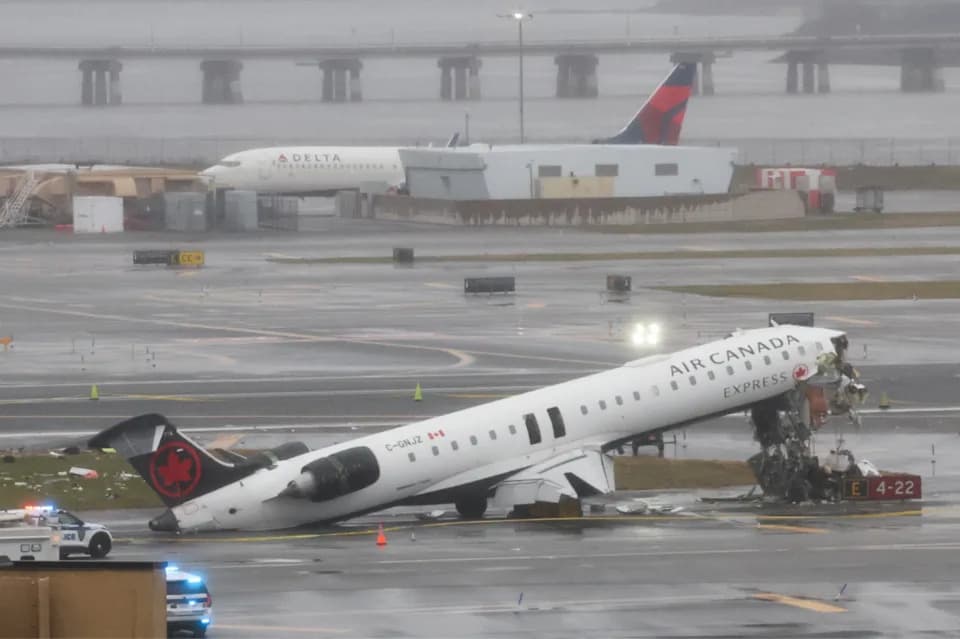
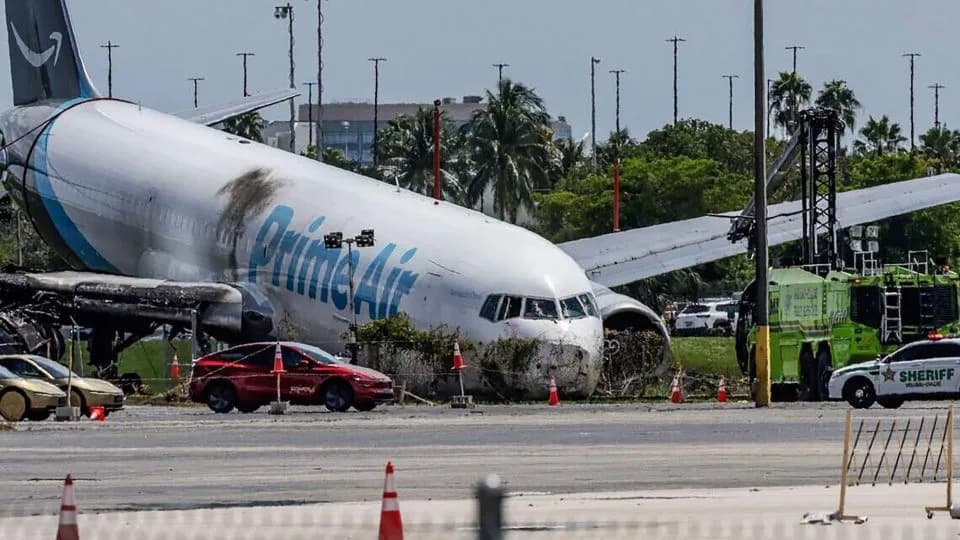
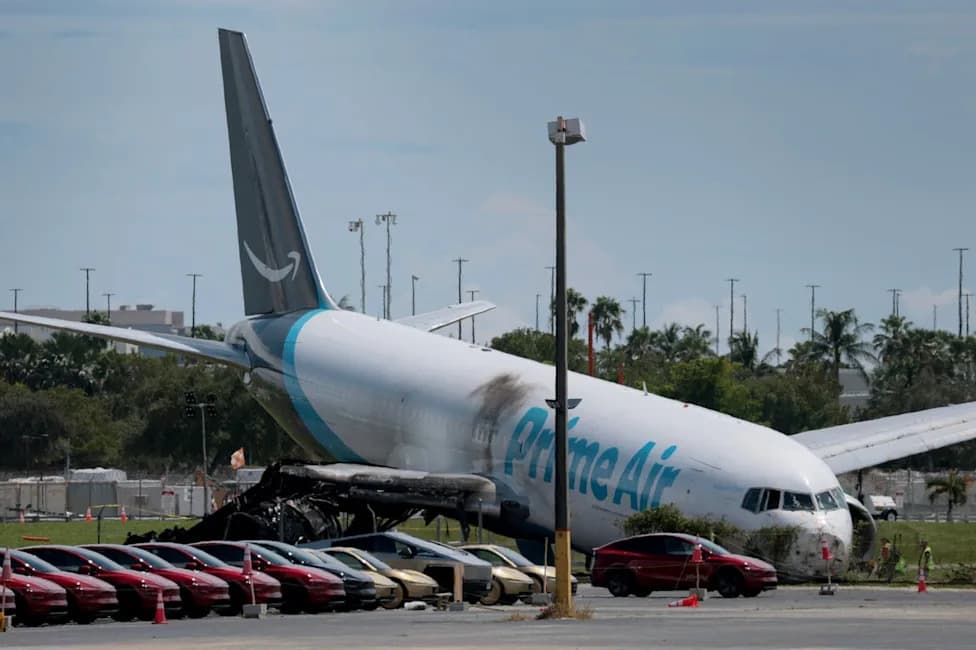
A single commercial airliner accident can reshape how people behave long after the event: broadcasters replay dramatic footage, survivors and victims' families relay traumatic accounts, and an exceptionally rare catastrophe becomes easy to picture. Some travelers cancel plans; others choose to drive instead. Those reactions can seem prudent, but the alternatives often carry higher overall risk.
What the research shows
Our peer-reviewed analysis at Embry-Riddle Aeronautical University (supported by the Boeing Center for Aviation and Aerospace Safety) compared fatality risk across U.S. commercial aviation and other activities and travel modes. We focused on Part 121 carriers (the major U.S. airlines and regional operators) and examined data from 2016 through 2025. Because fatal airline accidents are so rare, this long span yields stable estimates.
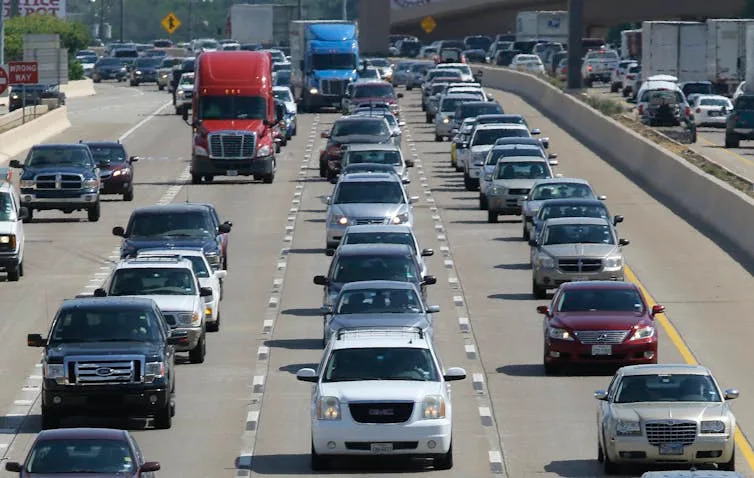
After a high-profile plane crash, road traffic can increase.AP Photo/LM Otero, File
Key findings
The data consistently show that U.S. commercial aviation is exceptionally safe across several exposure measures:
- Per mile: Passenger cars and trucks carry roughly 626 times the fatality risk of commercial airline travel over the same distance.
- Motorcycles: Estimated to be more than 22,000 times as risky as commercial aviation per distance traveled.
- Buses: Even highway bus travel, relatively safe among road options, carries about 9 times the fatality risk per distance.
- Per boarding: From 2016 through 2024, the long-run estimate was about one passenger fatality per 97.7 million boardings.
- Per hour: An hour in a passenger car or truck carries roughly 74 times the fatality risk of an hour aboard a commercial aircraft.
- Over the 10-year study window, 73 people died in accidents involving U.S. commercial airline travel.
Why flying feels more dangerous
Several psychological and social factors make rare aviation disasters feel disproportionately threatening:
- Perceived control: Driving gives people a steering wheel and the feeling their skill can affect outcomes. Flying requires ceding control to pilots, crews, regulators and complex systems. Greater perceived control is associated with more risk-taking and less fear.
- Vividness and media coverage: Plane crashes produce intense, concentrated coverage with dramatic images. Road deaths are dispersed across many locations and rarely generate sustained national attention, so the public underestimates their cumulative toll.
- Measurement confusion: Risk can be measured per mile, per trip, per hour, annually or over a lifetime. Meaningful comparisons require using the same metric—mixing metrics (e.g., one flight vs. annual driving) leads to misleading impressions.
Real-world consequences: The Aftermath of 9/11
After the Sept. 11, 2001 attacks, air travel fell sharply. Researchers investigated whether fear of flying led to more road deaths. Psychologist Gerd Gigerenzer estimated roughly 353 excess road deaths during the final three months of 2001. Later, Michael Sivak and Michael Flannagan reanalyzed the period and estimated 1,018 additional road fatalities from October through December 2001. Their work suggests that when millions shift from air to road travel, overall exposure to harm can increase.
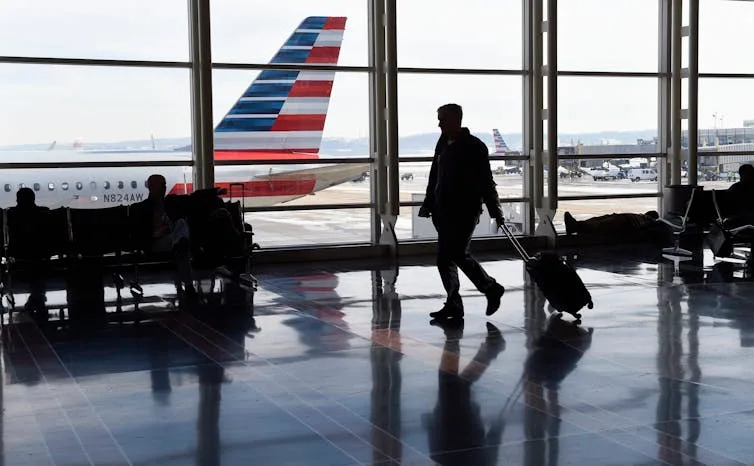
Airline passengers don't have the same sense of control over their vehicle as drivers, so flying can feel more uncertain and dangerous.AP Photo/Susan Walsh
What this means for travelers and communicators
For individuals deciding whether to fly or drive, the practical question is not whether an option is risk-free—none are—but whether it reduces overall exposure to harm. Good risk communication should:
- Present comparable metrics (same distance, time or trip basis) rather than isolated, emotive examples.
- Acknowledge emotions and fear while providing context about relative risks.
- Help people understand how small, collective shifts in behavior can change population-level outcomes.
Putting the rarity in perspective
Modern commercial aviation in the United States has achieved a safety record that is hard to grasp because fatal events are so uncommon. For context, an average of 2.48 million travelers passed through TSA screening each day in 2025. When fear pushes people away from a safer system, the choice that feels safest may not actually be the safest.
"A frightening, highly visible risk can be replaced by a larger, more familiar one."
Originally published on The Conversation.
Help us improve.